
Iconoclast Announces a Filmmaker
Gabriel Basso writes, directs, and stars in a confident, deeply unsettling study of online isolation that wobbles in places but marks him as a talent I want to keep watching.
By MIGUEL MATEO | JUNE 11, 2026
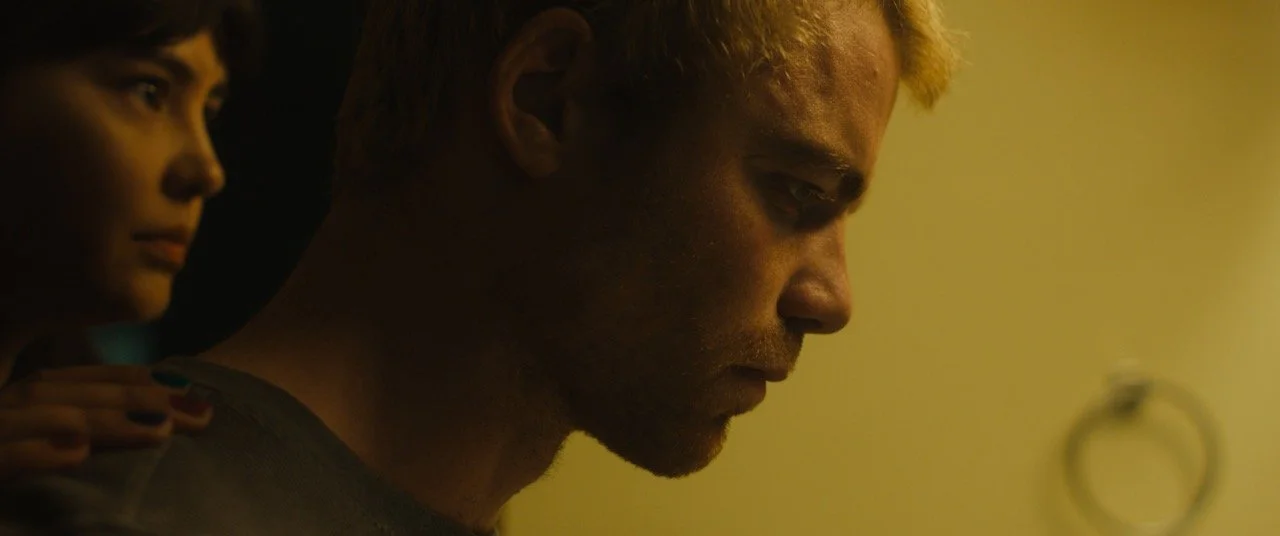
Gabriel Basso has spent a decade as one of those actors you trust on sight, and with Iconoclast he steps behind the camera for the first time and proves he belongs there too. He wrote it, he directs it, and he plays the lead, and the film carries the unmistakable charge of something personal. Connor lives alone in a dim, near-empty apartment, holds down a dead-end job, and pours whatever is left of himself into the livestreams of an influencer named Nika, who has no idea he exists. He logs every word she says. He reshapes himself around her in real time. He is, by design, a shell, and the film watches that shell harden into something dangerous.
What surprised me most is how assured the direction is for a first feature. Basso knows where to put the camera and, more importantly, when to leave it there. The Taxi Driver lineage is right there in the DNA, a lonely man rotting in a city that does not see him, and Basso does not pretend otherwise. But he takes enough detours that it never plays as imitation. Lula Carvalho's photography keeps the apartment claustrophobic and the screen glow sickly, and Mick Gordon's score presses on the nerves without tipping into melodrama. It is a controlled piece of filmmaking from someone with no obligation to play it safe, and he doesn't.
As a performer, Basso holds the center with very little dialogue and a lot of stillness, which is the harder version of the job. He builds Connor out of small adjustments and held silences, and the descent reads as inevitable rather than schematic. The casting around him is sharp, too. Putting Courtney Eaton, fresh off playing one of the least online teenagers on television in Yellowjackets, in the role of the always-on influencer is a quietly funny move that pays off. Rain Spencer makes a strong impression in her stretch of the film, and there is a brief Noah Centineo appearance that lands.
The film is at its best as a study of how new-age media preys on the vulnerable. This is timely material that could easily curdle into a lecture, and Basso mostly resists that. He is less interested in indicting the platform than in sitting inside the loneliness that makes the platform so effective, and the result is a genuinely disturbing portrait of isolation pushed to its furthest edge. When it works, it gets under the skin and stays there.
It is not without faults. At two hours it runs long, and the middle stretch sags in a way a tighter edit would fix. The ending is bold and will divide people, landing a touch too neatly for what comes before it while still leaving a few threads feeling lopsided. These are the growing pains of an ambitious debut rather than fatal flaws, and they read to me as a filmmaker reaching slightly past his current frame. Give Basso a larger canvas to paint on and I suspect we will see something special. For a first feature, this is a striking statement of intent.
Rating: ★★★1/2 out of ★★★★★
Currently playing at Tribeca Film Festival