
The Cinephile Mind is an independent, LGBTQ-owned film publication based in Austin, Texas, dedicated to thoughtful, accessible coverage of mainstream releases, independent cinema, and the international festival circuit. Founded by critic and editor Miguel Mateo, the publication brings together written reviews, filmmaker interviews, podcast conversations, and original video coverage with a focus on performance, storytelling, cultural perspective, and emerging voices. From major studio releases to films still searching for an audience or distributor, The Cinephile Mind aims to keep meaningful cinema in the conversation long after the credits roll.
ABOUT US
Our Team

MIGUEL MATEO
For much of my life, movies were where I felt most at home. Long before I fully understood myself, I found pieces of myself in the characters on screen. Watching films wasn’t simply entertainment. It was a way to connect with people, emotions, and experiences that often felt slightly out of reach in my own life.
For a long time, I moved through the world feeling as though I were watching my own life from behind glass, like a supporting character in a story that never quite felt like mine. But in the darkness of a movie theater, things were different. Through the journeys of others, I came to understand my own.
It didn’t matter how different their lives were from mine. I noticed reflections of myself in characters across completely different worlds. Through them, I learned to understand not only who I was, but also the people around me. Movies became a way of developing empathy for lives and experiences far removed from my own. Film also became the place where I allowed myself to feel things I had kept buried for a long time. Through these stories, I slowly began to understand myself with greater clarity and compassion.
I first saw myself most profoundly in Ennis Del Mar when I watched Brokeback Mountain during my college years, a time when I struggled deeply to accept who I was. Eleven years later, which seemed like a full circle moment, I watched Barry Jenkins’ Moonlight. Around that same time, I began dating the man who would eventually become my husband. A month later, after years of trying to understand myself, I came out to my family. What once appeared far away finally felt real. At that moment, I realized that my support system of family and friends looked far more like Elio’s in Call Me by Your Name than the isolation I once feared, the kind of loneliness I associated with Conrad in Ordinary People.
Cinema didn’t just shape my love of movies; it also shaped my life. It helped me understand who I was, forgive the parts of myself I struggled with, and eventually learn to love them.
Founding Editor | Writer | Podcast Co-Host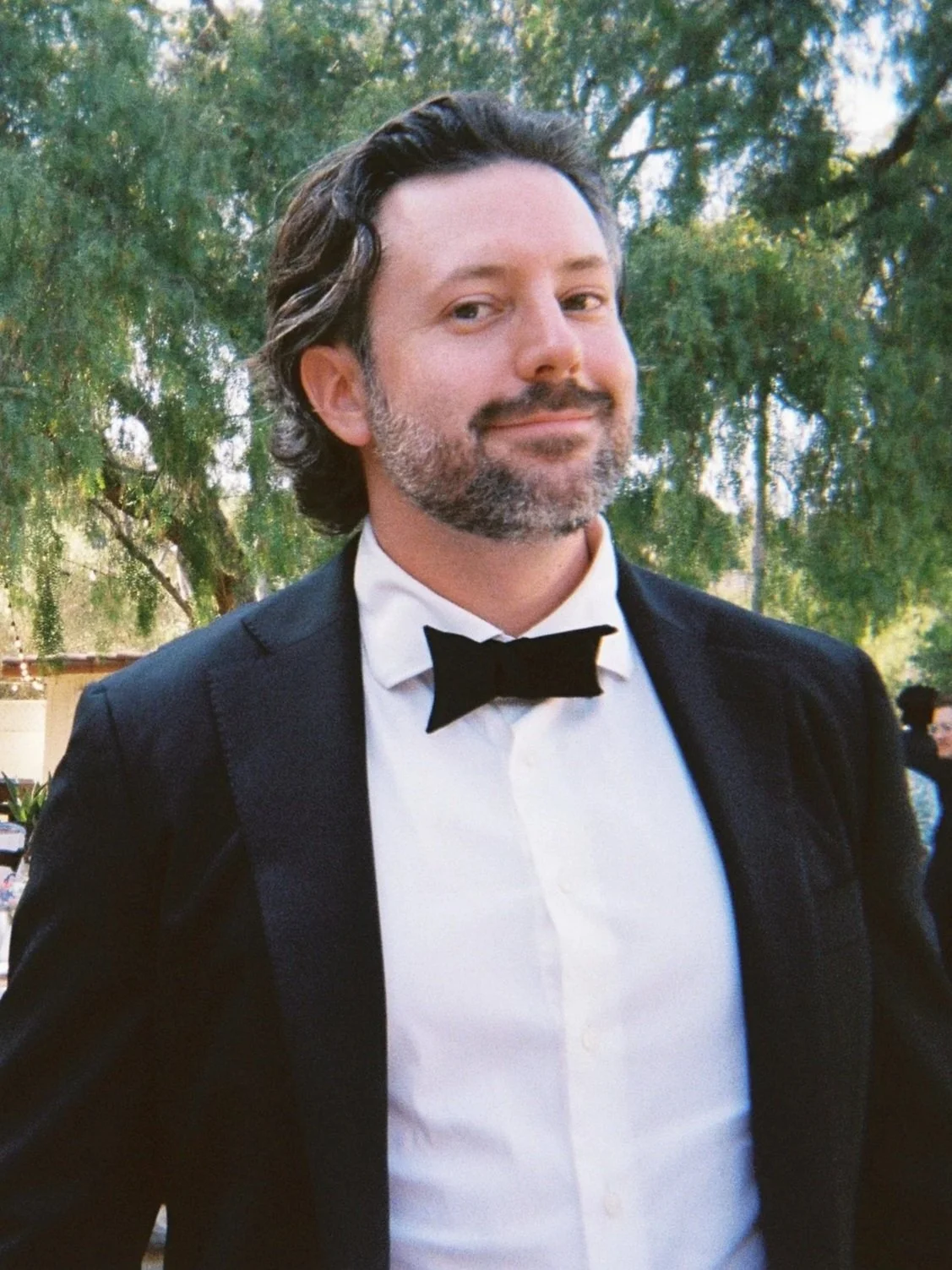
There was a moment in time, early in my high school years, where watching a movie shifted from an act of curing boredom to consuming a whole new art form. I was 15 or 16 years old, and had just finished watching David Fincher’s 1995 masterpiece thriller, Seven. I will never forget the feeling I had upon finishing this movie. It opened a door in my mind, which, up to that point, had been sealed shut in my brain. And through that door rushed an entirely new perspective when it came to cinema. An obsession began. I wanted to seek other movies that could invoke a similar feeling in me. These were the days before social media had the chokehold on society that it does today. Content was not nearly as accessible then (even though it really was not all that long ago). Tailored algorithms would have been viewed as dystopian science fiction. It would require a more proactive approach from me to find what I was looking for.
The answer, for me, arrived in my discovery of the Internet Movie Database. More commonly known as IMDb. It had everything a newly made film-lover could have wanted: cast details, writing/directing info, ratings, details on yet unreleased in-production movies, message boards for people to post discussion topics, and the most influential link that my impressionable teenage mind could have stumbled upon: the IMDb Top 250. A list of the all-time highest rated films based on IMDb user rating submissions. Here was the perfect place for me to begin my amateur cinephile journey.
Twenty years beyond that period in my life, and my love for film remains. My taste has evolved as I have developed a deeper appreciation for all the aspects that make up a great piece of cinema, and its role in telling stories. The Cinephile Mind is a way for me to continue to connect with the art form, connect with others who share a love for movies, and a vehicle for my own creative expression.
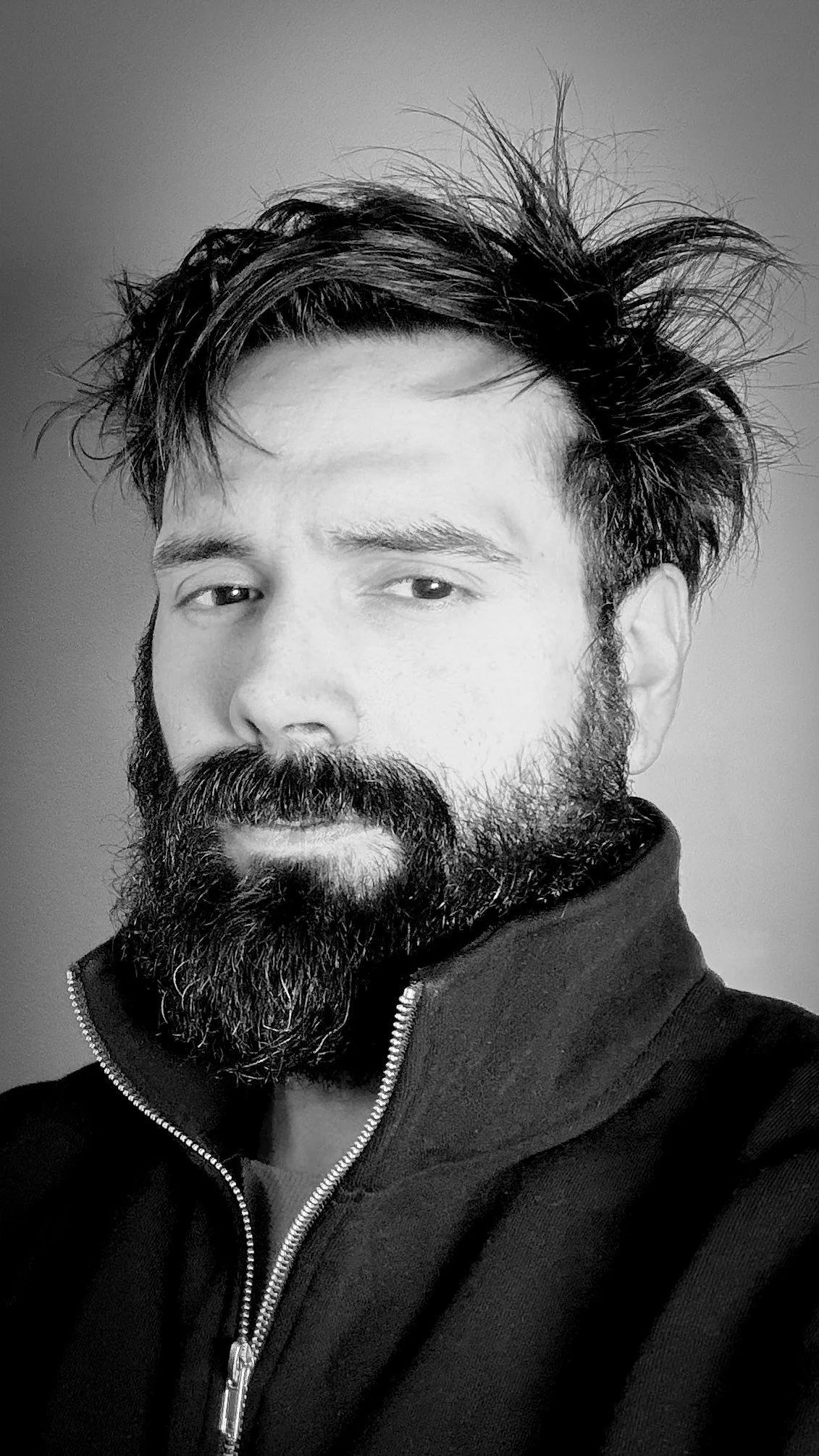
Podcast Co-Host | InterviewerSPENSER MYERS
NIC ICAZA
At 10 years old, sat on the floor of my cousins’ living room, I watched in awe as a classroom of similarly aged preppy private school children was transformed into a rock ‘n’ roll ensemble by their flippant and fraudulent substitute teacher in Richard Linklater and Mike White’s “School of Rock.” This movie unearthed for me a love and appreciation of music, captivating storytelling, and most importantly, it opened my mind to notion that anyone and everyone has the potential to allow their creative spirit to shine. It’s shamelessly still one of my favorites.
Skip ahead to high school and I took a film analysis class as an elective. The class would have been easy enough to breeze through since, unlike those aforementioned rockstar children, I attended a humble, public school in Midwestern U.S.A. An hour and a half of lights out was a dream come true for most of the students in my class, but I was always fully immersed. We watched many of the essentials like “Jaws,” “Psycho,” “Rear Window,” “Silence of the Lambs,” “One Flew Over the Cuckoo’s Nest,” “The Shining,” and “Misery.” At the moment, the only lesser-traumatizing films I can recall watching were “The Fugitive,” and “Juno” which were coated in their own flavors of grief and tragedy. This class was formative for my understanding of all of the elements that comprise storytelling through film and it charged my appreciation for the art form.
We often think of analyzing or critiquing art as picking it apart to take away something less than the whole. In my experience, looking at films more deeply to feel what is being expressed on- and off-screen has helped me understand more of myself and more of the world around me. And if I’m not going to write, direct, or produce, I might as well know how to watch.
Today, I live in Austin, TX, fittingly the backdrop and the heart and soul of much of Linklater’s other works. Many Austin-natives would disagree and say it’s changed too much, but in my opinion, the creative energy, the weirdness and celebration of the arts endures in this city. I enjoy watching new and old releases at the Alamo Drafthouse, catching premieres at SXSW, and being surrounded by other folks who enjoy a walk on the wild side. While I’m still daydreaming of “Ned Schneebly” (real or imposter) transforming me into a Battle-of-the-Bands-worthy virtuoso, in the meantime, you can find my hot and cold movie takes here on The Cinephile Mind.
Podcast Co-Host | Writer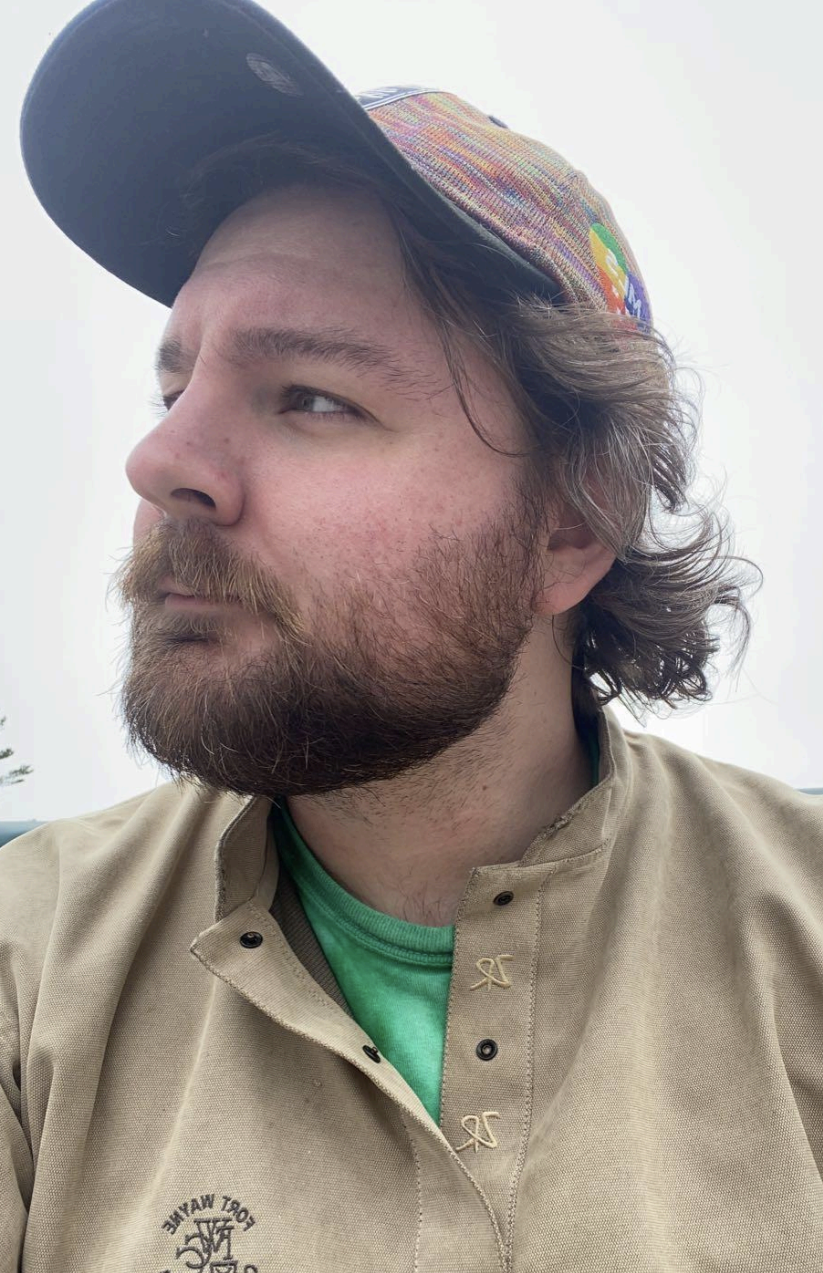
I was always into movies. My introduction to the medium was my dad pulling me out of school to see the Star Wars prequels. It was all over at that point. I had a positive reinforcement loop of watching movies with my dad and getting out of schoolwork. But when I really think about getting into film, I think about the void. In high school and College I had a heavily detrimental existential anxiety. After years of being fine as a kid, I felt a sudden anxiety while sitting alone in bed at night. Pursuing hurtful thoughts about how meaningless my life was, and destroying my sleep cycle by scaring myself over how awful life is, because we will die one day.
My only medication was movies. I was 17 when Netflix live streaming debuted. And it was the perfect distraction. I pored over forums and old award shows to find more sources of distraction. I was starting from scratch as a cinephile, an excuse to not think about the void. I can remember terrifying nights in bed. Thinking about how pointless things were. But then, watching a movie would move the attention outside of my own brain and into a new place. This is where I hit the essentials of the day at a ripe age. A Clockwork Orange, The Godfather, Citizen Kane. I was distracting myself with amazing stories. At this point, I didn't even know they were cliche films, but they felt like amazing discoveries during a time when live streaming was brand new. Growing up in that time, you were exposed to so many good movies for free, all at once.
Now I’m 30. I’m not really afraid of existentialism anymore, but I still love movies. It comes from the escapism that the theater provides. 90 minutes in a dark theater where phones aren't allowed. It’s an unheard-of experience these days where even I am attached to my phone’s content almost 10 hours a day. Nothing can compete with the experience of focusing solely on a 2-hour movie in the dark, where pulling out your stupid phone is taboo for a few hours.
That's me. Overall, I was raised in Dallas. I have a finance degree that I truly regret, and I struggle to work within those parameters. I’ve always loved film and discussing the good and bad of specific pieces, and of the industry as a whole. As a current-day bean counter, writing about movies is really my only outlet outside of work to be creative. I hope in the future to improve my writing and even further expand my film knowledge. Past that, I hope to spread the happiness that film brought me in my worst periods.
Podcast Co-Host | InterviewerHUNTER suelzer
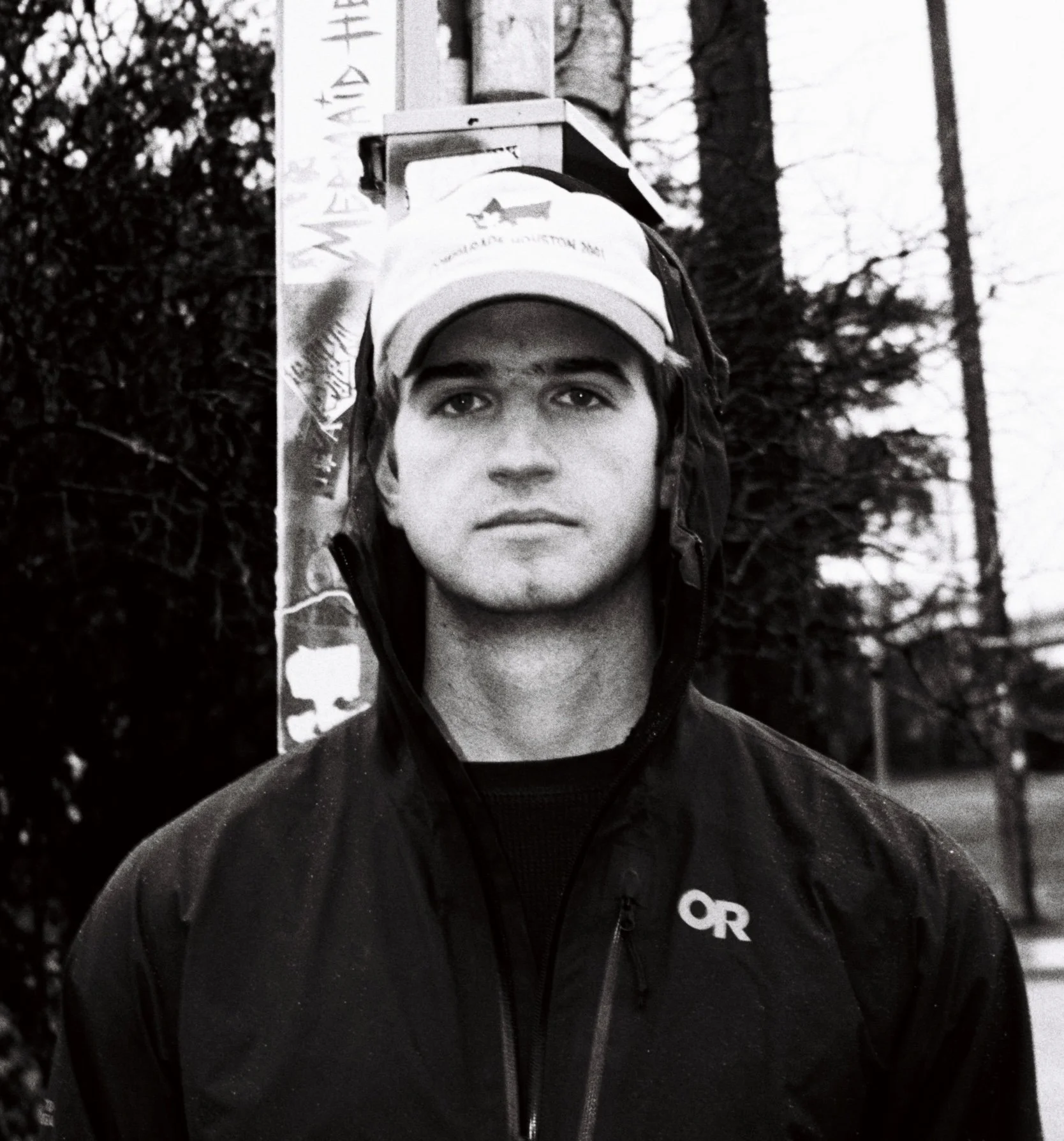
JACK MCCRACKEN
As an elder of Gen Z there were only a few years of my life before I was handed a screen and sent into the abyss of endless media consumption. What started with rewatching Napoleon Dynamite and Three Amigos with my dad quickly warped into meaningless YouTube and eventually short form scrolling.
As I’ve gotten older and more aware of what it means to have anything available at any time, movies began to serve a different purpose. Through living in Austin with a surplus of theaters and cheap memberships that allow daily screenings, my weeks are built around driving to and from the theater, sitting in the dark, being teleported elsewhere, and driving home thinking about my own life clearer than before.
When choosing what to watch I usually end up in the slowest corners of the form. Films where almost nothing happens, ambient moving photographs with narration, atmospheric scores, an excuse to let my mind wander. Or the cutting edge of Michael Bay and stuff that feels like a heightened cinema version of MrBeast. For me, the movies are a tool to either feel everything at once or shut it all out, usually turning into a diving board for whatever emotions I am trying to work through in the present.
Podcast Co-Host | Interviewer