
The Long Haul Belongs to Margo Martindale
Margo Martindale has spent a career stealing scenes from the leads. David Drake's debut feature finally hands her the wheel, and she drives off with one of the most affecting performances of the year.
By MIGUEL MATEO | JUNE 9, 2026
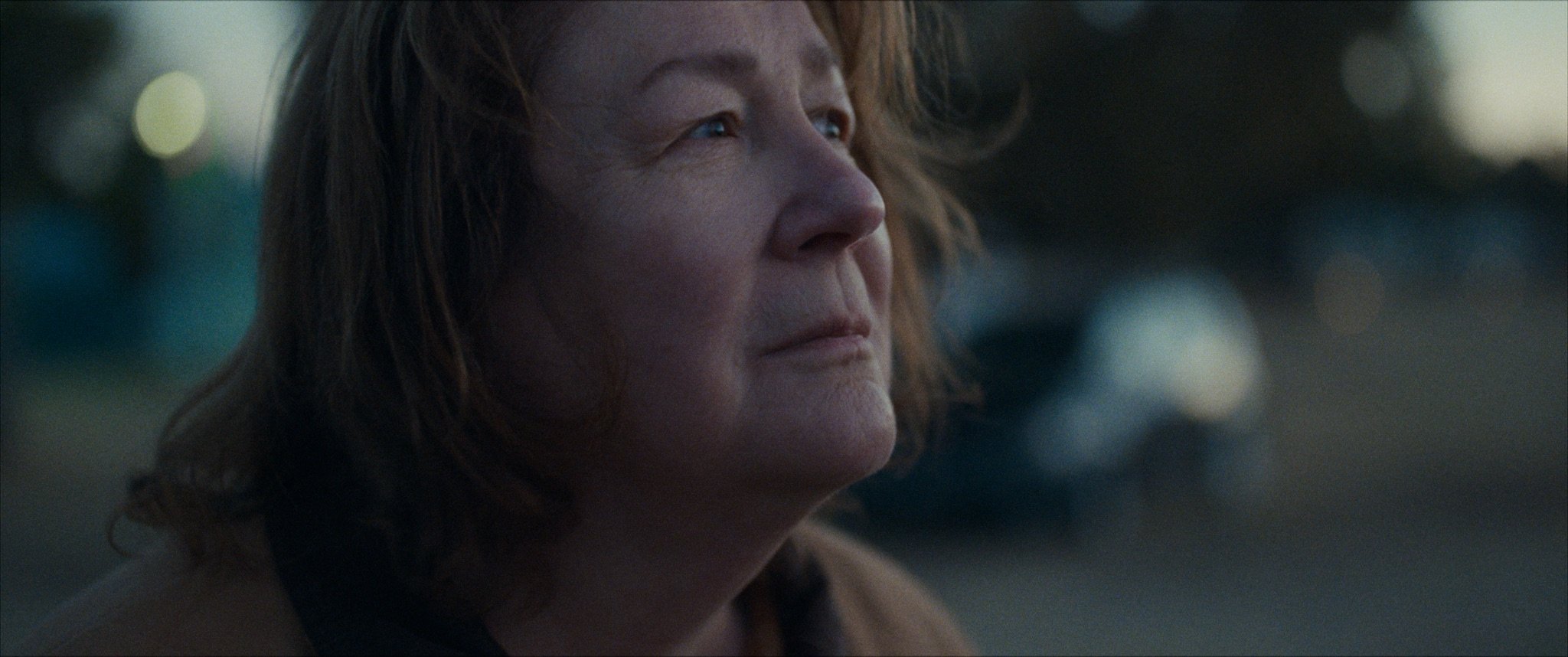
Margo Martindale has built a career on a quiet paradox: that the most unforgettable presence in a film is often the one asked to stand at its edges. Sandwiched between icons in August: Osage County, playing Meryl Streep's sister with Julia Roberts a few seats down the table, she is somehow the figure your eye keeps drifting back to. She arrives late in Million Dollar Baby for barely a scene or two as the venal, grasping mother of Hilary Swank's boxer, and in that sliver of screen time she leaves a mark you carry out of the theater. For decades she has been, reliably, one of the finest supporting actresses we have.
In The Long Haul, David Drake's debut feature, she is finally handed the wheel, and the result is glorious. As CJ Montague, a trucker in her seventies and one of the last independent owner-operators in a vanishing, male-dominated trade, Martindale gives a performance you cannot look away from. The film offers her life in glimpses: the hush of the cab, the crackle of a radio carrying the voice of a fellow driver named Buck she has never once met, the younger drivers who treat the road as a personal brand to be broadcast online. But it is in the silences, in the long stretches when CJ is alone with the highway, that the film locates its soul.
In those silences the weariness is unmistakable. You can see that CJ has lived a life, though the film is in no hurry to tell you what kind. A life left unfulfilled and heavy with regret. A life of private trials, of hard turns taken alone. Or a life hollowed out by some immense loss. Martindale lets all three possibilities live at once in her face. Only later does the film name its source: her daughter, taken by the man who claimed to love her.
What the film understands, and what Martindale renders so beautifully, is that some griefs do not soften with the years. They deepen. The consolation that time heals is reserved for those whose wounds are allowed to close. CJ's only sharpens, the way an absence grows louder the longer you are forced to live inside it. Not every kind of pain heals better with time. When a letter arrives from the parole board, the man responsible due for release after twenty-five years, she is given a week to decide whether to turn and face the past she has spent a lifetime driving away from.
That reckoning gathers toward a scene in court, where CJ at last stands before the man who took her daughter. It is the kind of fully earned eruption an actress waits an entire career to be handed, and Martindale detonates it. What follows is not only a measure of justice but a release, the unclenching of something her character has carried for decades and is finally, mercifully, allowed to set down. It is hard not to feel the same arc beneath the performance itself. This too is a release Martindale has earned, a role she has been waiting a lifetime to be given, and she meets it with everything she has.
Drake knows whose film this is, and he closes on an image worthy of her. A sky that slowly fills with starlings, gathering and wheeling overhead. The name belonged to her daughter, and so the birds arrive less as symbol than as a kind of visitation, the lost girl returning in the only form the world will still permit. It is a small and tender flourish, and it lands as the grace note that this film, and this performance, have more than earned.
Rating: ★★★1/2 out of ★★★★★
Currently playing at Tribeca Film Festival