
F1 goes around in circles
Joseph Kosinski's racing spectacular delivers everything the summer demands and very little of what this genre can actually do.
By MIGUEL MATEO | JUNE 27, 2025
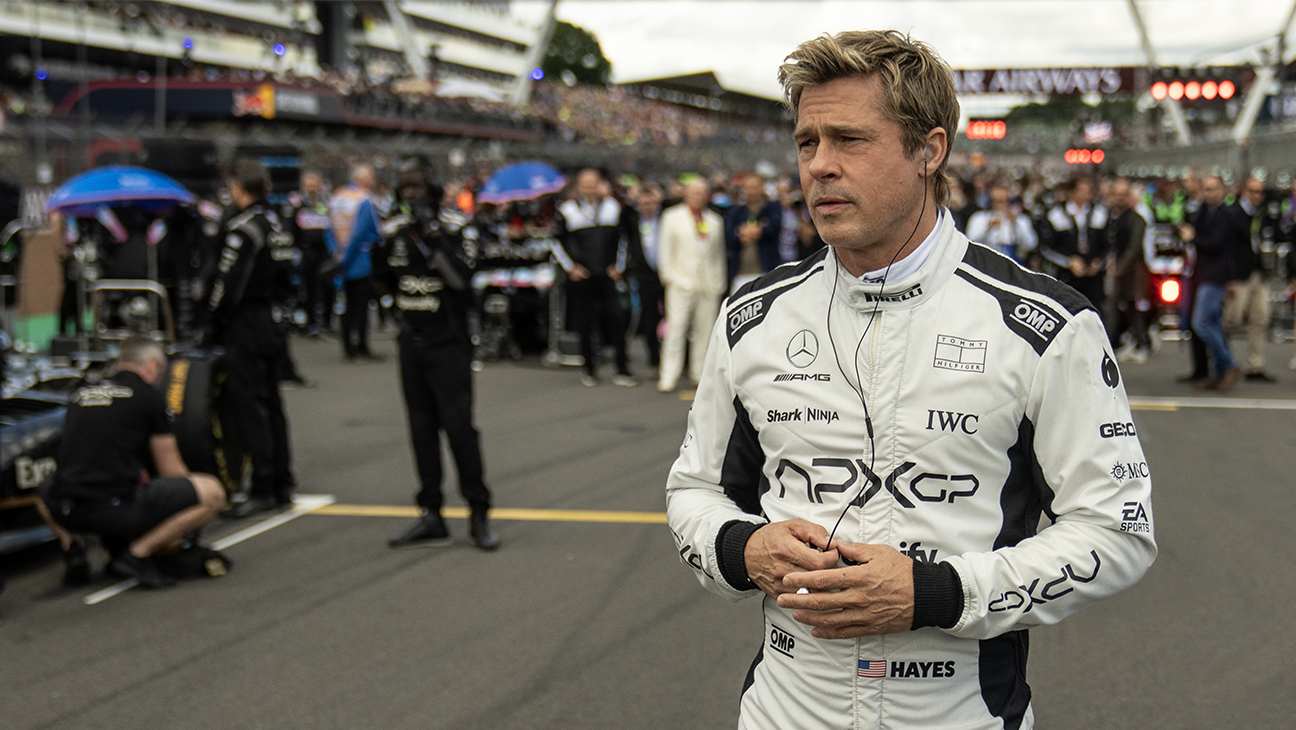
There is something almost mathematically precise about F1. Joseph Kosinski, the director who gave us Top Gun: Maverick, returns with the same producer in Jerry Bruckheimer, an equally storied star in Brad Pitt, and a near-identical contract with the audience: deliver maximum spectacle, minimum friction, and just enough emotional scaffolding to make the action feel consequential. The film fulfills that contract. Whether that is enough depends entirely on what you came for.
Top Gun: Maverick is the obvious and inescapable comparison, and not only because the two films share a director, a producer, and a star of a certain vintage making a comeback in a world that has moved on without him. Both films have genuine reverence for the machinery at their center. But Maverick earned its crowd-pleasing by putting something real in the balance. The aerial sequences in that film felt dangerous in a way that fed directly back into the drama. F1 has none of that bite. When Ford v Ferrari pressed its drivers against mortality, corporate cowardice, and each other, it earned every finish line. F1 just wants to get there first.
Pitt plays Sonny Hayes, a driver dubbed "the greatest that never was," pulled back into the sport after three decades away to partner with a young hotshot rookie, Joshua Pearce, played by Damson Idris. The premise is a baton-passing story, and the film knows it. What it does not seem to know is what to do with the man at the other end of the baton. Pearce is written in the broadest possible strokes: hungry, fast, prickly enough to generate friction with Hayes but not complex enough to sustain it. Idris is a compelling screen presence who deserves real material, and there are flashes throughout of what a fully realized version of this character might have looked like. The script, by Ehren Kruger, consistently privileges Pitt's star charisma over the dramatic logic the film has set up for itself.
And Pitt is enjoyable. He always is. But F1 is closer to his work in Ocean's Eleven than in Moneyball: effortlessly watchable and not particularly present. One of the last genuine movie stars working, Pitt has the rare quality of being magnetic at rest, and Kosinski leans into that rather than against it. It works, but it works in the way a very smooth road works: you make good time and notice nothing.
The film's real achievement is technical. Cinematographer Claudio Miranda, who also shot Maverick, captures the cars with a visceral immediacy that occasionally puts you inside the cockpit rather than simply beside it. Hans Zimmer's score holds the tension of the races better than the screenplay holds the tension between characters. When F1 is moving at speed, it is genuinely exciting. The problem is what it reaches for in the quieter moments: every familiar sports film gesture it can find.
F1 is a well-made film in the way a luxury product is well-made. The tolerances are tight, the finish is immaculate, nothing rattles. It is engineered for a certain kind of summer moviegoer who wants to feel the vibration without absorbing the impact, and on those terms it delivers. The engines sound magnificent. The rest, you will have largely forgotten by the time the credits finish rolling.
Rating: ★★1/2 out of ★★★★★