
Rental Family Finds Genuine Warmth Beneath the Sentimental Wrapping
A Hollywood-glossed dramedy about a man for hire ends up renting real feeling too.
By MIGUEL MATEO | NOVEMBER 21, 2025
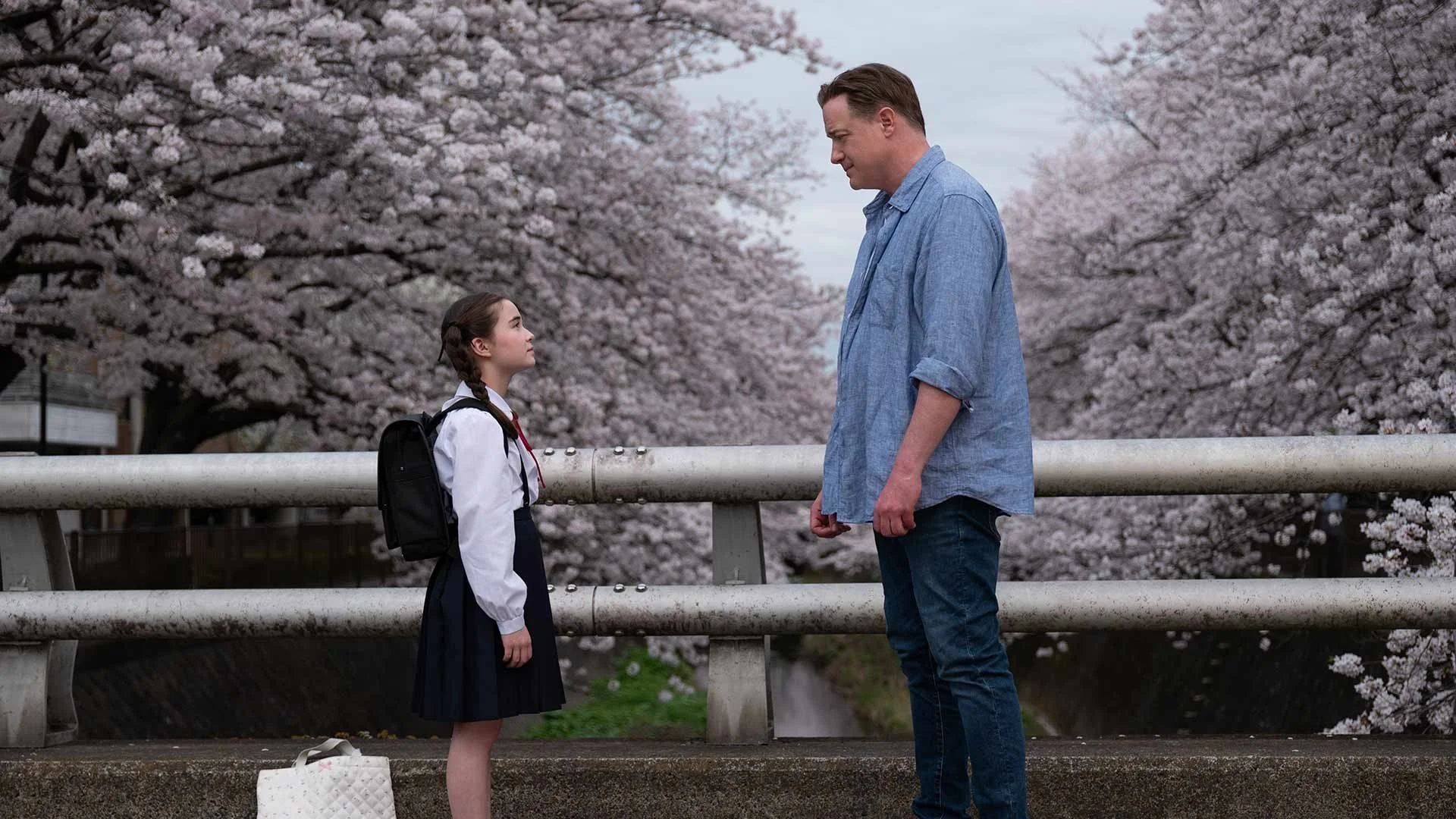
Tokyo has become something of a default setting for the lost American man, the place where an actor as recognizable as Bill Murray in Lost in Translation goes to wander neon corridors and quietly find himself while everyone else gets on with their lives. Rental Family slots comfortably into that lineage, this time with Brendan Fraser as Phillip Vanderploeg, an actor stalled out seven years into a career that peaked with a toothpaste commercial. When Shinji Tada's agency hires him to play stand-in relatives for paying clients, the film finds its shape in two overlapping assignments, posing as the absent father of a lonely girl named Mia so her mother can get her into a better school, and impersonating a journalist for an aging, memory-slipping actor named Kikuo who wants his life recorded before it disappears.
Both threads could easily curdle into manipulation, and the film knows it, flirting with the ethical mess of manufactured intimacy before smoothing it back into warmth. The film is smart enough to let a beat of guilt pass across Phillip's face before he cashes another check, even if it never lingers there long. What keeps it from tipping into outright saccharine is Fraser himself. This is a gentler, more physically settled performance than the one that won him his Oscar, less about visible suffering and more about a man slowly unlearning the habit of performing his own life. It plays like real growth, a performer trading his most extreme instrument for something quieter and harder to fake.
The ensemble matches him scene for scene. Takehiro Hira gives Shinji a businesslike warmth that never curdles into cynicism, Mari Yamamoto finds real ache in a woman who has made a career out of manufactured feeling, and Shannon Mahina Gorman holds her own against Fraser, playing Mia's wariness like a child testing whether an adult's promises will actually hold. Akira Emoto, in the Kikuo scenes, supplies the film's quietest and most affecting stretch, a portrait of a man trying to leave something behind before his memory does.
None of this fully escapes the film's tendency toward tidy resolution, and the seams of its Hollywood packaging show most clearly in Takurô Ishizaka's cinematography, all glowing trains and postcard neon that flatten Tokyo into pure backdrop, all shine and no texture. But the tenderness underneath is real even when the film surrounding it is engineered. This is the kind of movie destined to turn up on cable years from now, and the kind worth leaving on.
Rating: ★★★ out of ★★★★★