
SUNDANCE: FAVORITE SHORT FILMS
Short films remain one of the Sundance Film Festival’s greatest strengths. After watching 31 of the selections, these were the works that proved how much can be said in under 20 minutes.
By MIGUEL MATEO | FEBRUARY 3, 2026
As the Oscars approach, I am already struggling to overcome consumption procrastination and see everything before the awards are announced in March, so attending Sundance online last weekend was a fun challenge as I attempted to cram 50 short films into an even tighter window. At times it felt like a heightened doom scroll as I sat on the couch, quickly brought into and relieved from a breadth of stories, characters, styles, and emotions, moving straight into the next one, hoping to retain or at least remember to revisit the ones I enjoyed most.
Sundance moved online during COVID and has stuck around as a way for film fans across the world to watch the newest offerings to the medium. Over 11,000 short films were submitted for this year's festival, 54 were selected, and I was able to watch 31 of them. The following are my favorites.
1. Birdie
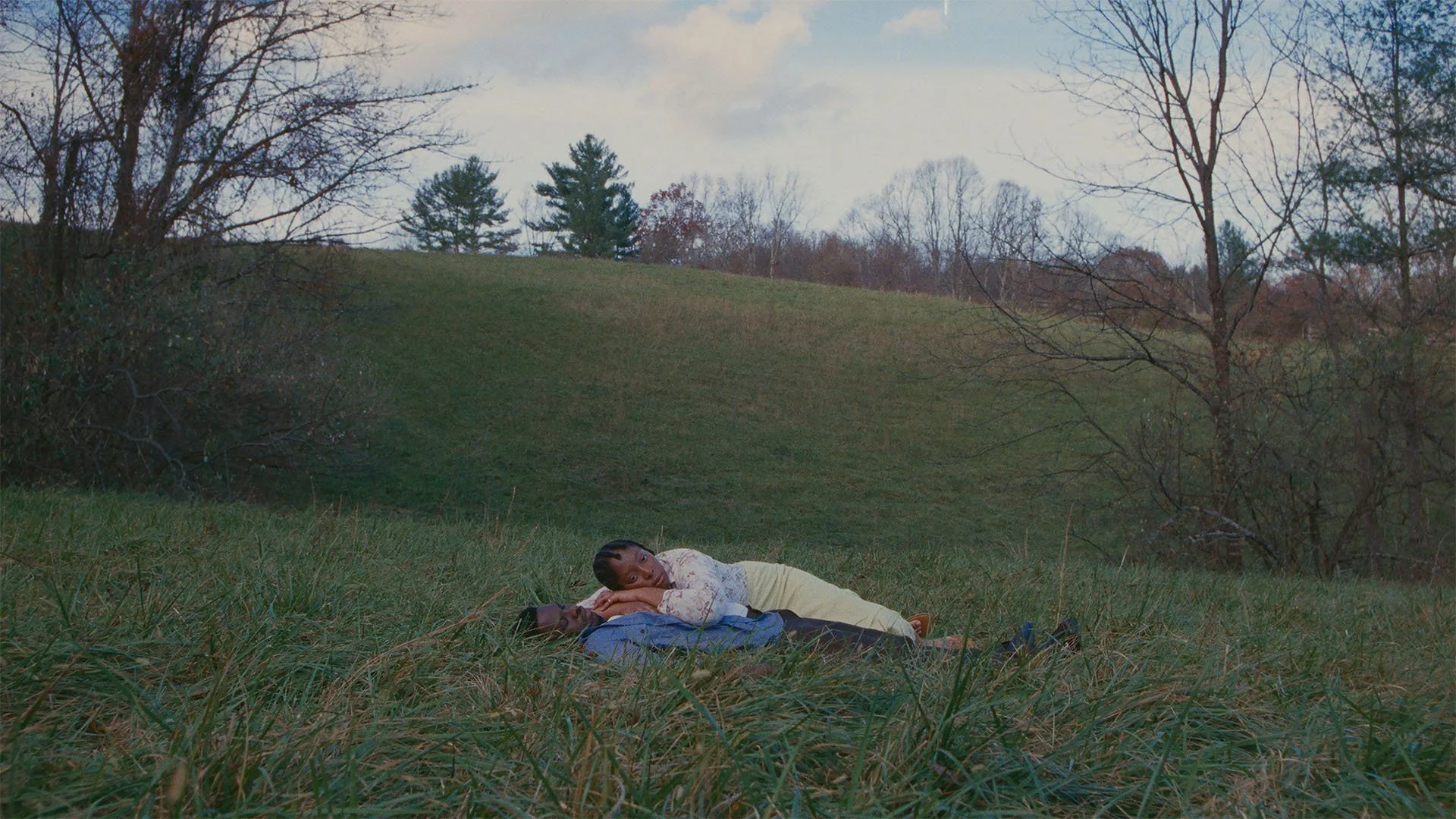
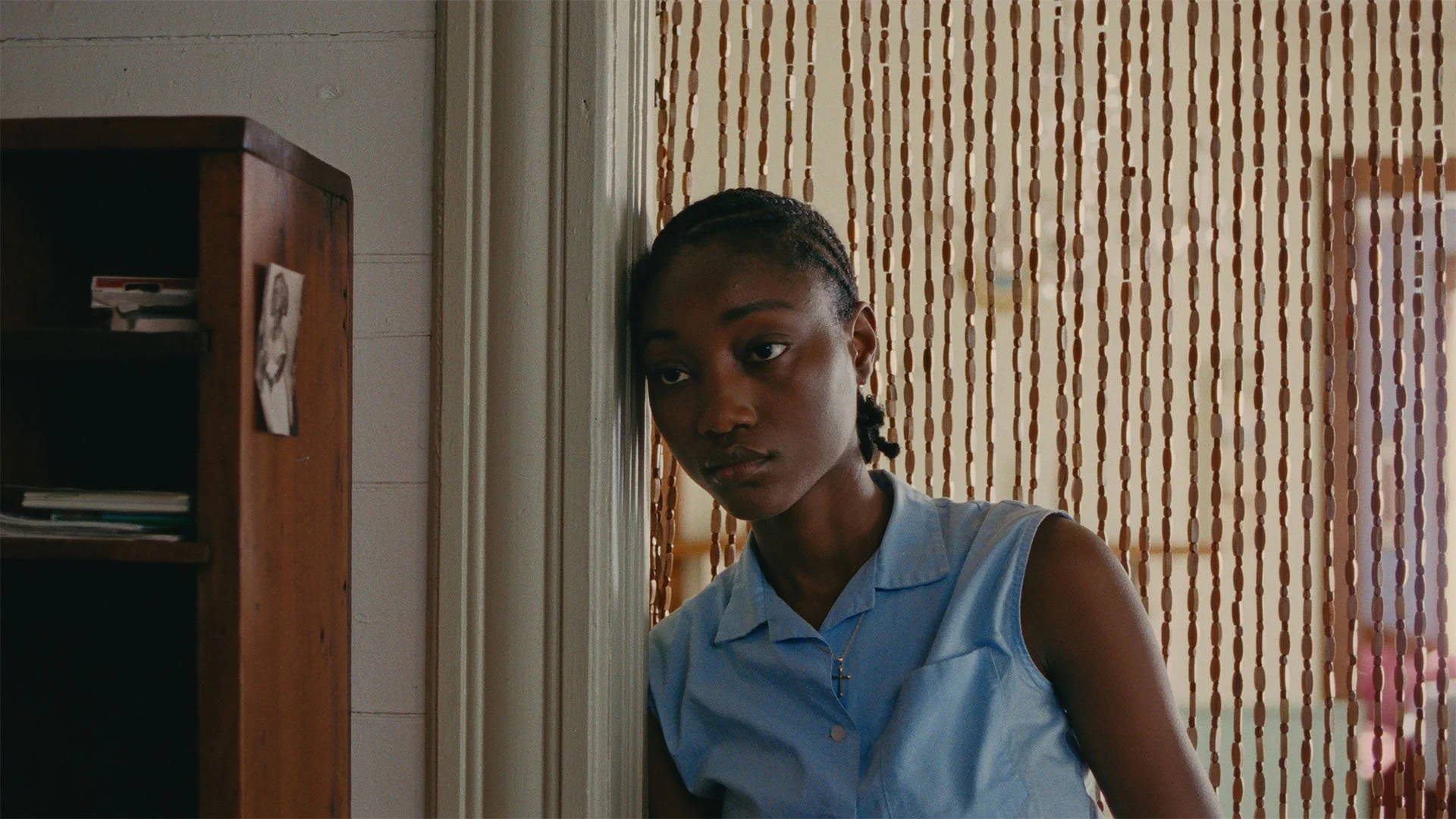
Over the past week of stewing on all the wonderful films I watched, Birdie by Praise Odigie Paige has remained at the front of my mind. Through the peaceful atmosphere of the Virginia countryside, Paige builds a world that carefully balances the hesitant but hopeful nature of finding your place in a new world. Birdie follows a family (Celeste and her daughters, English and Birdie) of Nigerian refugees living in a quiet, convent-owned Virginia country house in 1970 as they wait for word about their father, a soldier, not knowing if he's alive. A stranger (Justus) is brought to live with them, and with him brings an unspoken way to understand life before and after Nigeria's civil war.
Director Praise Odigie Paige immigrated to the U.S. in 2003 and "wanted to explore the wave of African immigration in the late 60's, what it might have felt like for them, mourning this old life while trying to figure themselves out in this really strange place." A very personal story of her own experiences and those who came before her. Birdie is visually stunning, warm, and scenic, cinematically hugging the characters as they live through the unknown. I read that Paige was told to keep her film around 15 minutes, and I'm glad she didn't listen. Some of my favorite parts of Birdie are the prolonged silences, whether to make you feel the uncertainty of waiting for their father or to truly grasp the peace of lying in a field after war, as Justus consistently wanders off to do.
Music is used sparingly and with precision, becoming a quiet way of tracking change in the culture the family moved away from. The two songs featured in the film trace Nigeria's cultural shift before and after the civil war of the 1960s. The cassettes Justus brings with him offer a version of home unfamiliar to a family removed by distance and time. The electric funk of the Formulars Dance Band contrasts with the more traditional sound of the Asaba Youth Orchestra, placing generations and expectations in conversation rather than opposition. Throughout the film, there is a quiet skepticism shared by characters who move through their world as strangers, uncertain of what they belong to, but as the film ends and English walks up a seemingly endless hill, she's ready for the world ahead. "I know nothing of the world and the world knows nothing of me."
2. Blue Heart (Cœur Bleu)
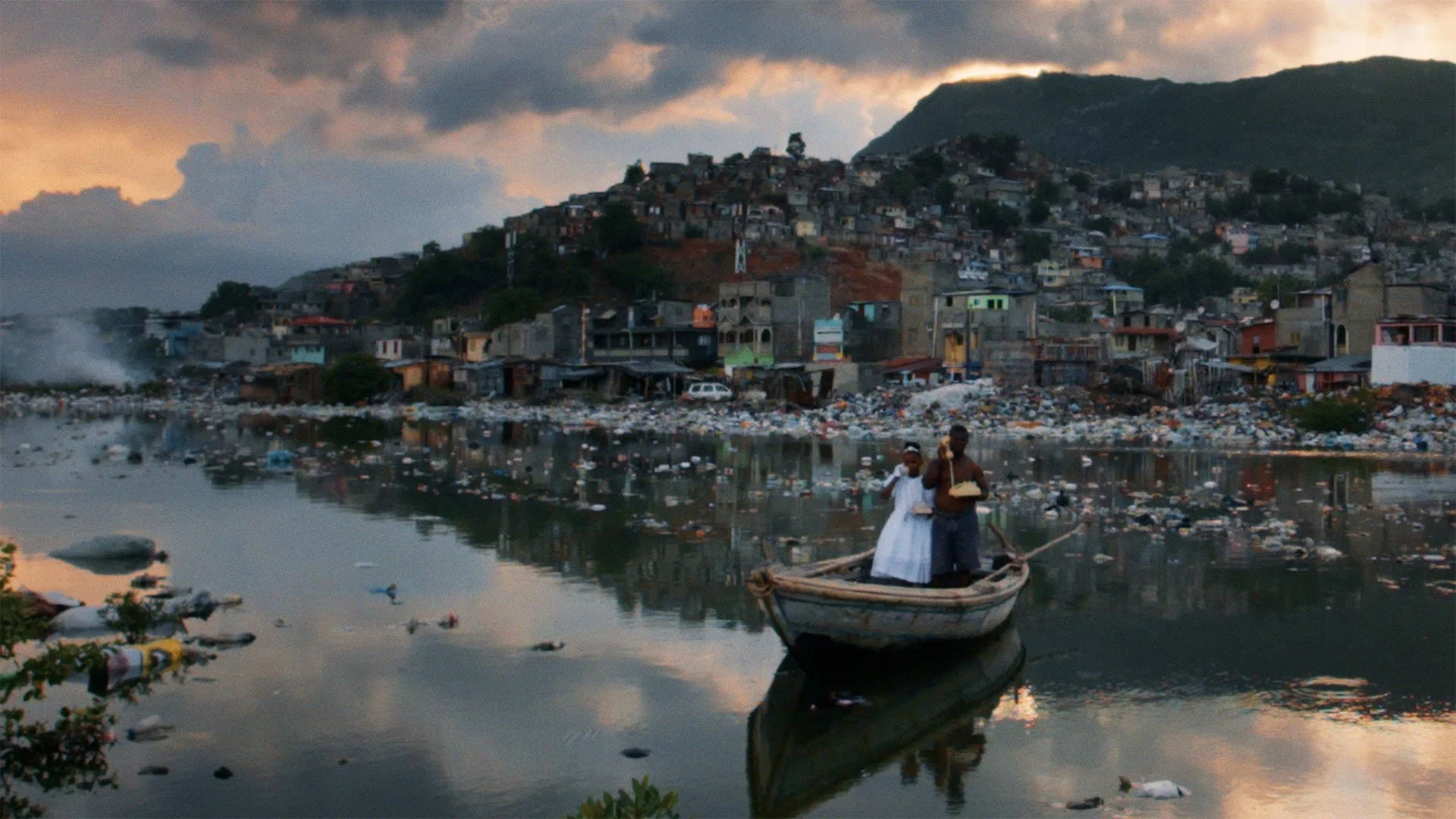
Another film that has been quietly percolating in my memory since viewing, Blue Heart, directed by Samuel Suffren, is the third and final installment in his trilogy of films exploring the perspectives of immigrants or those experiencing a loved one who has left home. Inspired by Suffren's own experiences, both from hearing the stories of his father and his own journey to leave Haiti. In Blue Heart, we live alongside a mother (Marianne) and father (Pétion), awaiting a call from their son, who left in pursuit of the American dream.
From Suffren in an interview, "My films are mainly about elsewhere, about people who leave and don't give any news. We don't know…Has the elsewhere consumed them? For me, exile is above all the absence of the other… a personal journey… These departures are expressions of love that come from the heart. A heart we don't quite understand. For my father, leaving meant encountering the USA. 'The USA is a foretaste of heaven,' my father used to say. Blue Heart is a reference to this phrase of my father's, to the blue of the sky, the blue of dreams, and the beauty of the sky."
Blue Heart is a photographic film, a succession of moving images, and with this, you are
welcomed to sit with the opposing longing of the parents whose son is pursuing his dream. A rotary phone becomes the main character and vessel to bring the son home, but it is only ever used as a receiver for creditors. The toll of waiting falls heavily on Marianne as her body and spirit grow frail. The final scenes include a gradual zoom-out of Marianne and Pétion in a field, Marianne holding onto the phone and Pétion with a goat, the means of survival for the two, and a scene with the son returned for the funeral of his mother, uncertain about the purpose of his own pursuits and aware of the pain it caused.
Like Paige, Suffren is a bright new voice in cinema and one to follow closely. He is currently working on his feature debut, Je m'appelle Nina Shakira.
3. The Liars
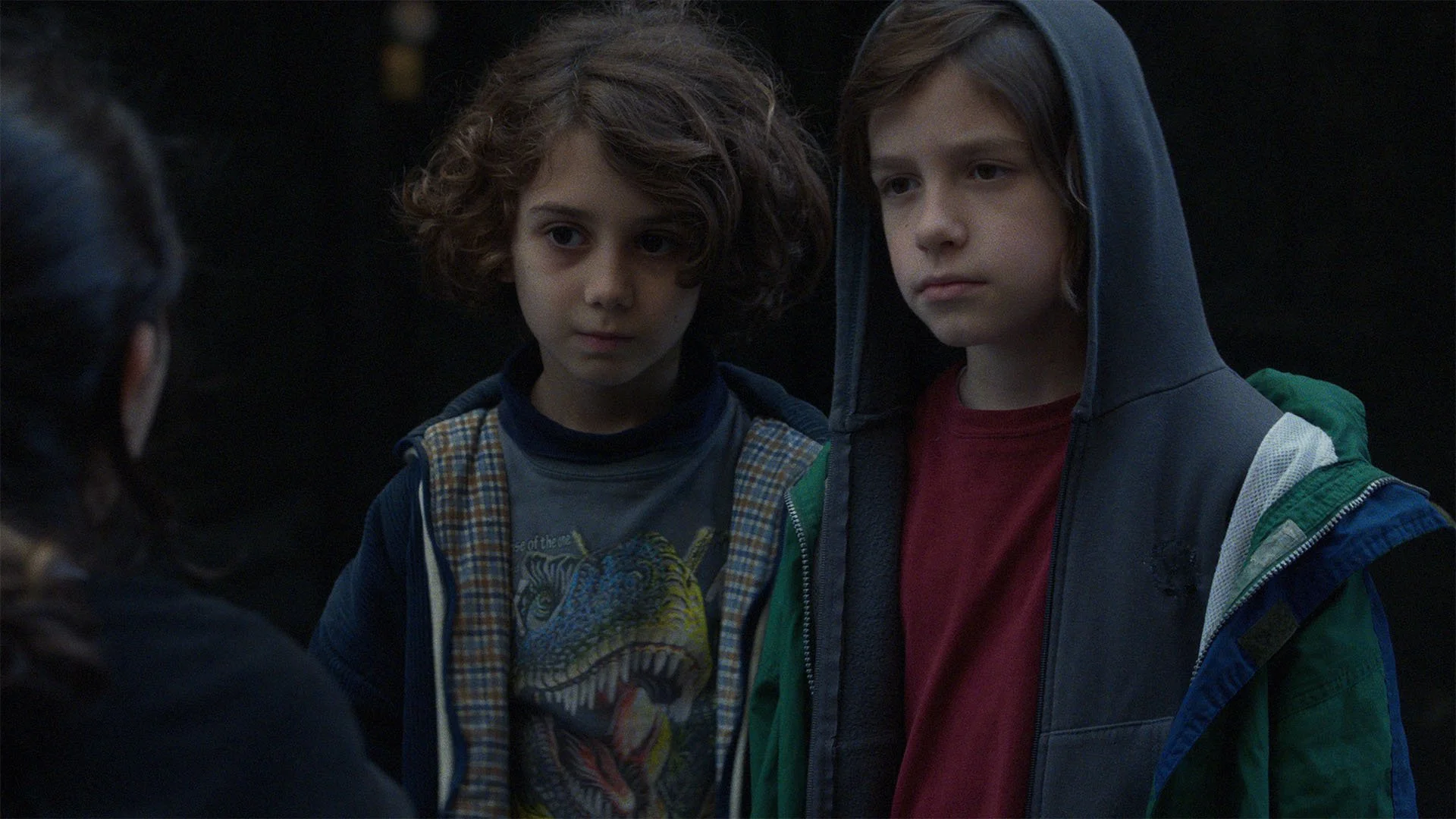
Following two young little dudes in Argentina as they’re thrown out of the house to entertain themselves and get caught up with the law. I watched this one a few times and was blown away by the acting chops of the two leads, Noah Roja (Matías) and Filippo Carrozza (Jaime). To no surprise, The Liars won the Sundance Short Film Special Jury Award for Acting. The Liars is a film where you have to assume it was a joy to shoot. Director Eduardo Costa said that he wanted to make something that made him feel like a kid again. As an adult, the film is slightly stressful since you embody the worry of a parent of the two young characters as they wander about the streets of Buenos Aires, trying to get into a movie they're too young for, but I believed in these boys, and it's probably because at one point in my life, I was doing exactly what they were.
The film was set in the 2000s but also has a timeless nostalgia of harmless delinquency and brave naivety experienced when you are sent out of home and running around with your bros. Without role models, Matías is faced with growing up fast with the arrest of his little brother Jaime, but does not miss a beat on stepping up to the plate and working on fixing it. There is a blind confidence of Matías, youthfully aware of the joy of living without being beaten by the pressures adults were experiencing from the recession at this time, showcasing the heroism an older brother can perform through necessity while coming of age in the process.
4. BUSY BODIES
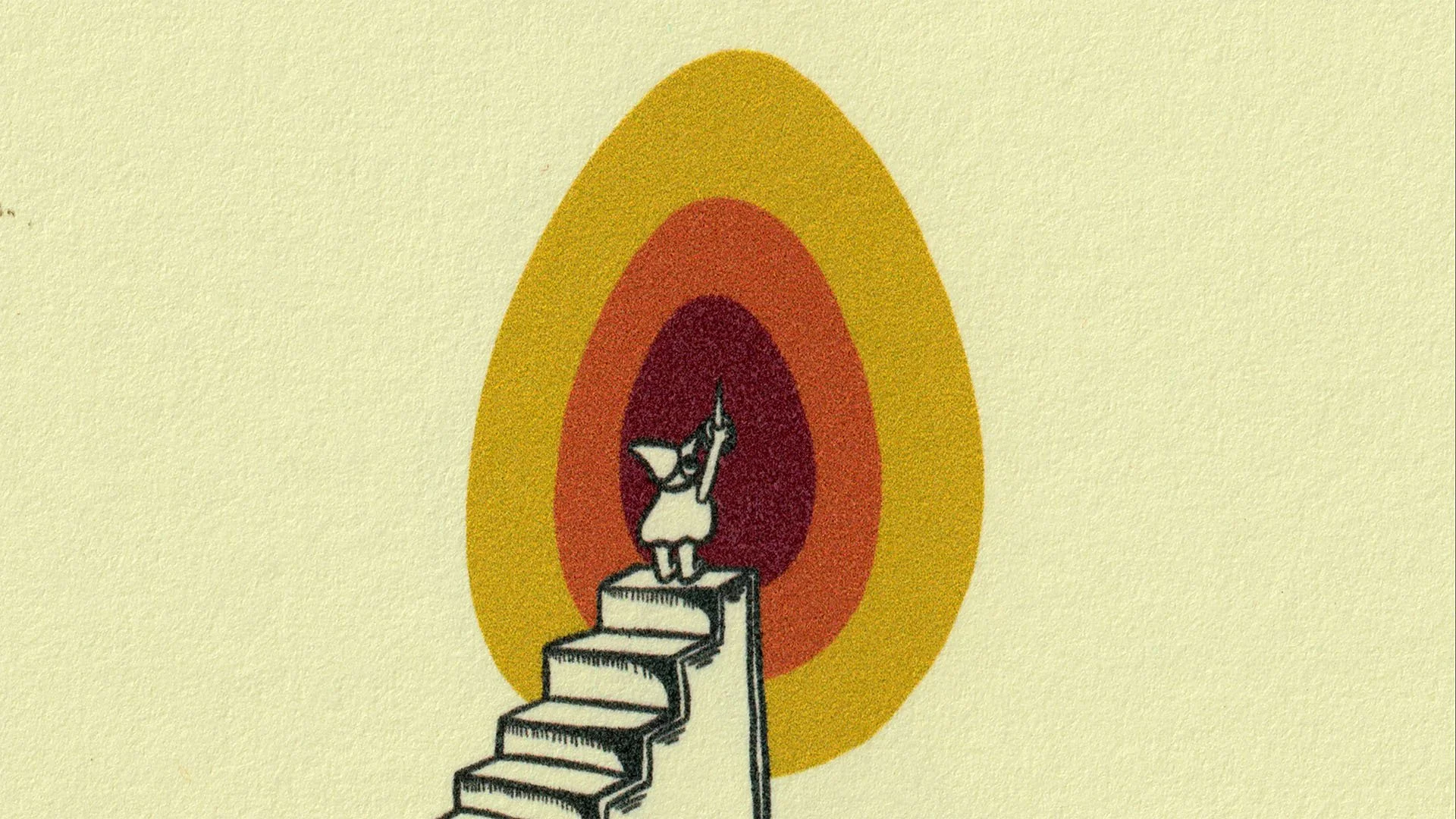
It's very difficult for a film to showcase elements of printmaking and for me to be unbiased, but then you add a bunch of hard at work googly goblins, and it's cemented as one of my all-time favorites.
Designed digitally in director Kate Renshaw-Lewis' bedroom and then printed using a
combination of screen and inkjet printing techniques, Busy Bodies explores the secret world of how mass-produced products are made. A score built from using the Vintage Synthesizerv Museum as a playground and a simple colorful aesthetic born from the limitations of screenprinting. Mass production is horrifying when you think about it for too long, with the waste it produces and the overconsumption it propels, so why not imagine it as something cute? We are all just little goblins handing things off to each other to make the world go round.
Unsurprised to hear Renshaw-Lewis talk about the subject of the film being a response to the actual process of screen printing, an art form requiring monotonous repetition, used as the medium for a film about mass production. From my own experience with screen printing, with each project, there always comes a point where I question doing it this way vs giving in to using a more modern method, but you see from the final product of this film, there is a human connection between the art form and the art. I stand by the fact that there is real value in just copying whatever was being made in the 70s as an easy way to make good art. Whether I like this because I love that era or screen printing is a magic wand in the hand of an artist, I don't care, Busy Bodies is a
master work.
5. AGNES
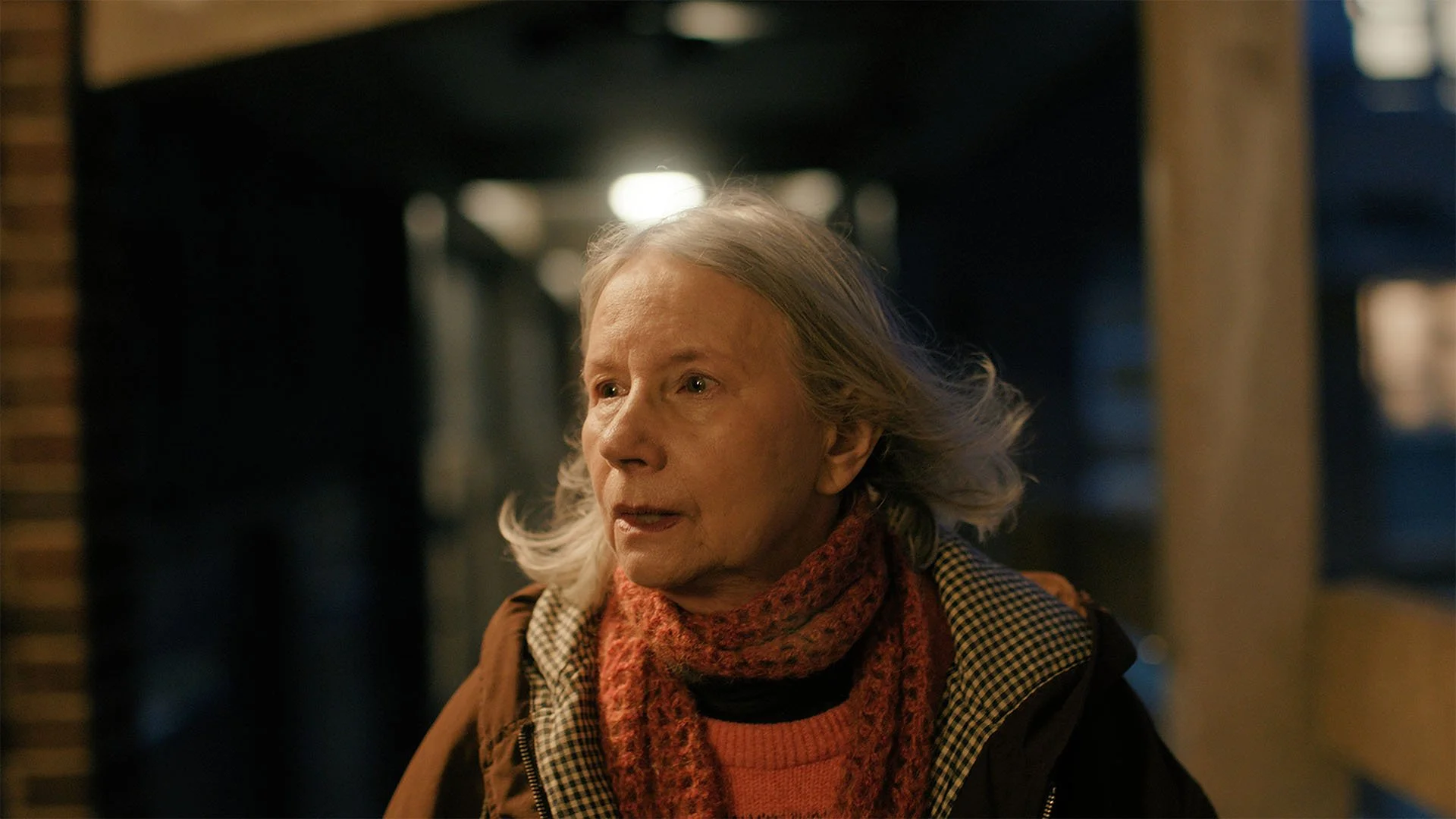
As I think back through my experience watching Agnes, it's weird to see that it was only 11 minutes. The depth this film produces with both Agnes as a character and her experiences is more than many directors succeed at with 90+ minutes.
Agnes opens with a call from her daughter asking Agnes to move and become a live-in
babysitter. You walk with 74-year-old Agnes through her peaceful but lonely life as she seeks but fails to find a fulfilling connection. Yet, it's a testament to hope as a belief born from confidence. Agnes is okay being alone while not having to ignore it. She knows what she wants, and her working up the courage to go clubbing resulted in the most tears I shed during the festival. Agnes is my hero; she inspires me, and I'm proud of her.
Magnificently written and directed by Leah Vlemmiks, you see and feel the passion of this film. My pride for Agnes is Vlemmiks' pride for her own mother, imbuing strength to a character we rarely experience on screen. An important and moving piece of art that I'm thankful to have seen.
Big shouts, Mom.
HONORABLE MENTIONS
Ivar
Anne notices a change in her husband's scent for the worse and spirals into a late-night existential crisis. Directed by Markus Tangre. I need more puppet films in my life. Beautifully expressive. The motorcycle scene may be my favorite of the festival. The shortest I watched at 4 minutes, but still a very sweet and complete story.
How Brief
From director, Kelly Mccormach, "The question that propelled this work was not why a woman would choose to disappear, but rather, why wouldn't she? I wanted to capture all the terror and the glory that comes with accepting this fact." The intense but tight theatricality it opens with is unraveled as the environment of the dream sequence grows to an unmanageable size cementing the intensity of the feelings of a sister being unwelcomed in her family’s old home. One of the best practical set designs I have ever seen..
Crisis Actor
A dark comedy about a woman whose insatiable urge to perform gets her into trouble. A movie about addiction to drama and addiction generally. Probably the one I'm most excited to see as a feature and from interviews it seems like director, Lily Platt, is working on extending it. Sarah Steele is phenomenal.