
LEVITICUS: THE TEXT AND THE TERROR
Adrian Chiarella's debut understands that the real monster has always been the book it's named after.
By MIGUEL MATEO | JUNE 26, 2026
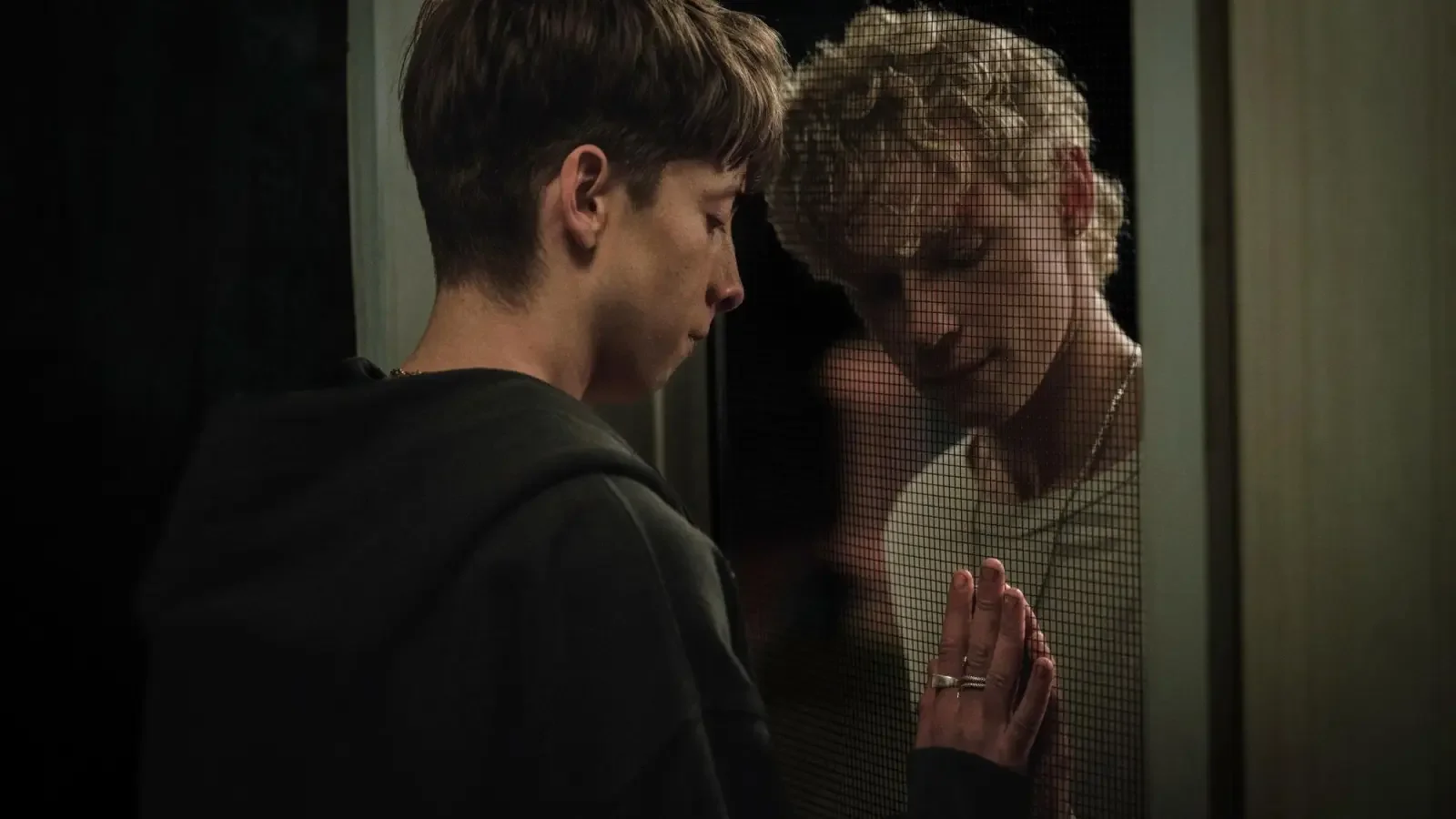
Most people who have heard Leviticus cited against queer people have never read the book. They've heard the passages, maybe two verses pulled from a text that also prohibits shellfish and mixed fabrics, and they've been told those verses mean something permanent and damning. What gets lost in that telling is the context, the translation, the long history of interpretation that slowly turned ritual guidelines into a cudgel. The word that became "abomination" in English was never quite that stark in the original. It meant something closer to ritually unclean, which is a different thing entirely. But somewhere along the way the nuance fell away, and what remained was a handful of sentences used to justify conversion therapy, family rejection, and violence against queer people for generations. The book of Leviticus didn't do that. People did, with the book as cover.
So there's something immediately pointed, even defiant, about Adrian Chiarella naming his debut feature after that text. The title is not incidental. It's a challenge: this is a horror movie, yes, but the horror has a very specific origin, and it predates the film's supernatural conceit by centuries. Chiarella is not borrowing scripture for atmosphere. He's returning it, loaded, to the hands of the people it was used against.
The film drops Naim (Joe Bird) into a small, devoutly evangelical town in regional Victoria after his father's death. He is an outsider in the clearest sense, arriving with grief he has no language for and desire he has been taught not to name. What he finds in Ryan (Stacy Clausen) is someone who already knows both of those feelings and has built a careful life around containing them. Their courtship is quiet and tentative, full of the kind of charged proximity that teenagers navigate when they cannot say out loud what they want. Chiarella gives this early section room to breathe, and the film is better for it. Before the horror arrives, he insists on the reality of what will later be threatened.
What makes Leviticus work is how seriously it takes its romance. It's not using horror as a gimmick or backdrop, it's fully integrated into the emotional core of the story. The relationship at the center feels intimate and genuine, which makes the darker elements feel more invasive when they start to creep in. There's a tenderness here that you don't usually see in this genre, and that contrast between softness and unease is what gives the film its identity. It's not just effective, it's affecting.

The supernatural mechanism Chiarella builds around this romance is genuinely unnerving in concept. When the religious community summons an entity to purge the boys of their desire, the creature takes the form of the person they most want. The result is a monster that can only exist because of love, whose violence is inextricable from longing. It is, in other words, a perfect externalization of what the weaponized text has always done: it turns desire itself into a source of terror. The film earns its horror label, and the scare sequences are well-constructed, but they're not where Leviticus is most alive. The entity's shape-shifting threat works as metaphor more consistently than it does as pure genre delivery, and there are moments where Chiarella's confidence in the horror mechanics doesn't quite match the assurance he shows in everything else.
The more resonant terror is the institutional kind. A scene in which the pastor (Nicholas Hope) leads the boys through a conversion ritual lands harder than anything the supernatural element produces, because it requires no effects. Just a room, a book, and the specific cruelty of certainty. This is where the film's thesis sharpens most clearly. Conversion therapy, which has been practiced and in many places still is practiced against queer youth, exists almost entirely because of the way those passages in Leviticus have been read. Not because of what the text actually says, but because of what powerful people decided it meant. The creature in this film is a manifestation of that decision. It is what happens when a mistranslation becomes policy, becomes doctrine, becomes a room with a preacher and two boys who are told their love is the abomination.
Joe Bird, who first announced himself in Talk to Me, confirms here that he can carry grief and desire simultaneously without one canceling the other out. Clausen matches him, and together they make Naim and Ryan feel like people rather than allegories. Leviticus falls short of greatness mainly because its most powerful moments are the quiet ones, the ones belonging to the coming-of-age story underneath the horror, and the film doesn't always trust them as fully as it should. But when it does, it is exactly as moving as it is frightening. Which is, in the end, precisely the point: the book this film is named after was never the problem. The problem was what we chose to do with it.
Rating: ★★★1/2 out of ★★★★★
Now in theaters
Directed by Adrian Chiarella. With Joe Bird, Stacy Clausen, Mia Wasikowska, Ewen Leslie, Nicholas Hope. 88 minutes. Rated R.