
MARTY SUPREME
An exciting, tightly controlled spiral that had me ready to call it Chalamet’s best, Marty Supreme ultimately left me frustrated that all the chaos never slows down long enough to show us its heart.
By MIGUEL MATEO | DECEMBER 20, 2025
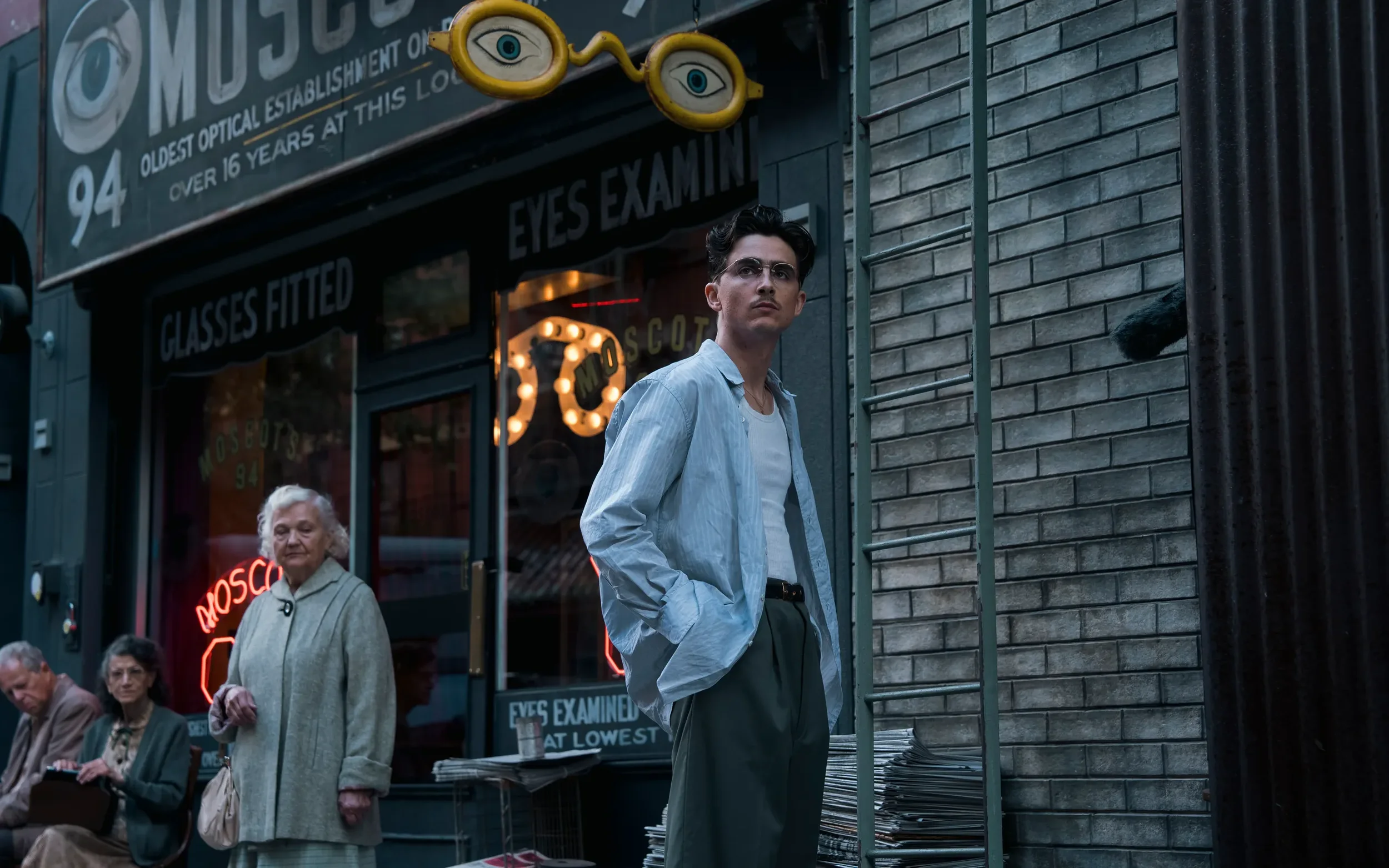
There is a very specific kind of thrill that only a filmmaker like Josh Safdie can deliver. It is the rush of watching a character sprint toward disaster with total conviction, powered by ego, delusion, and a belief that the next gamble will fix everything. Two-thirds into Marty Supreme, I was ready to call it one of the most electrifying films of the year.
Up to that point, the film is pure propulsion. The chaos is orchestrated with an impressive amount of control, even more focused than what we saw in Uncut Gems. Every escalating problem feels engineered to tighten the screws rather than simply overwhelm. I genuinely found myself preparing a rave in my head, ready to admit I was wrong for waiting so long to see it.
And at the center of it all is Timothée Chalamet delivering what, for a long stretch, felt like his best performance. There is something deeply personal in his portrayal of Marty. The performance fits him in the way Leonardo DiCaprio in Catch Me If You Can, or Tom Cruise in Jerry Maguire feel inseparable from their roles. Chalamet inhabits Marty’s bravado, charm, and self-mythologizing with a looseness that feels almost autobiographical. It is charismatic, funny, and a little bit dangerous. I was completely locked in.
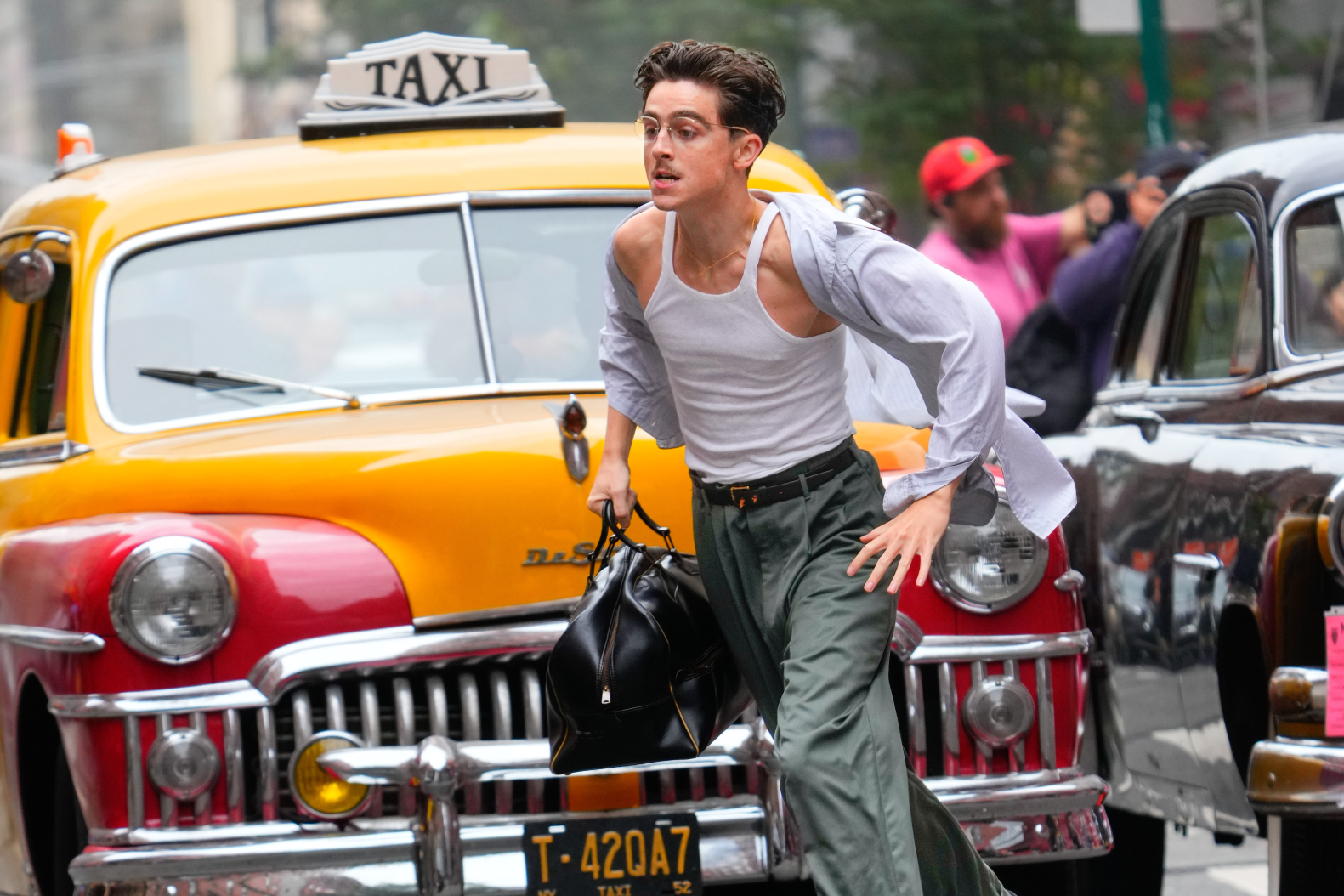
Then its repetitive template becomes too apparent.
Right around the moment I was ready to declare it a masterpiece, the film’s chaos starts to feel less organic and more engineered. The Central Park sequence marks a turning point. Instead of escalation feeling inevitable, it begins to feel redundant. If one more thing happened to Marty, I found myself thinking I might check out. And of course it does. He nearly gets arrested. He gets humiliated. He barely escapes a shootout in Jersey. All seemingly within eight hours of each other. I used to commute between Jersey and New York City, and despite it being decades ago, I still wonder how he got from one place to the next during this run of unfortunate events.
Screenwriting wisdom tells us to force your protagonist into the most uncompromising situations possible. Safdie takes that advice to the extreme. Marty is never allowed to breathe, and in turn, neither are we. The problem is not that the film is relentless. It is that it forgets to pause.
We are used to following unlikable and narcissistic men through their spirals. What makes those journeys compelling is not just watching them fall, but understanding what drives them. We need a crack in the armor or a glimpse of insecurity. A moment where the performance drops and the person underneath surfaces.
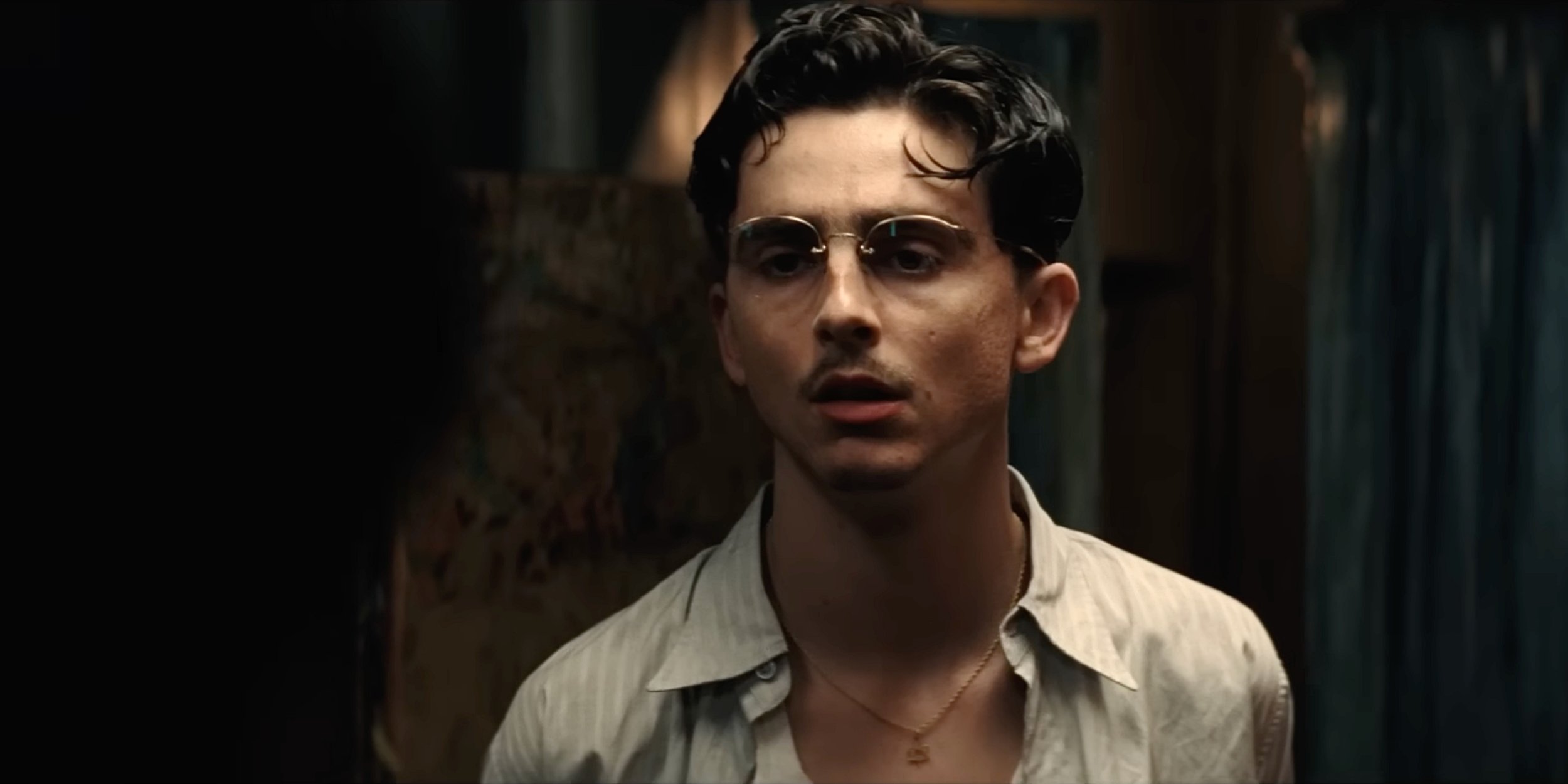
Chalamet has already proven he can access a level of vulnerability. In Call Me by Your Name, he gave us a performance built on silence, longing, and interior ache. The famous final scene works because we are allowed to sit with him, to watch his face process loss in real time. There is no chaos there, just emotional truth.
Marty Supreme hints that this side of him exists, but it never fully commits to it. Safdie keeps Marty in motion at all times. The camera chases him. The plot batters him. The world humiliates him. But we never see him sit with any of it. We never see him alone with his thoughts long enough to understand what he fears, what he regrets, or what he is running from.
I did not need a sentimental monologue. I did not need the film to suddenly soften. I simply needed one sustained moment where the noise quieted, and Marty was required to confront himself. A scene where Chalamet could bring that same raw openness he once did so effortlessly, reminding us that beneath the ego and chaos is a human being who feels.
Without that interior access, Marty becomes more of a spectacle than a person. We are entertained by him, sometimes even impressed by him, but we are rarely invited to feel with him. Because of that, the emotional catharsis in the final two minutes lands softer than Safdie intended. He aimed for this moment to be important, when we finally understand this character and everything that came before finally starts making sense. Yet it feels too little and too late. The basis for that emotional release was never fully laid.
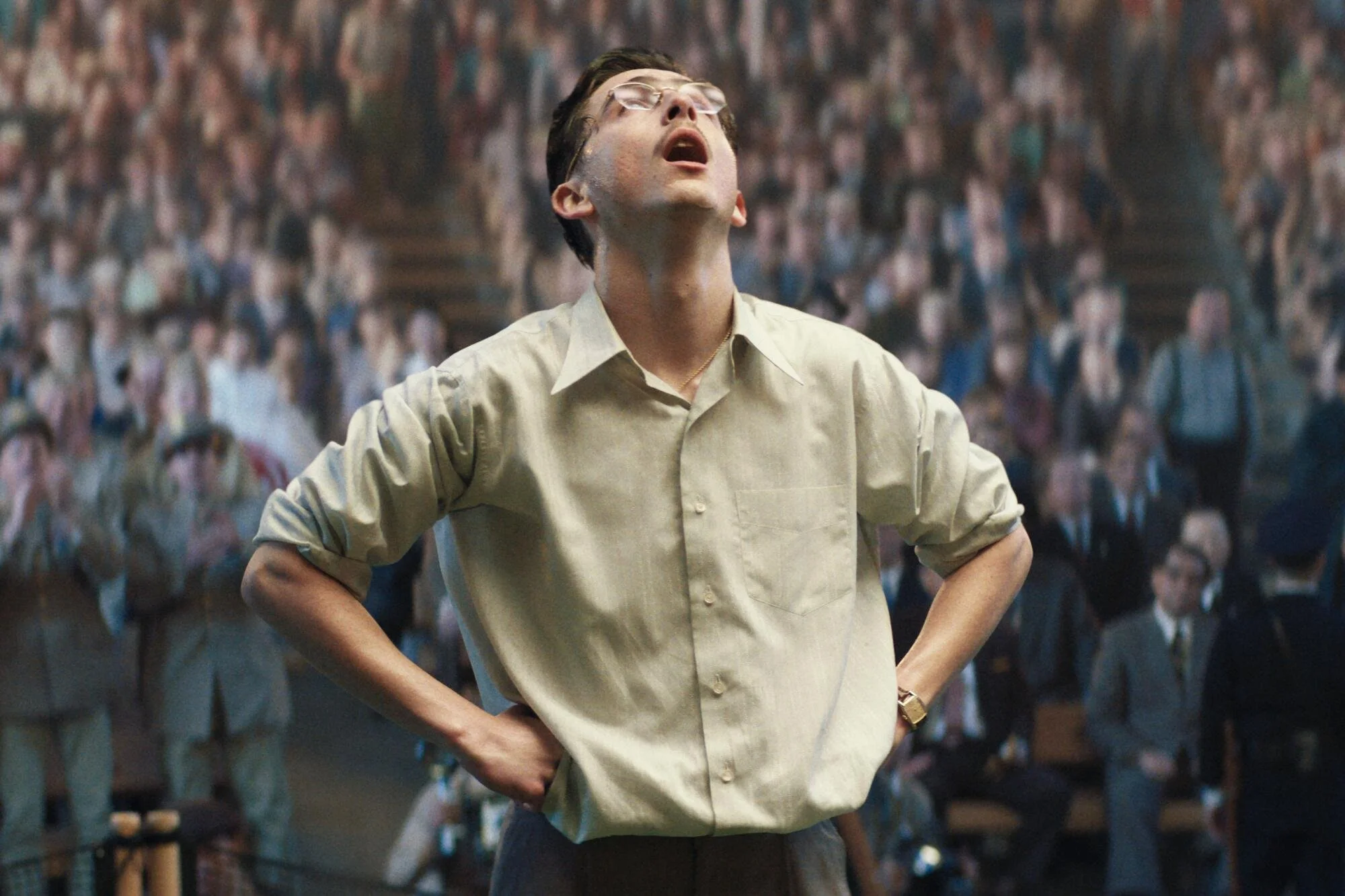
Still, even with that frustration, I cannot deny how captivated I was for most of its runtime. I enjoyed the ride. I was entertained. I admired the craft and the nerve. Safdie absolutely knows how to keep an audience engaged. What he truly understands more than most directors today is momentum.
What he forgets here is heart.
The film is so committed to acceleration that it never slows down long enough to let us deeply connect. For a movie that comes so close to greatness, that absence is what lingers. I did not need Marty to be likable or relatable. I needed him and his actions to be understandable. I needed one calm moment to express vulnerability that would make all the chaos around it make sense.
Marty Supreme is an exhilarating sprint that ALMOST transcends. It proves that Chalamet can anchor a film of this scale and volatility. It proves that Safdie remains one of the most dynamic filmmakers working today. But in its refusal to slow down and let its star expose something fragile, it sacrifices the emotional depth that could have made it unforgettable.