
Happy Hours, Part 1
Katie Holmes reunites with her Dawson's Creek co-star for a New York two-hander that mistakes a famous template for a finished design, and leans on Joshua Jackson to carry what its director cannot.
By MIGUEL MATEO | JUNE 12, 2026
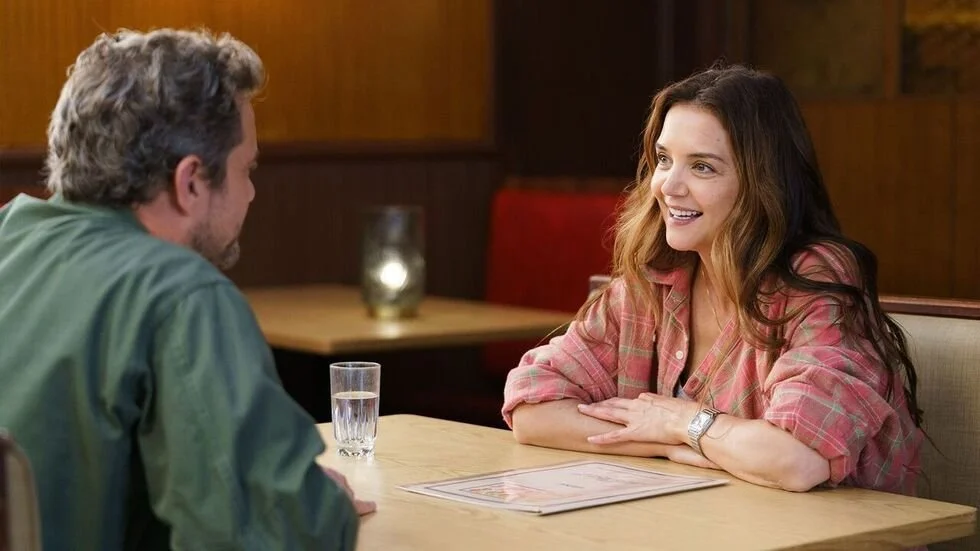
Katie Holmes knows Tribeca. Her pandemic drama Alone Together premiered here in 2022, and she returns now with Happy Hours, Part 1, the fourth feature she has written and directed, and the one most likely to fill a room on name recognition alone. The hook is impossible to miss. Holmes and Joshua Jackson, the Joey and Pacey of a generation that grew up on Dawson's Creek, play high school sweethearts who broke apart young and find each other again in middle age. The title card that closes the film, "Happy Hours, Part One: Love," confirms what the marketing has already promised, that this is the opening movement of a planned trilogy.
That ambition is the film's first miscalculation. By announcing a trilogy about two people circling each other across the years, Holmes invites the one comparison she cannot survive, and the audience makes it within minutes. Richard Linklater spent eighteen real years on Jesse and Céline, and the Before films earned their ache through accumulated specificity, through conversation that felt overheard rather than written. Happy Hours wants that same structure of return and reunion without the patience or the precision that made it land. It reaches for Before Sunset and arrives somewhere closer to a streaming placeholder, the kind of thing that autoplays when you have stopped paying attention.
And yet the film is not the disaster its premise risks, largely because of Jackson. He has aged into the rare kind of leading man who seems to be doing nothing and holding everything, and his ease anchors every scene he occupies. There is a looseness to him, a willingness to let a silence sit, that keeps the picture honest even when the script is straining. Whenever Happy Hours threatens to drift into the generic, he supplies the charisma and the lived-in warmth that the writing keeps forgetting to provide. He is, plainly, the reason to watch.
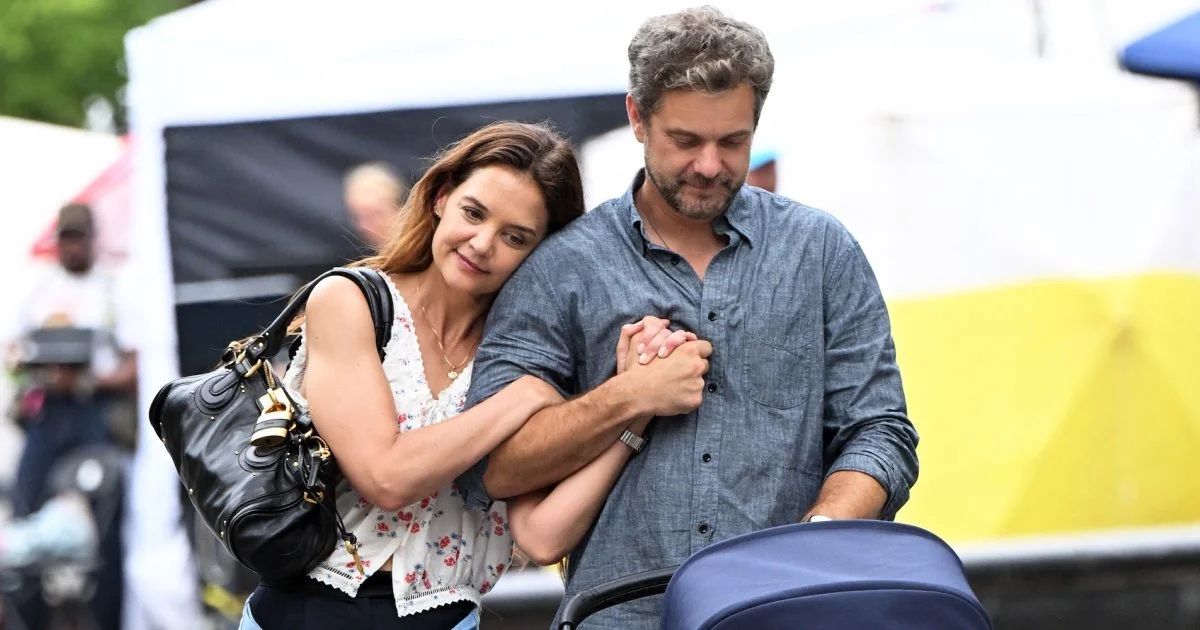
The same generosity is harder to extend to Holmes, who carries three jobs here and is stretched thin across all of them. Her screenplay trades in the kind of dialogue that explains feelings rather than dramatizing them, and the structure leans on flashbacks that are meant to deepen the central romance but instead keep interrupting it. At eighty minutes the film is slight, and even that runtime feels padded by these detours into a past we are told mattered more than the movie ever shows us. As a performer she is grounded and sincere, but sincerity is not the same as presence, and beside Jackson the imbalance becomes its own quiet subject.
What survives is atmosphere. Holmes shoots New York with real affection, and the city does a great deal of the emotional work, from the benches of Washington Square to the soft jazz of original Norah Jones songs threaded through the picture. The supporting bench is stronger than the material deserves, with Mary-Louise Parker and Constance Wu lending texture at the margins, and John P. McGinty bringing a welcome, unforced Deaf presence whose scenes in ASL are among the film's most alive. These are the moments when Happy Hours stops performing tenderness and briefly achieves it.
I left unconvinced that this story needs one film, let alone three, and skeptical that a trilogy can be built on chemistry alone, however genuine that chemistry is. There are charms here, almost all of them wearing Joshua Jackson's face, and they are enough to make the eighty minutes pass pleasantly without ever making the case for the two installments still to come. As a calling card for nostalgia it works, but as the foundation of something larger, it wobbles. I will happily be proven wrong by Part Two. I am not holding my breath.
Rating: ★★1/2 out of ★★★★★
Screened at Tribeca Film Festival