
Mutter Cradles a Monster
Hazar Ergüçlü gives one of the festival's most committed performances in Alphan Eşeli's maternal horror, a film that asks whether a mother's love can outlast the knowledge that what she has birthed is monstrous, and answers with a tenderness that wrecked me.
By MIGUEL MATEO | JUNE 13, 2026
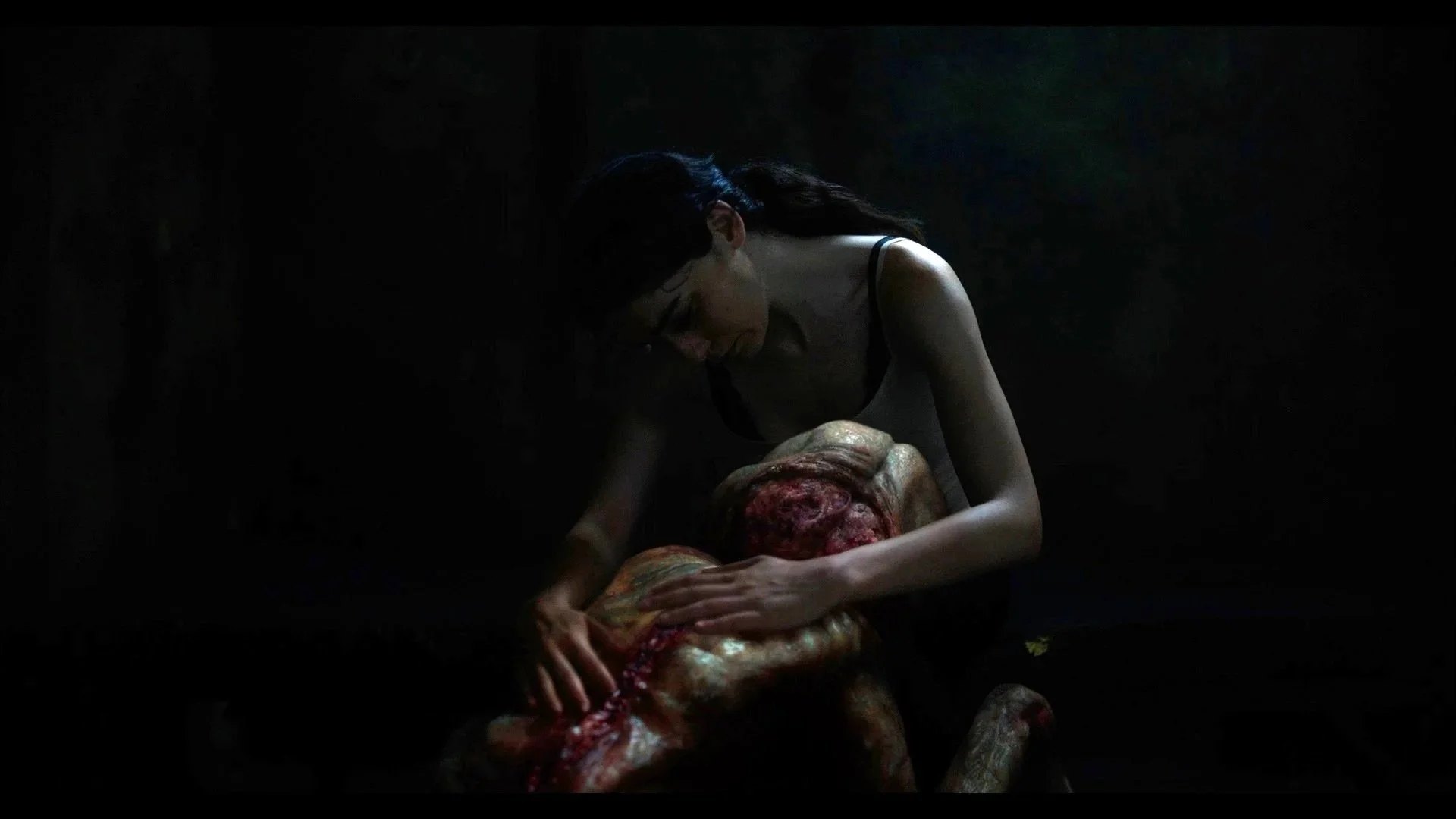
Every Tribeca turns up a handful of films I keep turning over on the walk home, and Mutter: The Diary of a Mother was one of the most intriguing things I saw all week. Alphan Eşeli, who writes and directs, drops us on the fog-drenched Black Sea coast and into the life of a woman who gives birth to a being that defies nature. It would be easy to file this under maternal horror and leave it there, alongside the Good Manners and Huesera comparisons that have trailed it around the circuit, but the film is after something stranger and sadder than a genre exercise.
The premise does the cruelest possible thing with the most ordinary of bonds. Eşeli takes the love a mother feels for her child, the one love we are all told is unconditional and beyond question, and slowly turns it into the thing that hollows her out. As her body and mind come apart, her devotion curdles into a kind of disease, and the film never lets her, or us, off the hook by pretending the two can be pried apart. To watch her care for this child is to watch someone love herself to pieces.
None of it would land without Hazar Ergüçlü, who is, simply, incredible. She carries nearly every frame and never reaches for sympathy she has not earned. There is a physical bravery to the work, but what stayed with me is quieter, the way she lets exhaustion and adoration settle on the same face at the same moment. I believed her as a mother before I believed anything else in the film, which is exactly why the rest of it cut so deep.
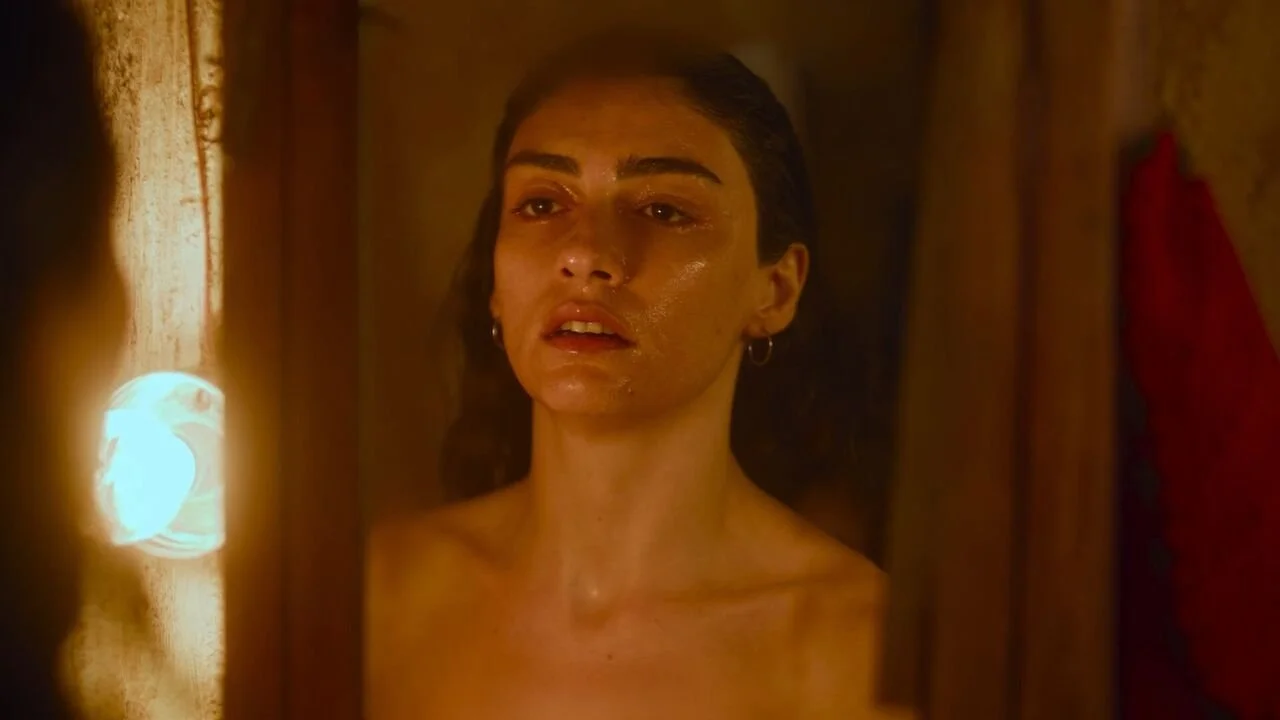
And the rest of it is not pretty. Whatever she has brought into the world is no soft-eyed visitor sent to teach us about wonder. This is not E.T., and Eşeli has no interest in making the creature cuddly or safe. It is unlovely to look at and it kills, and the film refuses to sand down either fact. For most of the running time I watched it the way everyone around her does, with revulsion and dread, certain I knew where my sympathies were meant to sit.
What I did not expect was to be moved on the film's own terms by the end. The closing stretch reframes everything before it as a study in love without conditions, the real and frightening kind rather than the greeting-card version. Eşeli understands that unconditional love is only truly tested at the point where the beloved becomes impossible to defend, and he holds his nerve all the way there.
I will not spoil how it lands, except to say that the final scene asks this mother to let go of the child she carried and made, and that the act of letting go becomes the purest expression of love in the whole picture. I did not think I would have my heart broken this year by a lethal, unlovely thing, and yet there I was. That the film wrung that from me against every instinct telling me to recoil is why it stands as one of the strongest things I caught at Tribeca. I came out wanting to sit with Ergüçlü's face a while longer, which is the highest compliment I know how to pay her.
Rating: ★★★★ out of ★★★★★
Screened at Tribeca Film Festival