
Jay Kelly: A Flawed Ride That Sticks the Landing
Noah Baumbach's meandering meditation on stardom finds its footing only in the final stretch, but George Clooney makes every mile worth it.
By MIGUEL MATEO | DECEMBER 13, 2025
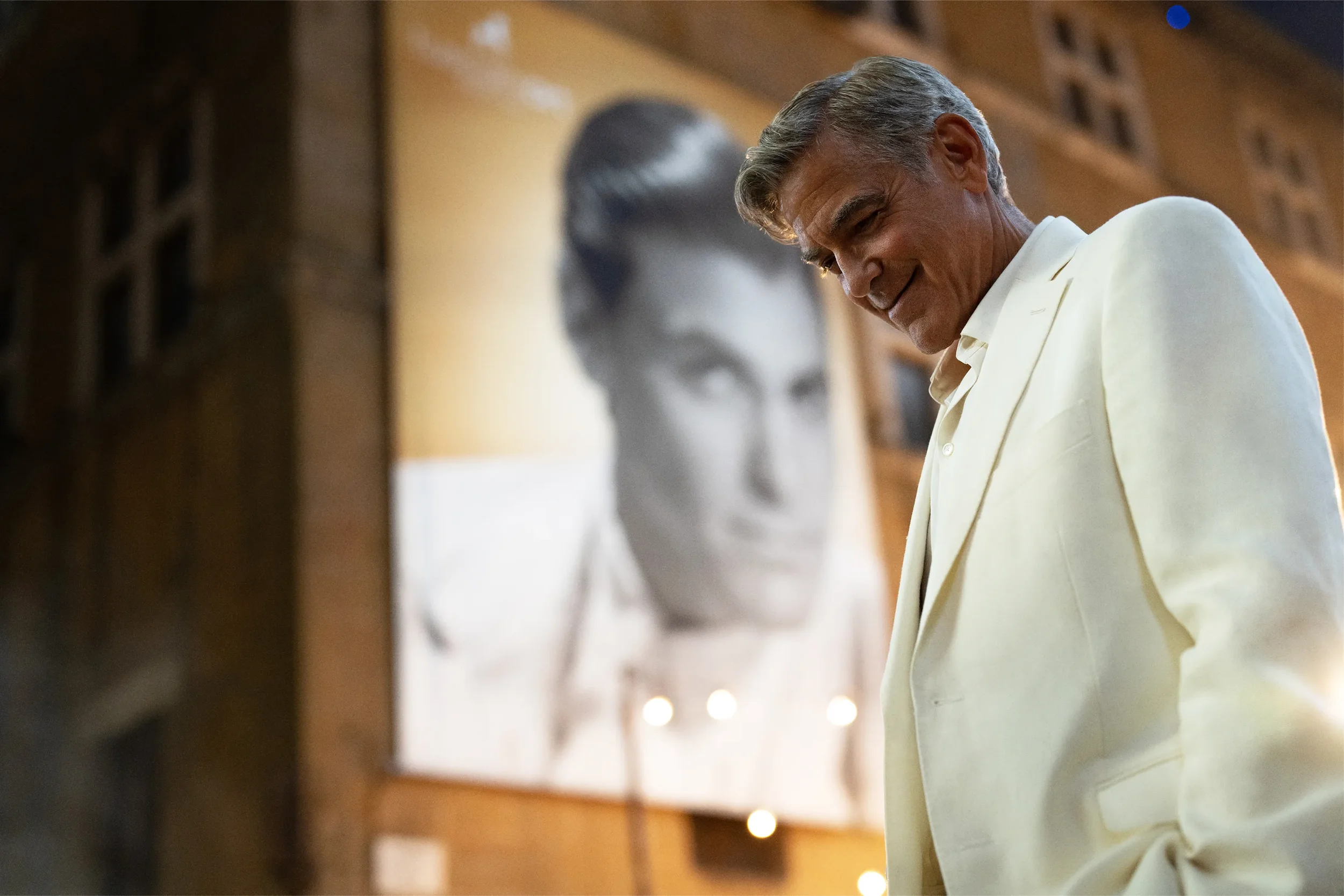
Jay Kelly opens with its title character asking for one more take on a movie set, a small directorial tic that becomes the film's guiding metaphor. Baumbach's meditation on stardom asks whether a life built on infinite retakes can ever earn a real ending. The results are uneven. Long stretches sag under repetitive marital and paternal regret, and the dialogue rarely surprises the way Baumbach's best work does.
The film also suffers by proximity. Joachim Trier's Sentimental Value covers similar ground this year, an artist using their work to process the damage done to the people closest to them, and does it with sharper structure and more earned catharsis. Jay Kelly circles the same wound for over two hours without ever finding as clean an incision.
The clearest evidence of that damage arrives in flashback, when Jay's elder daughter Jessica (Riley Keough) brings him to a therapy session and has the counselor read a letter she wrote as a child about growing up without him. Jay walks out before it finishes. It is a brutal, economical scene, and it does more to justify the film's back half than any of the present-day European detours surrounding it.
That back half is where Jay Kelly finally locks in. At his Lifetime Achievement tribute, Baumbach builds a montage from Clooney's own career footage, and it lands with real weight, a man watching his own myth assembled in real time while the people who paid for it sit just out of reach. Ron (Adam Sandler), his manager of decades, ends their professional arrangement in the same breath he agrees to show up as a friend, a distinction Jay is only now capable of understanding.
None of it works without Clooney, who treats Jay's vanity and self-pity as two sides of the same practiced charm. It is a role built for a man who has spent decades studying what stardom costs, and Clooney plays every inch of that cost without losing the glow that got Jay Kelly into trouble in the first place. Few working actors could make regret look this good.
That cost lands hardest in the final shot. The montage ends, and Jay looks straight into the camera and says, "Can I go again? I'd like another one." It is the same request he made on a film set in the movie's opening scene, except there is no director left to grant it. It is a small, devastating rhyme, and it is the rare ending in Jay Kelly that earns its sentiment outright.
Rating: ★★★ out of ★★★★★