
The Smashing Machine Wants to Break You Open, But Never Finds the Crack
Benny Safdie sets out to dismantle a myth of invincibility and ends up building a hollower one in its place.
By MIGUEL MATEO | OCTOBER 3, 2025
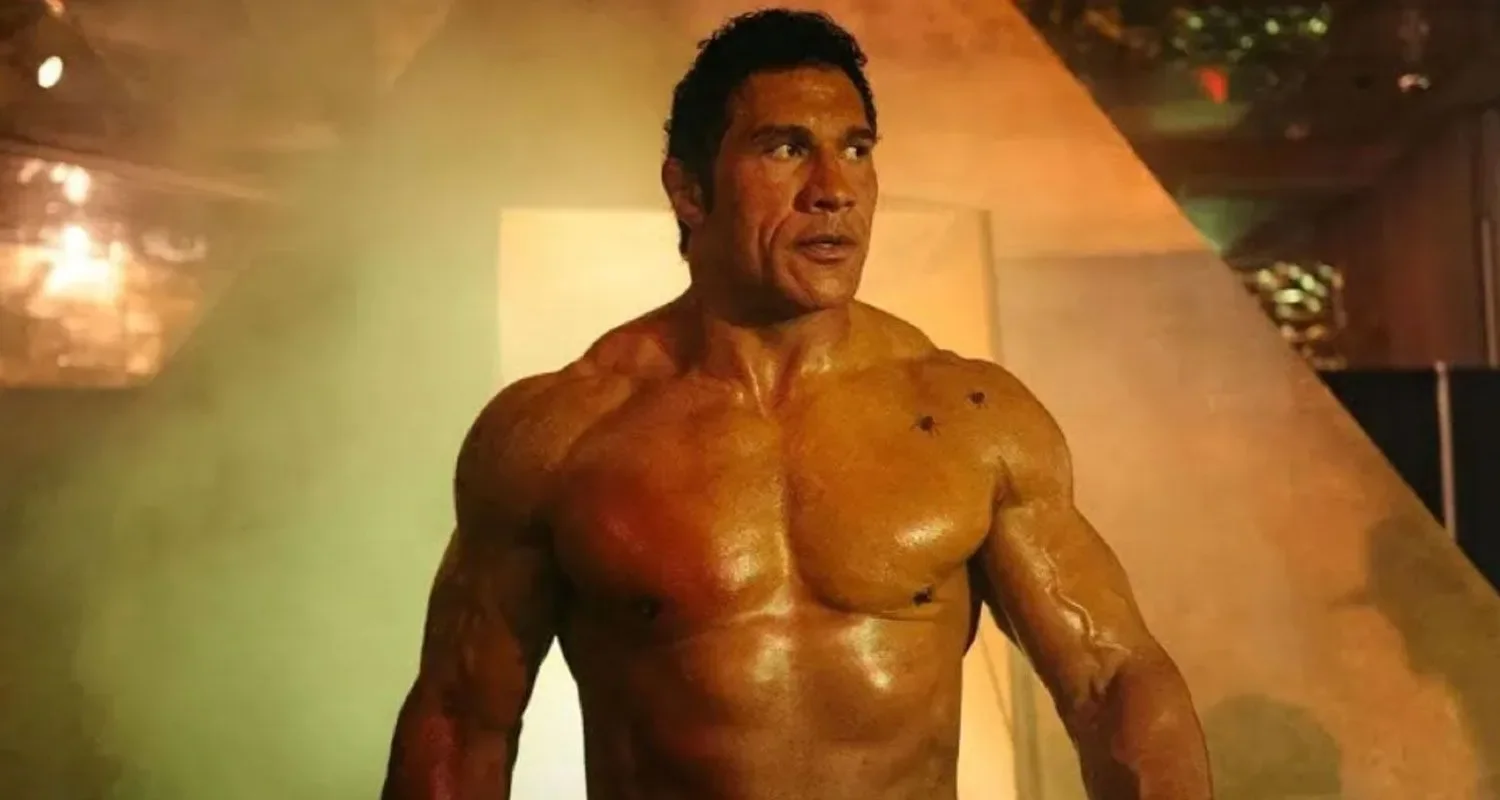
The Smashing Machine arrives with two promises built into its premise: that it will crack open the psychology of a man who cannot lose, and that it will do so through the durable, crowd-pleasing shape of a rags-to-riches sports story. It delivers on neither. Mark Kerr's rise through mixed martial arts in the 1990s has all the raw material for both a character study and an underdog arc, addiction, obsession, the terror of a body that keeps winning until it doesn't, and the film gestures toward that material constantly without ever committing to excavating it.
The character study is the bigger disappointment because it is the film's clearer ambition. Safdie frames Kerr as a man whose entire identity is scaffolded on victory, someone who has never had to build a self that exists apart from winning. That is a rich premise. But the film keeps circling the idea from the outside, cutting between fights and domestic strain without ever letting the audience sit inside Kerr's head long enough to understand what winning is protecting him from. The addiction plotline, which should be the film's emotional engine, plays out in shorthand rather than in accumulated dread. The film wants to be about the unraveling of a myth. Instead, it mostly just restates the myth in different scenes.
It also fails on the simpler, more forgiving level, as pure entertainment. A rags-to-riches sports story doesn't need psychological depth to work. It needs momentum, stakes, and a reason to root. The Smashing Machine has none of the three in real supply. The fight choreography is competent but rarely thrilling, and the domestic scenes meant to raise the stakes outside the cage feel like interruptions rather than counterweights. The film ends up stranded between two modes, too restrained to be cathartic entertainment, too surface-level to be genuine character work.
Dwayne Johnson is serviceable in the lead, and that word is doing real work here. He commits physically, and there are moments where his sheer scale becomes its own kind of vulnerability, a body too big to hide anything in. But the screenplay gives him almost nothing to build an interior life from. Johnson is often left performing the symptoms of a man in crisis, the silences, the flatness, the controlled tremor, without ever being handed the scene that would let him show us the cause. It is a performance searching for a script that isn't there.
Emily Blunt fares worse on paper and better in practice. Her character is thinly conceived, mostly defined in relation to Kerr's spiraling rather than as a person with her own interior weather. And yet Blunt finds textures in the role that the writing never earns, flashes of exhaustion, love curdling into vigilance, the specific fatigue of loving someone you can't save. She is doing more with less than anyone else in the film, and by the film's back half she is close to the only reason to stay locked in.
What's left is a film that seems aware of its own ambitions without ever executing them. It knows it wants to be a character study. It knows it wants to be an underdog story. It never becomes either, and the gap between intention and execution is the most consistent thing about it.
Rating: ★★ out of ★★★★★