
The Mountain, the Moonlight, & the Monologue
Two decades, three movies, and the language I needed before I had any words of my own.
By MIGUEL MATEO | AUGUST 1, 2026
Before I had the words, I had the images. I knew what I was for as long as I can remember, but knowing it and saying it out loud were two different things. Movies became the place where I could confront what I was not ready to say.
Brokeback Mountain came first, when I had accepted a life of hiding. Eleven years later, Moonlight arrived as I was deciding whether to come out. Call Me by Your Name came after I had, when I was learning how to live openly in a relationship I had finally allowed myself to have.
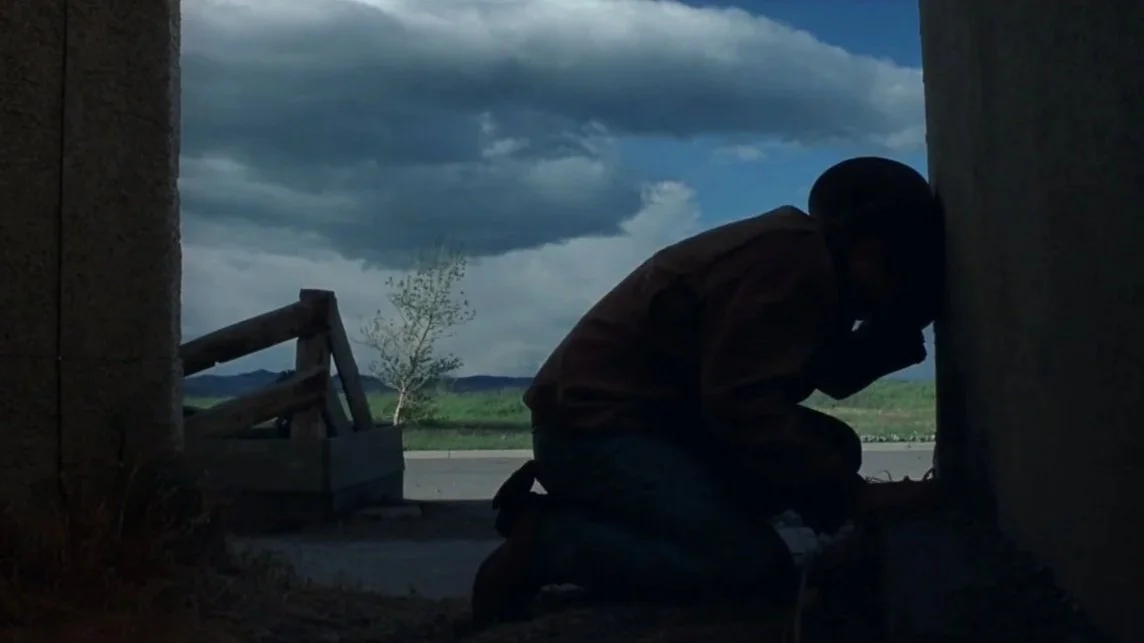
I saw Brokeback Mountain in a movie theater while in college, sitting next to my cousin Chi-Chi (or Christene), who was my movie partner back then. I did not know it then and would not know it for years, but she was sitting beside me carrying the same secret I was. She came out long after I did. We barely talked about the movie afterward beyond how incredible Heath Ledger's performance was, and I have wondered since what she was thinking in the dark next to me.
I had known I was gay for as long as I could remember, but I had already made something like peace with the idea that I would carry that knowledge alone. I came from a progressive Catholic family, one that cared more about whether you were a good person than about following scripture to the letter, and I believed my parents and siblings would still love me. But years of jokes from the straight male friends I grew up around had taught me to laugh along and keep part of myself hidden.
That was why Ennis Del Mar hit me so hard. Brokeback Mountain is a love story, but what devastated me was the way fear governs almost every choice Ennis makes. He loves Jack Twist deeply, yet he keeps choosing the safety of a life that asks him to deny that love. Jack keeps returning to the mountain, hoping each time that Ennis might finally imagine a life with him, while Ennis remains trapped by what he believes will happen if he lets himself want more. By the time he is ready to imagine something different, there is no time left.
I left the theater gutted and did what I often did when something got too close: I filed it away as something devastating that had happened to somebody else.
Not long after, I joined the Navy, partly, in hindsight, to prove to myself and everyone around me exactly how straight I was. While I was in, I dated women, including one relationship I still think about with real regret. I was distant in the way that eventually pushes someone out the door without ever having to be the one who opens it. Years later, I could see the connection to Ennis more clearly, not only in the way he denies himself Jack, but in the collateral damage of that denial. Alma and Cassie both try to love a man who can never give them all of himself.
I recognized that pattern because I had already watched it performed for me on a screen. I just did not yet have the courage to stop repeating it.
Eventually I made myself a promise: I would stop hurting women and choose solitude instead. That felt safer than either the lie or the truth. In Brokeback Mountain, I had already seen where that kind of choice could lead. I just was not ready to believe the warning applied to me.
By the time I moved to Memphis in 2016 for a new job in a city where nobody knew me, I had spent years keeping that promise and convincing myself solitude asked less of me than anything else. Only one person knew I was gay: my best friend from the Navy, whom I had told the year before. He pushed me to use the anonymity of a new city to finally be myself.
I downloaded Grindr first, took my baby steps, and was immediately thrown into the trenches, unprepared for any of it. Tinder felt more survivable. I talked to plenty of men there, but only one conversation had any real spark: a man who met me exactly where I was and gave me the patience I did not know I needed. That man, Michael, is now my husband.
We were a month into dating, still new enough that I introduced him to people as my roommate's friend. The absurd part is that my coworkers had never even laid eyes on my roommate, so "my roommate" would have been a perfectly serviceable lie on its own. Apparently even my cover stories needed a cover story. That night he was angry enough to threaten leaving the bar, and I remember apologizing and telling him the truth, that I simply was not ready yet.

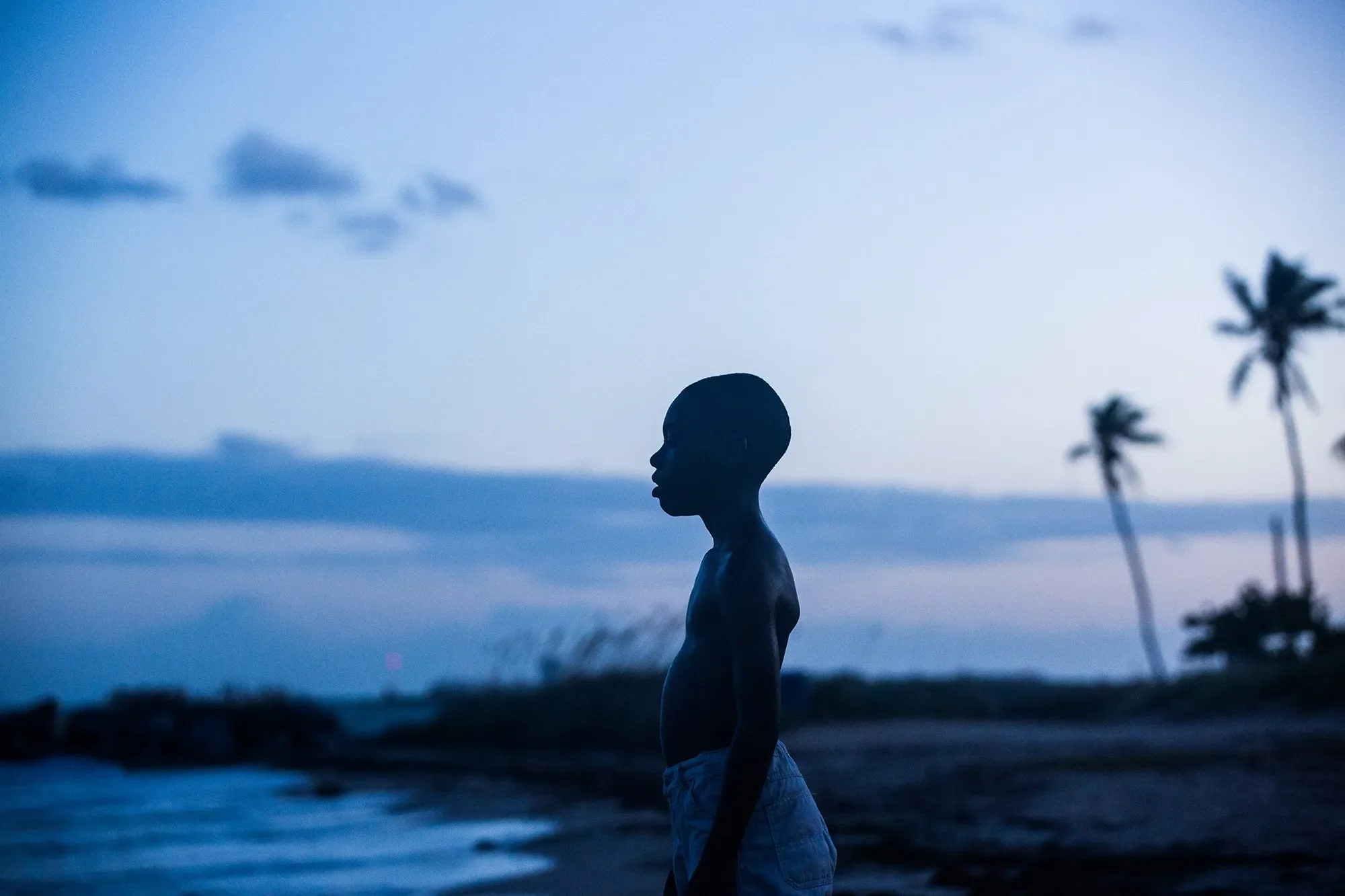
Then we went to see Moonlight. Chiron spends much of the film learning how to survive by concealing the most vulnerable parts of himself. By adulthood, he has constructed a life in which almost no one can get close enough to hurt him, but almost no one can truly know him either. What devastated me was watching how thoroughly fear had shaped the person he became.
Sitting beside Michael, I recognized a version of that instinct in myself. My life looked nothing like Chiron's, but I understood the impulse to keep part of yourself unreachable. I did not want Michael, someone who had become so important to me, to feel like I was hiding him from the people I loved.
It was not until I got home that night that I made the decision: when I went home for the holidays, I would come out. Not because I had stopped being afraid, but because Michael was the first person I had ever loved who loved me back in the same way. I was more afraid of losing that than I was of coming out.
I came out to my siblings and my parents first, which turned out to be the easiest part. Then to every friend I had, and every coworker once I got back to Memphis. I did not lose a single person. If anything, everyone I told seemed to love me more, not less, once they finally got to see the rest of me.
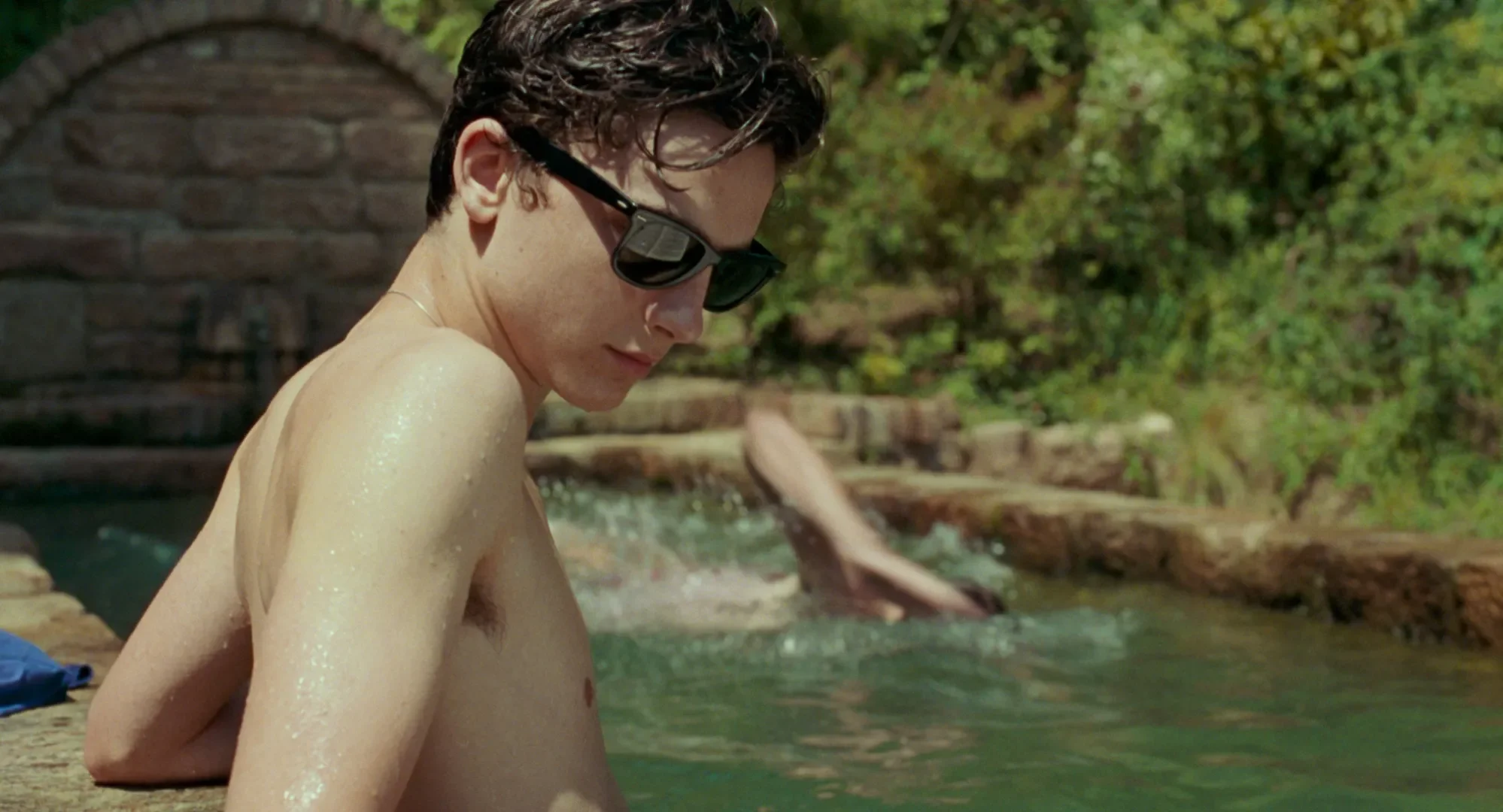
There is a third film that belongs in this story too. By the time Call Me by Your Name found me, about a year after I came out, I was already living openly. What stayed with me most had almost nothing to do with Elio and Oliver themselves. It was a scene near the end, after they have said goodbye, when Elio's father sits his son down by the fire. Michael Stuhlbarg, playing the father, offers his son an idea more than a line, one I have carried with me ever since: that spending a life trying to feel nothing, so that nothing can ever hurt you again, is its own kind of waste, and that whatever we feel, however briefly, deserves to be felt completely, grief included, instead of sealed away out of fear of the grief still to come. That is the only instruction I have ever needed from that film. Not a lesson about hiding, and not a lesson about coming out, but a standing reminder to keep loving all the way once you have finally let yourself start.
None of these three movies wrote my life for me. I did that, slowly, with more support around me than I ever let myself believe I had, from my family, Michael's family, and friends who never made either of us feel like we were carrying any of this alone. I know how rare that is, and I do not take it for granted. But the films gave me something I could not yet give myself: a clearer understanding of the choices I was making and what those choices were costing me.
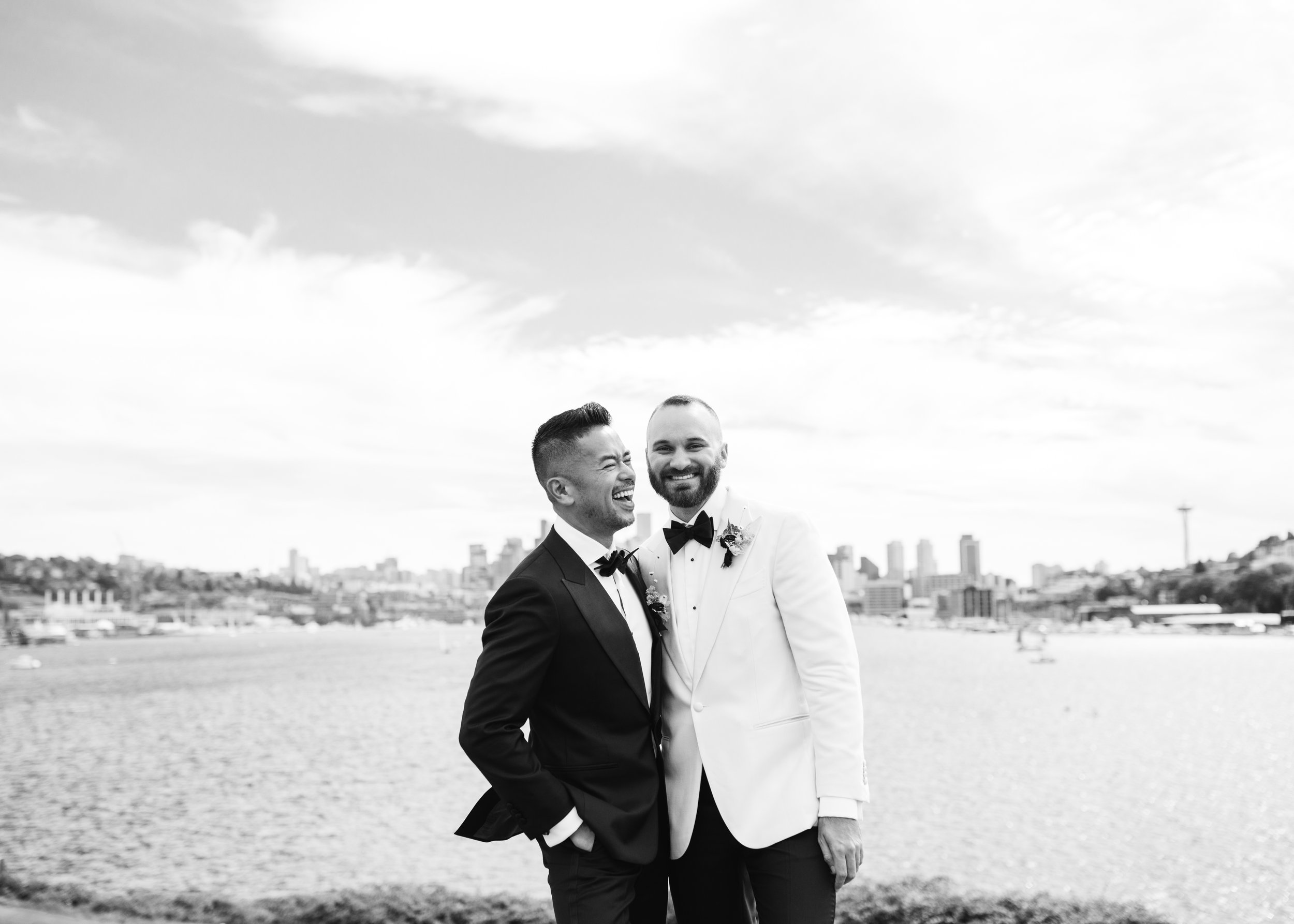
Michael and Miguel’s Wedding Day | September 4, 2021 | Seattle, Washington
Michael and I have been together for ten years now. I think of Elio's father sometimes, of his insistence that a fully felt life, however much it costs, is worth more than a life spent protecting yourself from feeling anything at all. What has changed is how much weight it carries now.
Last year, on the twentieth anniversary of Brokeback Mountain, I took Michael to see it in theaters. Twenty years earlier I had sat in a theater in the dark, watching that same tragedy unfold, gutted and convinced I would spend my whole life the way Ennis did, choosing silence over the person I actually wanted. This time I sat next to Michael instead, and there was nothing left in me that recognized itself in Ennis Del Mar. That is the full circle I did not know I was writing toward, watching the credits roll beside the man I once introduced as my roommate's friend.