
Obsession: A Sinister Reflection of Desire and Control
In Obsession, the horror isn’t the wish, it’s the person who made it. What begins as a story about longing and connection slowly reveals something far more unsettling: a desire not for love, but for control. As Bear’s wish distorts reality, the film forces us to confront a chilling question that lingers beneath every frame: who is truly obsessed?
By NIC ICAZA | MAY 14, 2026
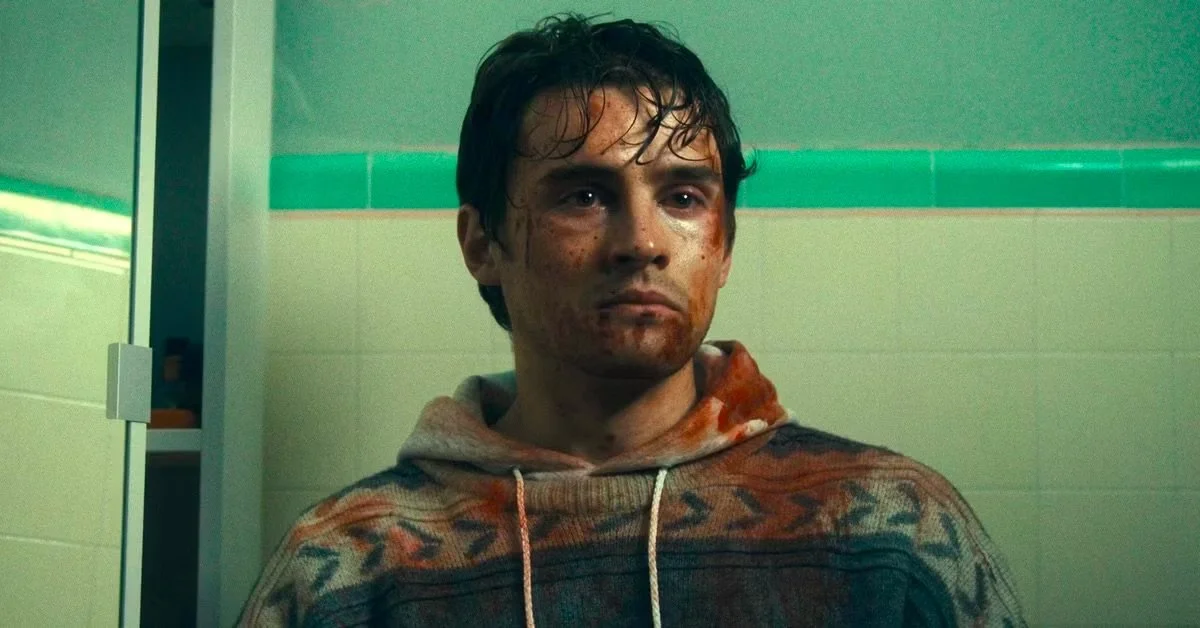
A medicine cabinet that just won’t stay shut. The spark in your lover’s eyes. Rearview mirrors, the glass of an old-school CRT TV screen, and tin foil taped over the front door.
Obsession, Curry Barker’s latest entry into the world of horror, reflects something back to its wary audiences about our deepest desires and how they often get distorted or laughably flipped off axis.
Bear (Michael Johnston) has a thing for his friend and music shop coworker, Nikki (Inde Navarrette), but he struggles to find the right way to tell her or show her. He goes the mystical route, enlisting the help of a One Wish Willow, a magic stick that he picked up at a woo woo type spiritual shop. The One Wish Willow gives its ill-fated wish maker one single, irrevocable wish. As with most wishes and most horror movies, the One Wish Willow carries unintended consequences along with it. Bear wishes for Nikki to love him more than anyone in the world. And while this wish may initially appear to have come true, what unfolds is a fracturing of identity and an unassumingly complex philosophical and moral quandary.
Bear’s wish seemingly sends Nikki, or at least her soul and spirit, into some alternate, hellish dimension. Her body becomes inhabited by a force that’s arguably not so much in love as it is a doting, infantilized pet looking to do whatever it can to please him and to earn his love in return. Bear did just lose his pet cat after it tragically ate some of his prescription pills, so it follows that he’s longing for another companion to fill that void.

If Nikki isn’t really inhabiting her own body, then her loss of autonomy is arguably the scariest thing of all in this film. And not just that loss of control over one’s self, but the almost paradoxical notion that to wish someone else felt or behaved differently is to fundamentally wish they were another person altogether. Since it all stems from his wish, Bear isn’t exactly as much a victim as he is a villain, especially as he learns of and acknowledges the consequences of the wish he made. He doesn’t do much to undo it, or to find a way to reset things. His first instinct is instead to ignore it or choose to deny Nikki’s possession or to even embrace some of the toxicity. When it can no longer be ignored, Bear makes a feeble attempt to ask the One Wish Willow customer service line to first alter the wish before then relenting and asking to cancel it. He’s unsuccessful at accomplishing either. He does later try to buy more One Wish Willows to make a new wish himself or to have someone else make a wish that would cancel his out, but by this point, he’s already caused irreparable harm to Nikki, and himself by extension.
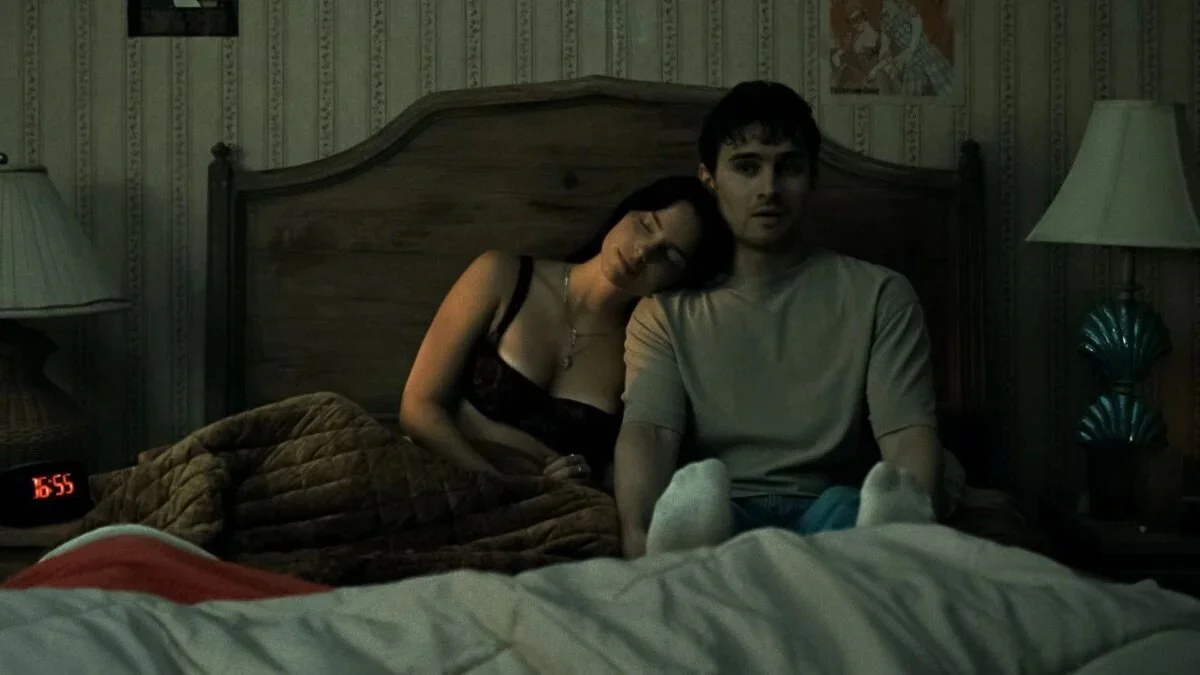
Bear is the one who’s obsessed and his wish only reflected that onto spellbound Nikki. He chooses to keep her trapped and “in love” against her will. One of the more horrifying scenes gives us the voice of Nikki talking in the middle of the night as Bear is attempting to sneak out. She tells Bear that “she’s asleep,” again implying that an entirely separate spirit now occupies her living body. She tells him they haven’t actually “been together.” And she begs him to simply kill her to end the spell. Bear walks out the door.
There is (a)symmetry in the friend group of 4 with Bear, Nikki, Ian (Cooper Tomlinson) and Sarah (Megan Lawless). The friend group quartet acts as both reflections of and foils to one another. Bear is more timid while Ian is more confident. Sarah is more clearly romantically and emotionally interested in Bear, though he is completely infatuated with Nikki.
Nikki ultimately kills Sarah in a most gruesome beating, running up from the driver’s side of her car (aka Sarah’s left). This is a visual callback to a tense moment from nights before, when playing Jenga at Ian’s house party, Bear was meant to kiss the person to his left, which was Sarah until Nikki intervened. Sarah’s last bit of dialogue was even an acknowledgment that she was to his left then at the party and presently to his left in the car, her way of confessing that she loved him.
By the end, when Bear finally accepts the damage his wish has caused, he attempts to take his own life to end the curse, staring at his reflection before reaching into the medicine cabinet to take from the same bottle of pills that killed his pet cat. He sits down next to yet another mirrored cabinet that is slightly ajar. We’re left staring with him at the many literal and symbolic reflections of the aftermath of his obsession. Nikki snaps another One Wish Willow, presumably making her own wish for Bear to love her more than anyone in the world. He retreats from the bathroom and they embrace, but he dies in Nikki’s arms, having already overdosed from his medicine. He falls to the floor, foaming at the mouth in the same way we find his cat at the beginning of the movie. The spell is broken and Nikki retakes control of her body and screams in torment at the aftermath of the destruction brought on by Bear.
Bear isn’t the lonely underdog we think we’re rooting for at the beginning. His character draws viewers in because it can feel relatable to cheer on someone who just wants to find love and connection, especially in the wake of tragic loss or in overcoming the anxieties of professing their love and bracing for possible rejection. Obsession works so well because it wants us to want Bear to succeed. The true horror comes from realizing that Bear isn’t just forlorn or lovesick. He’s fully an embodiment of the fragile male ego. Bear first stakes a claim in Nikki against her will. He keeps her under this trance, even when it’s apparent that he’s driven them both off a cliff. By the end, Bear’s eyes even light up when Sarah begins to confess her feelings for him, because really, his end goal doesn’t seem to actually be finding love, but to exert control and force attachment against everyone’s better wishes. We now see Bear for how distorted he really is.
On its face, Obsession follows many of the same conventions and motifs as its predecessors in a long list of cautionary tales about being careful what you wish for. When you crack it open, this movie does still feel fresh and inventive. It peppers the viewer with cringe moments and discomfort but also pure existential dread through a kaleidoscope.
There’s poetry in how Obsession delivers this haunting message. That our wishes and desires exist not only as some outward manifestation but more so an intrinsic reflection of our own selves. We pass our wants and wishes through a prism and feign shock or ignorance when all of the shades of our desires lying just beneath the surface are refracted out on the other side.