
Women in Horror: FOUR Films That Defined SPRING
Horror has always belonged to women, even when the industry failed to give them full recognition. March 2026 delivered four strikingly different films led by performances that anchored fear, survival, and chaos. From campy cult chaos to psychological dread, these films reminded us why women continue to shape the future of horror.
By MIGUEL MATEO | MARCH 18, 2026
Horror has always belonged to women.
Long before studios started marketing "final girls" as brand identities, actresses were already carrying some of the most iconic films in the genre. From Carrie to Alien, from Rosemary’s Baby to modern landmarks like Hereditary, women have shaped horror through performance, vulnerability, rage, and survival. Yet recognition has often lagged behind the impact. Awards voters ignore the genre. Critics sometimes underestimate the craft. Audiences, meanwhile, never stopped showing up.
March 2026 felt like a reminder of that legacy.
Within just a few weeks, four very different horror films arrived, each led by women who anchored the chaos around them. Some leaned into comedy. Others embraced violence. One delivered something closer to traditional dread. Together, Forbidden Fruits, Ready or Not 2: Here I Come, They Will Kill You, and Undertone created a month that felt unusually rich for the genre, especially for stories built around a female perspective and survival.
Forbidden Fruits
A witchy mall cult comedy that trades polish for pure, unruly nerve.
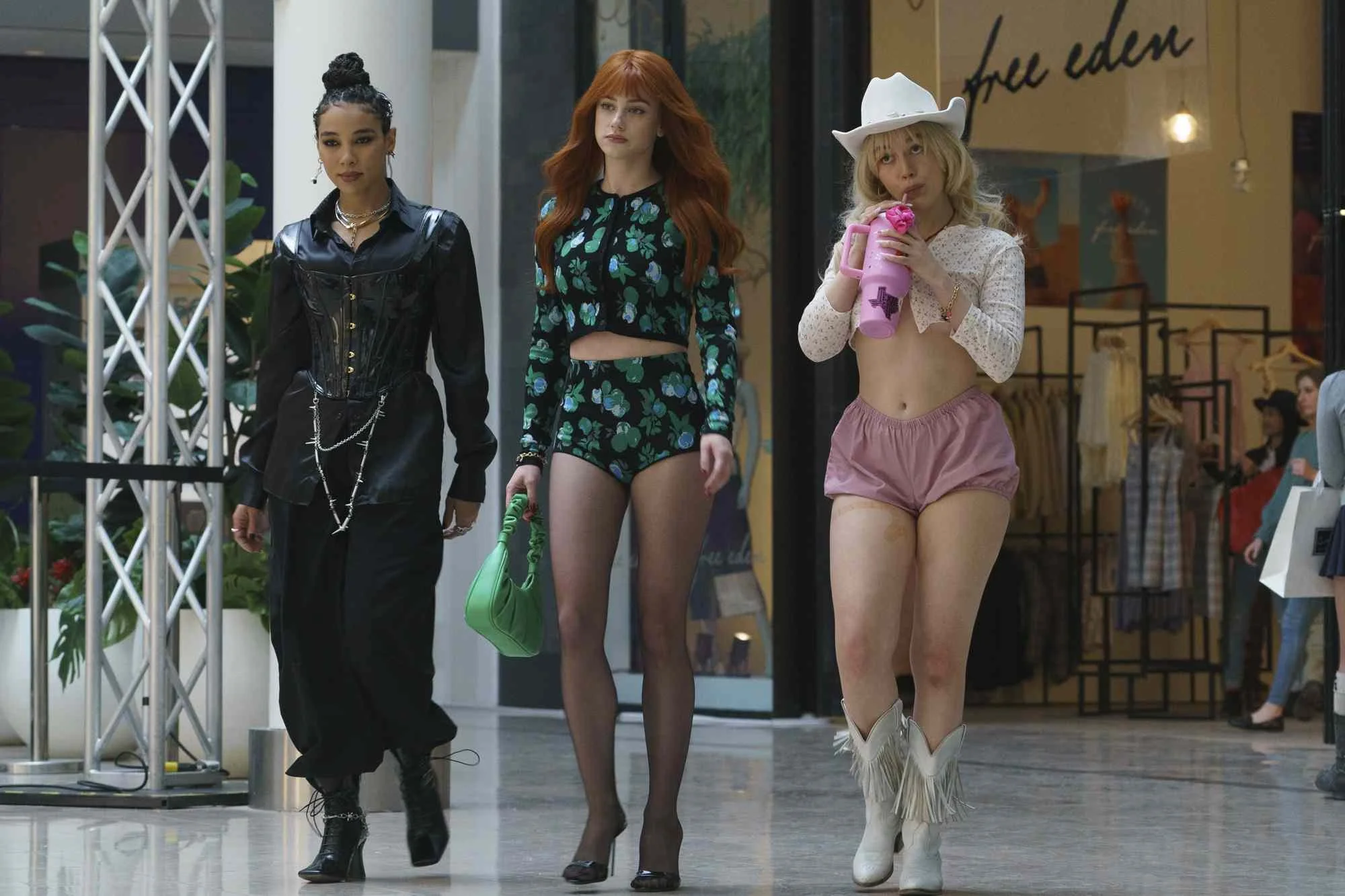
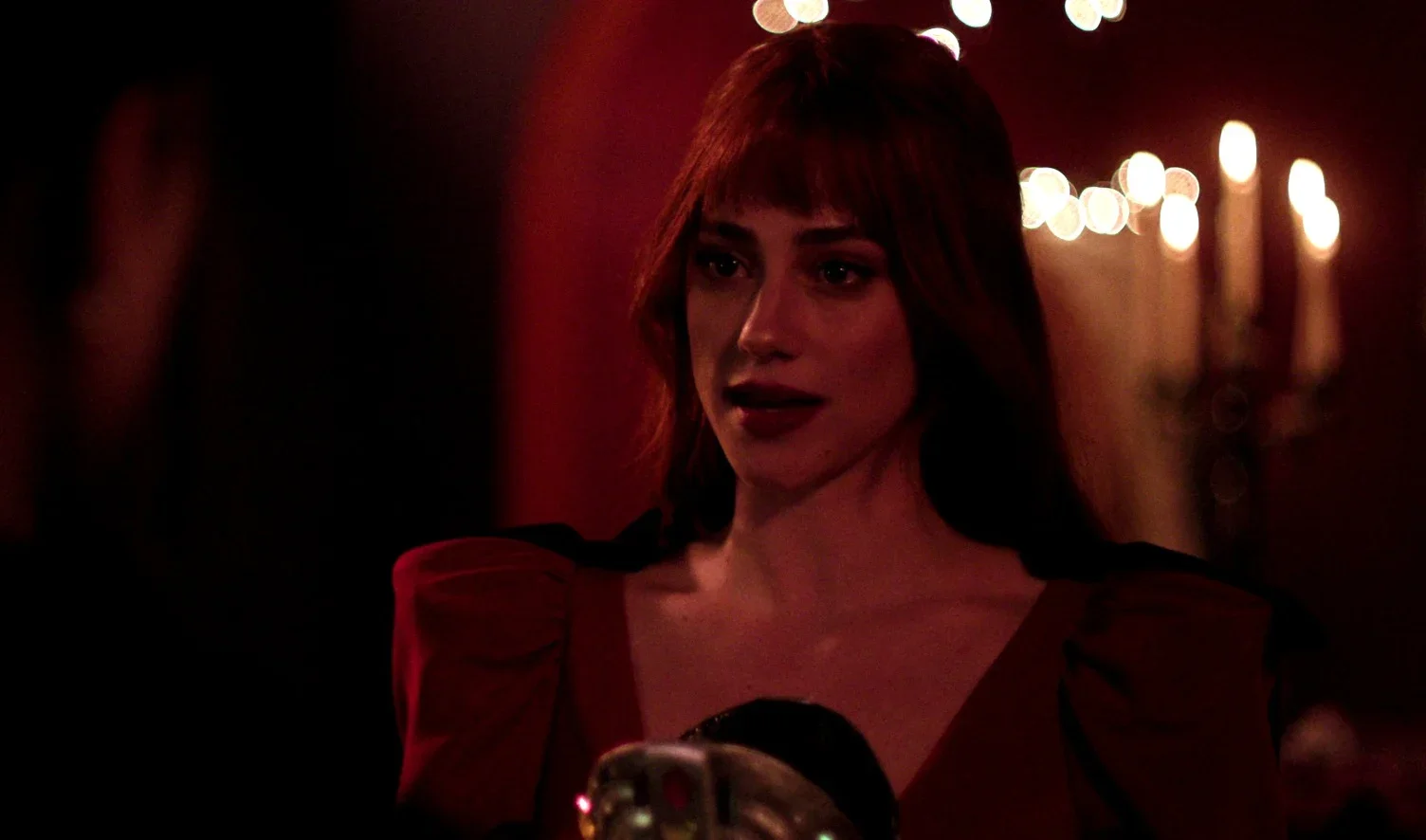
Meredith Alloway's feature debut announces itself fast. Before the opening credits settle, a red-wigged Lili Reinhart has already dumped scalding coffee into the lap of a stranger whose license plate reads like a warning label, and the film never really slows down from there. Adapted from Lily Houghton's 2019 stage play, Forbidden Fruits takes the bones of a workplace mean-girl story and grafts a witch cult onto it, set inside the back room of a trendy mall boutique called Free Eden. It is a premise that could have played as a single joke stretched past its limit. Instead Alloway keeps finding new registers to push it into, some of them working better than others, which is exactly why the film feels alive rather than assembled.
What separates Forbidden Fruits from the glut of recent girlboss-horror hybrids is its refusal to smooth itself out. Tonal whiplash is not a flaw here so much as a method. A scene of genuine menace gives way almost immediately to a bit of cartoonish slapstick, and the film trusts the audience to keep pace rather than holding their hand through the transition. That trust will not pay off for everyone. There is a real version of this movie that plays as undisciplined rather than unruly, and depending on your patience for camp that swings wildly in mood, this could be that version. But cult favorites are rarely built on consensus. They are built on the exact kind of messiness that makes a film feel like it belongs to the people who love it rather than the people who merely respect it.
The cast is doing more shaping of the tone than the script sometimes allows for. Lili Reinhart plays Apple with a control that occasionally curdles into something genuinely unsettling, turning a stock queen-bee archetype into a character whose composure feels like a held breath. Victoria Pedretti, cast against the haunted-house typecasting that has followed her since Hill House and You, gets to be loud and a little unhinged as Cherry, and the change of pace suits her. Alexandra Shipp grounds the group as the astrophysics grad who sees the cracks before anyone else does, while Lola Tung's Pumpkin carries the film's most complicated arc, arriving as an outsider testing the group's sisterhood before the story reveals she has reasons of her own for being there that go well beyond wanting to fit in.
That late reveal is where the film's chaos briefly organizes itself into something sharper, and it is worth sitting with rather than rushing past. Without spoiling the specifics, the twist recontextualizes the entire Free Eden dynamic, turning what looked like a story about performative sisterhood into something closer to a story about inheritance and vengeance dressed up in retail glitter. It is the rare late-film pivot that makes you want to rewatch the first act rather than resent it.
Emma Chamberlain, making her acting debut, mostly survives the transition from internet personality to ensemble player, though her line readings occasionally sit a beat outside the rhythm the rest of the cast has locked into. It is a minor drag on scenes that otherwise move with real velocity. Gabrielle Union, in a smaller supporting role, gets less to chew on than her presence in the marketing might suggest, which feels like the one place the film underuses its cast rather than overloading it.
By the time Forbidden Fruits reaches its bloodier stretch, it has earned the right to go for broke, and it does. This is not a tidy film, and it does not want to be one. It wants to be discovered at midnight, argued about the next morning, and rewatched for the scenes that seemed too strange to be intentional the first time around. That is precisely the profile of a movie that outlives its opening weekend.
Ready or Not 2: Here I Come
Seven years later, Radio Silence sends its final girl back into the game, and this time she's not hiding.
Horror sequels have a well-earned reputation for diminishing returns, especially when the original worked as a self-contained joke the way 2019's Ready or Not did. That film's pleasures were tied to a single wedding night, a single mansion, a single family of aristocrats playing a satanic game of hide-and-seek with the wrong bride. A sequel risked either repeating that formula until it went stale or abandoning it so completely that nothing carried over except the star. Radio Silence, the directing duo behind the original, threads that needle by picking up literally seconds after the first film ended, with Grace still bloody on the mansion's front steps, and then escalating the stakes into something bigger without losing the character work that made the first film more than a gimmick.
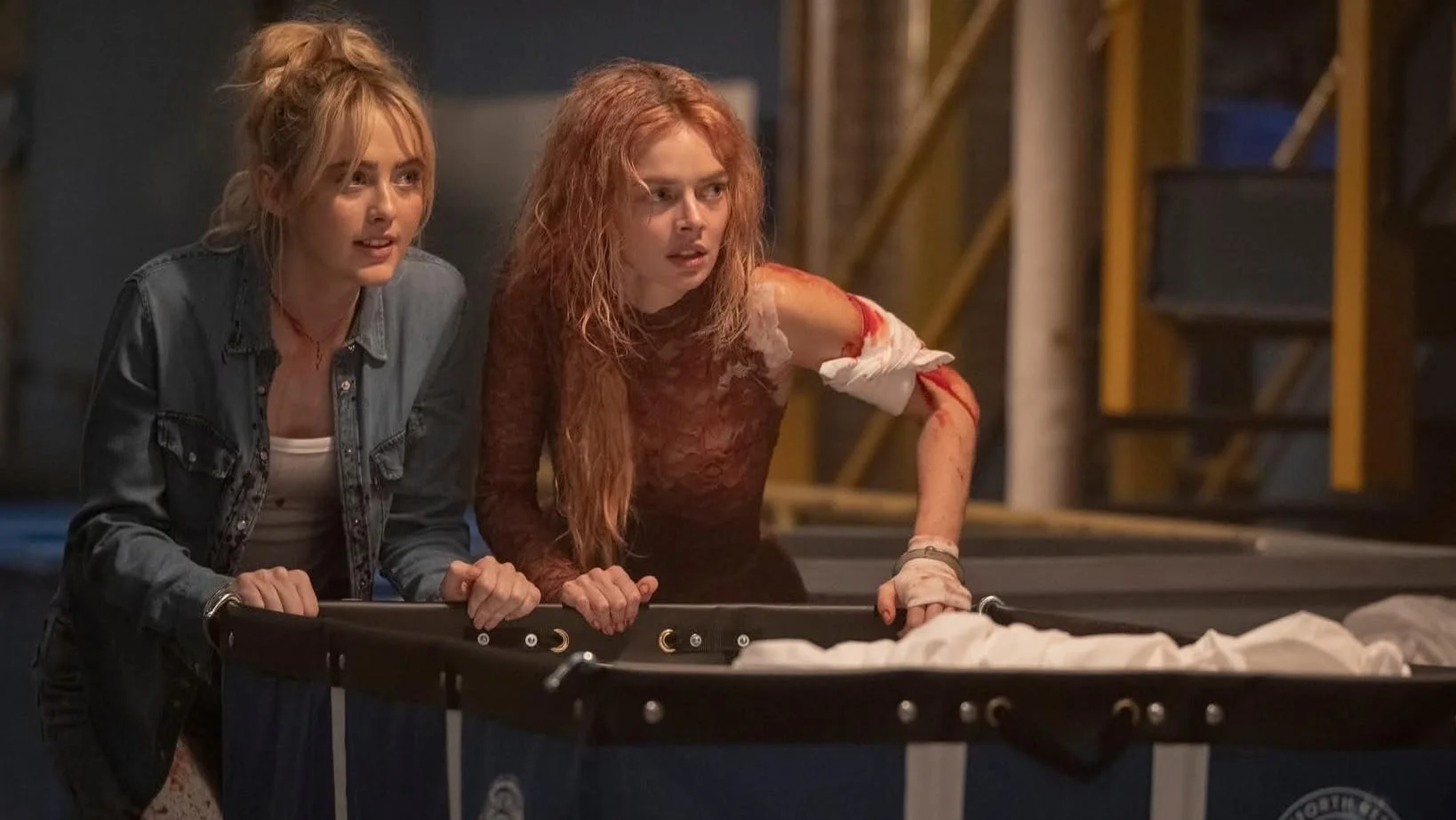
The smartest choice the film makes is refusing to reset Grace back to square one. She is no longer a woman blindsided by violence she does not understand. She has already survived one impossible night, and that survival has changed her posture entirely. Samara Weaving plays that shift with real precision, trading the panicked improvisation of the first film for something colder and more deliberate. Watching her move through this new nightmare feels less like watching someone try to escape and more like watching someone calculate the fastest way through. That distinction matters. It is the difference between a character who happens to survive and a character who has learned how to make survival a skill.
Kathryn Newton's Faith, introduced as Grace's estranged sister, gives the film a second engine, and the sibling dynamic between them does real work establishing why Grace is willing to fight for someone other than herself this time. Sarah Michelle Gellar, cast as the sequel's version of the venomous in-law matriarch, understands exactly the register this material needs, delivering menace with a kind of bored patrician cruelty that never tips into camp even as the film around her gets increasingly absurd. David Cronenberg's presence is a genuine curiosity, more texture than performance, but it fits a film that has always treated its wealthy antagonists as a rogues' gallery of grotesques.
The premise expansion, four rival families competing for a throne rather than one family running a single game, gives the back half of the film a scale the original never attempted, and mostly that scale pays off. Set pieces are staged with a clarity that a lot of modern horror sequels lose the moment they start chasing bigger spectacle, and the found-family violence at the film's core keeps the mayhem from feeling weightless. There is also a sharper vein of humor running through the carnage this time, less panicked screwball and more confident deadpan, which suits a lead character who has stopped being surprised by how far rich people will go to protect their inheritance.
It does not entirely dodge the trap of sequel bloat, and a few competing factions get less development than the concept promises, leaving some of the family rivalries feeling more like scorecards than characters. But as a continuation of Grace's story rather than a rehash of it, Ready or Not 2: Here I Come earns its title. She is not running toward safety anymore. She is running toward the fight, and the film is smart enough to let that be the point.
They Will Kill You
A satanic penthouse cult meets its match in a housekeeper who refuses to play victim.
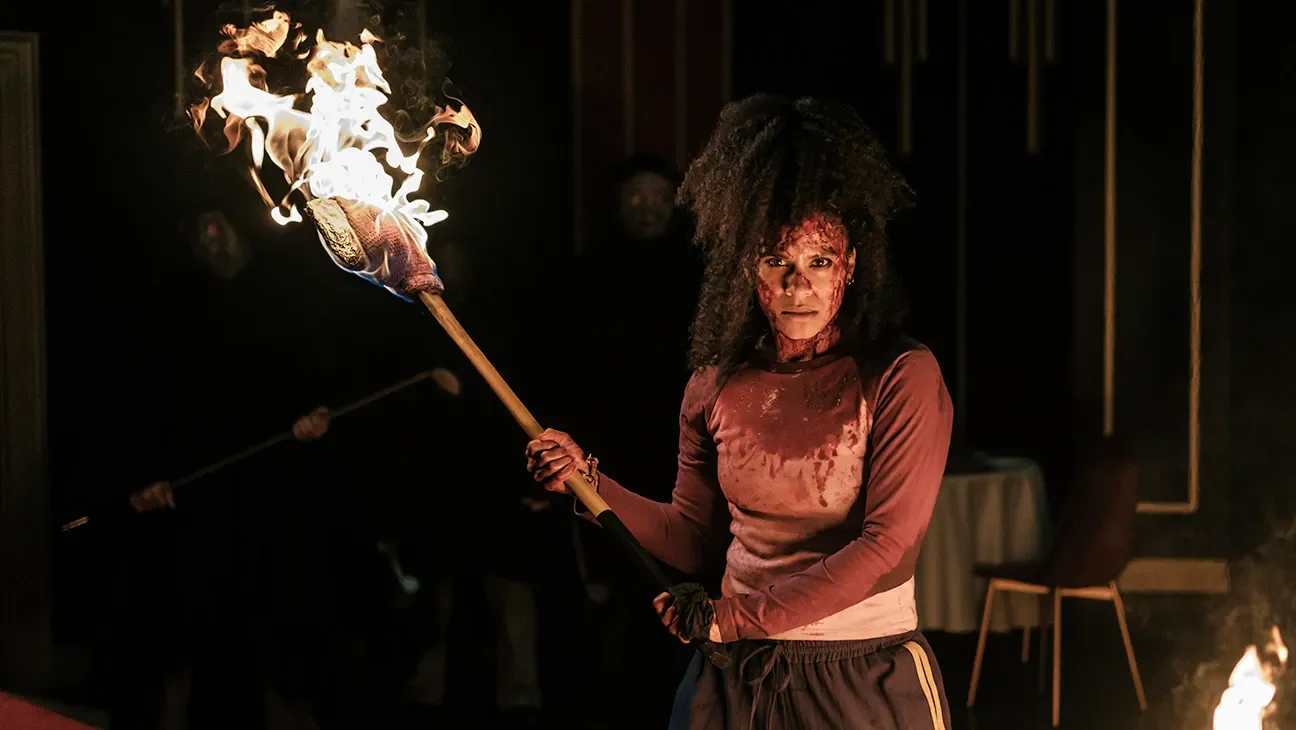
Some titles are a promise, and Kirill Sokolov's They Will Kill You has no interest in subtext about that promise. It tells the audience exactly what kind of ride is coming before the lights even dim, and then it spends ninety-four minutes making good on the threat with a level of commitment that borders on gleeful. Zazie Beetz plays Asia Reaves, an ex-convict who answers a help-wanted ad for a live-in housekeeper at the Virgil, a century-old New York high-rise with the kind of pedigreed residents who treat their staff as furniture. The normalcy does not survive the first act. Every hallway in this building is wrong in a way the film lets you feel before it lets you understand, and once the wrongness breaks open, it does not let up.
What makes the film work as pure spectacle is how deliberately it is engineered for a crowd. This is not a film built for quiet, isolated viewing on a laptop. It wants gasps timed to gore and laughter timed to the absurdity sitting right next to that gore, often within the same beat. Sokolov, working from a script he co-wrote with Alex Litvak, understands that horror comedy lives or dies on rhythm, and he has a genuine sense for when to let a kill land as shock and when to let it land as punchline. Few films this year have understood their own theater experience this well, treating the audience's reaction as part of the choreography rather than an afterthought.
Beetz anchors all of it with a performance that keeps finding new gears. She is vulnerable in the film's quieter stretches, particularly in scenes reckoning with her estrangement from her sister, played by Myha'la, and then unrecognizable in the action beats that follow, moving through violence with an intensity that never once looks staged for the camera's benefit. The sisterly reconciliation running underneath the carnage gives the film an emotional throughline that a lesser version of this story would have skipped entirely, and it earns real weight by the time both women are covered in blood that is not entirely their own.
The supporting cast leans into camp without undercutting the stakes. Patricia Arquette and Heather Graham both seem to understand exactly what kind of film they signed up for, playing the Virgil's cult leadership with an unbothered, aristocratic menace that plays as funnier the more matter-of-fact it stays. Tom Felton and Paterson Joseph round out a household of believers whose devotion reads as absurd and genuinely threatening in equal measure, which is a harder balance to strike than it sounds.
If there is a knock against the film, it is that the premise, a working-class woman uncovering a wealthy cult hiding in plain sight, arrived in theaters the same month as at least two other films chasing a similar eat-the-rich instinct, and They Will Kill You does not reinvent that territory so much as sprint through it with more style than most. That is not nothing. Style, timing, and a game cast can carry a familiar premise a long way, and this one goes the distance loudly, bloodily, and with a real sense of fun that a lot of horror comedies forget to prioritize.
Undertone
A24's podcast-set psychological horror trades jump scares for dread you have to listen for.
Of the four films that defined this stretch of the season, Undertone is the one least interested in spectacle, and that restraint is both its clearest strength and its most obvious limitation. Ian Tuason, making his feature debut after reportedly conceiving the project as a radio play, builds nearly the entire experience around sound rather than image. Nina Kiri plays Evy, a skeptical paranormal podcast host who moves back into her childhood home to care for her dying mother, and who receives a series of unsettling audio recordings from an anonymous couple, recordings that begin to mirror the grief unfolding in her own house in ways that feel less like coincidence the further she listens.
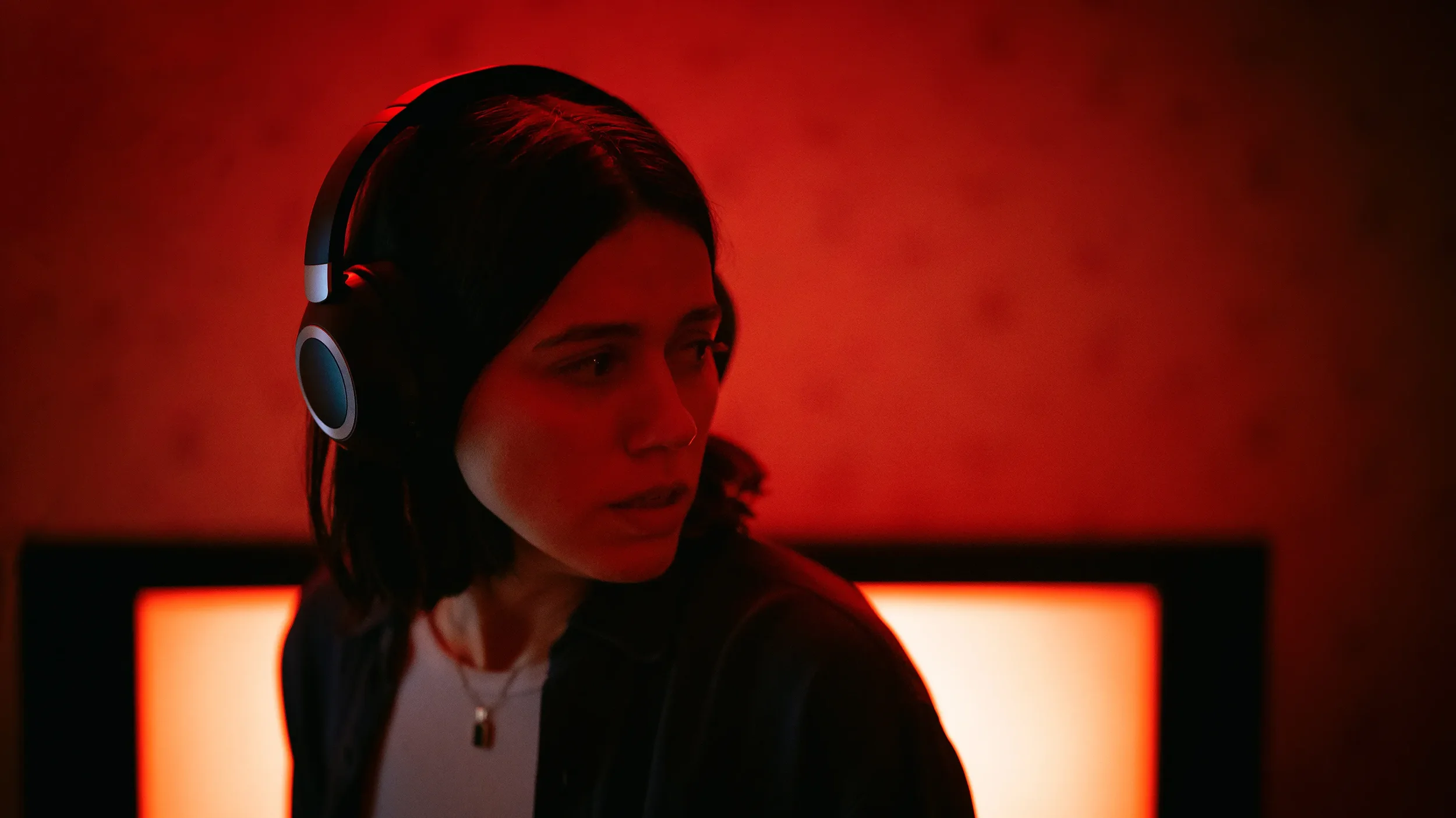
The film's formal gamble pays off more often than not. Most of the supporting cast exists only as voices, heard through phone calls, recordings, and the podcast Evy co-hosts with Justin, played by Adam DiMarco in a performance built entirely on vocal presence. That structure could easily have felt like a limitation dressed up as a concept, but Tuason uses it to genuinely unsettling effect. Silence becomes a texture here rather than an absence. A scene of Evy alone with noise-cancelling headphones on, cut off from the room around her, does more with stillness than most horror films manage with a full arsenal of jump scares. The recordings themselves, layered with distortion and buried details that reveal themselves only on a second listen, are the film's most confident achievement, turning something as mundane as a podcast editing session into a slow-building nightmare.
Kiri carries the film almost entirely alone onscreen, and that isolation is doing real narrative work. Evy's arc is as much about caregiving exhaustion and anticipatory grief as it is about the supernatural mystery she is chasing, and Kiri plays both threads with a raw, unshowy naturalism that keeps the film grounded even when its plotting gets hazier. Michèle Duquet, as Evy's dying mother, has limited screen time but makes every scene count, giving the film's most human moments an ache that the ghost-story elements sometimes struggle to match.
Where Undertone runs into trouble is in its back half, when the atmosphere it has so carefully built starts to feel more like a holding pattern than an escalation. The film raises real questions about parental inheritance, about what daughters absorb from their mothers whether they want to or not, and about the ethics of a skeptic profiting off other people's trauma for content, but it does not commit to answering any of them with the same rigor it brings to its sound design. The result is a film that is frequently more interesting to listen to than it is satisfying to sit with all the way through, and a final stretch that seems to punish Evy for reasons the script never quite earns.
Still, there is something worth respecting in a horror film willing to bet almost everything on what the audience cannot see. In a month crowded with cults, chainsaws, and mall-basement covens, Undertone stands apart simply by asking viewers to lean in and listen closer, and for most of its runtime, that is a request worth honoring.