
Backrooms Finds the Door, Loses the Way Out
Kane Parsons announces himself as a major filmmaking talent with a first two-thirds of pure, sustained dread, only to watch the screenplay lose its nerve just when the psychology it built so carefully was about to pay off.
By MIGUEL MATEO | MAY 30, 2026
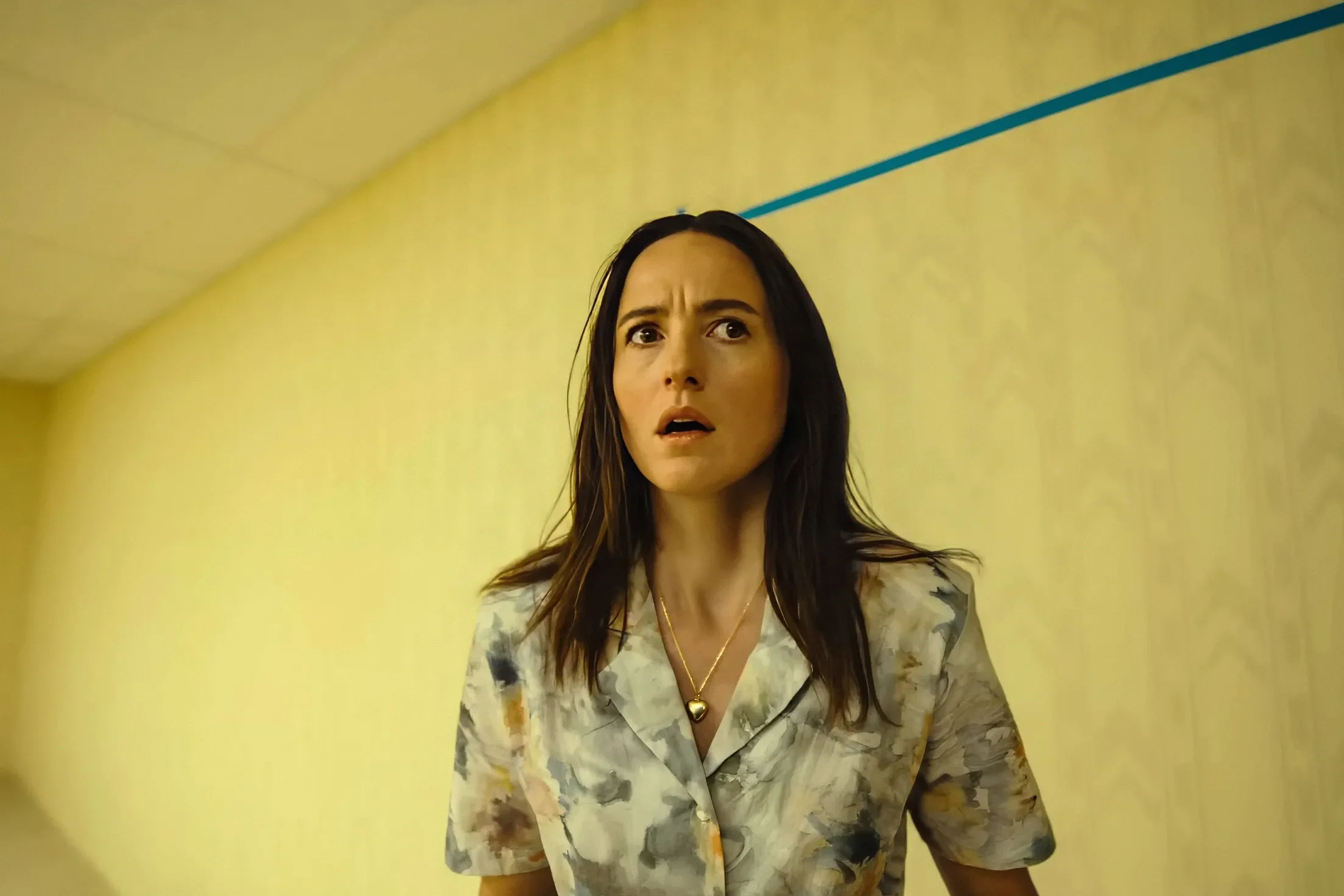
For a while, Backrooms looks like it might be a horror masterpiece. Kane Parsons, adapting his own viral creepypasta series for his feature debut, pulls off something rare for a twenty-year-old working his first studio budget. He builds a place, not just a plot. The moment Clark descends into the basement of his failing furniture showroom and the fluorescent hum swallows him whole, the film makes its point clear, that the setting itself is going to carry the weight of the story. The corridor does not just threaten him, it feels like it already knows him, and the film earns every comparison to The Shining it has picked up by treating the Backrooms like a character instead of a backdrop. Parsons weaves in pixelated, first-person footage from his own web series at key moments, showing Clark filming his own descent as if he is leaving a record behind for someone to find, and that choice makes his obsession feel more like a confession than a discovery.
Chiwetel Ejiofor is the other reason the film almost worked. Clark shows up already hollowed out, carrying the resentment of a man whose life quietly ended before he noticed, and Ejiofor plays that wound as the real doorway into the Backrooms, well before he finds the literal one. Take the scene where he talks Bobby and Kat into coming back with him, supposedly for proof. The argument is barely about evidence at all. Ejiofor plays it as a man negotiating with his own compulsion, dressing up what he wants as what the moment requires, which is a hard thing to pull off in a genre film. Because that quieter scene already shows what is coming apart, the unraveling that follows never tips into camp.
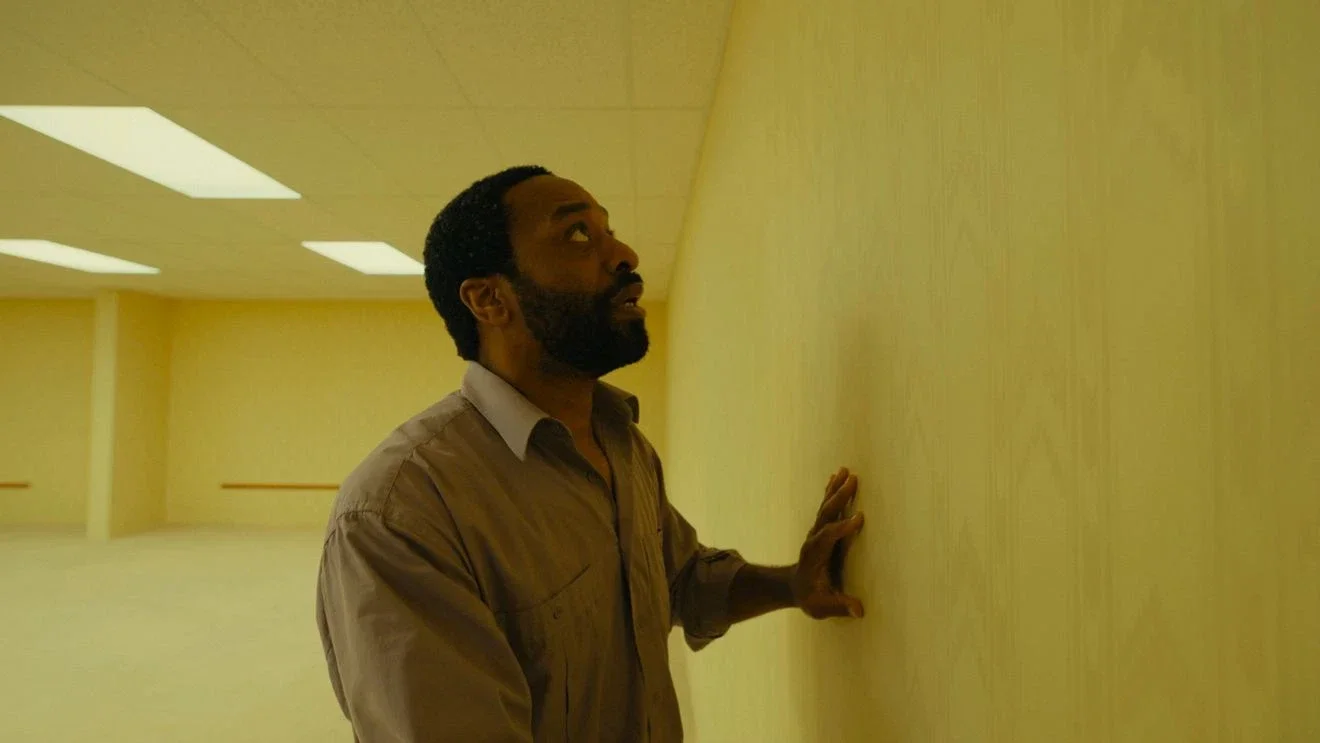
The production design is the film's real achievement, and it is not close. Every hallway, every identical yellowed room, every hum of the lighting rig does the work a weaker horror film would leave to jump scares. The scene where Clark and his employees first hear the creature moving beyond the walls, without the film showing what it is, is the film's most controlled stretch. Parsons, who built this world alone on YouTube, understands better than almost anyone working right now that atmosphere is not decoration, it is the point. If there is any justice, awards season remembers this craft when the below the line nominations come around.
The film loses its footing with the therapist. Renate Reinsve gives Mary one unguarded moment, a piece of her own childhood mentioned almost by accident in a conversation meant to be about Clark, and the screenplay treats it like it has set something up. It never comes back to it. That gap becomes hard to ignore once Mary has to carry the final act on her own, chasing Clark through spaces that grow stranger the deeper she goes, with only that one moment to explain why she is so invested. The fault is not Reinsve's. It is still her least convincing performance on record, mostly because she is asked to carry an inner life the script sketched once and then dropped.
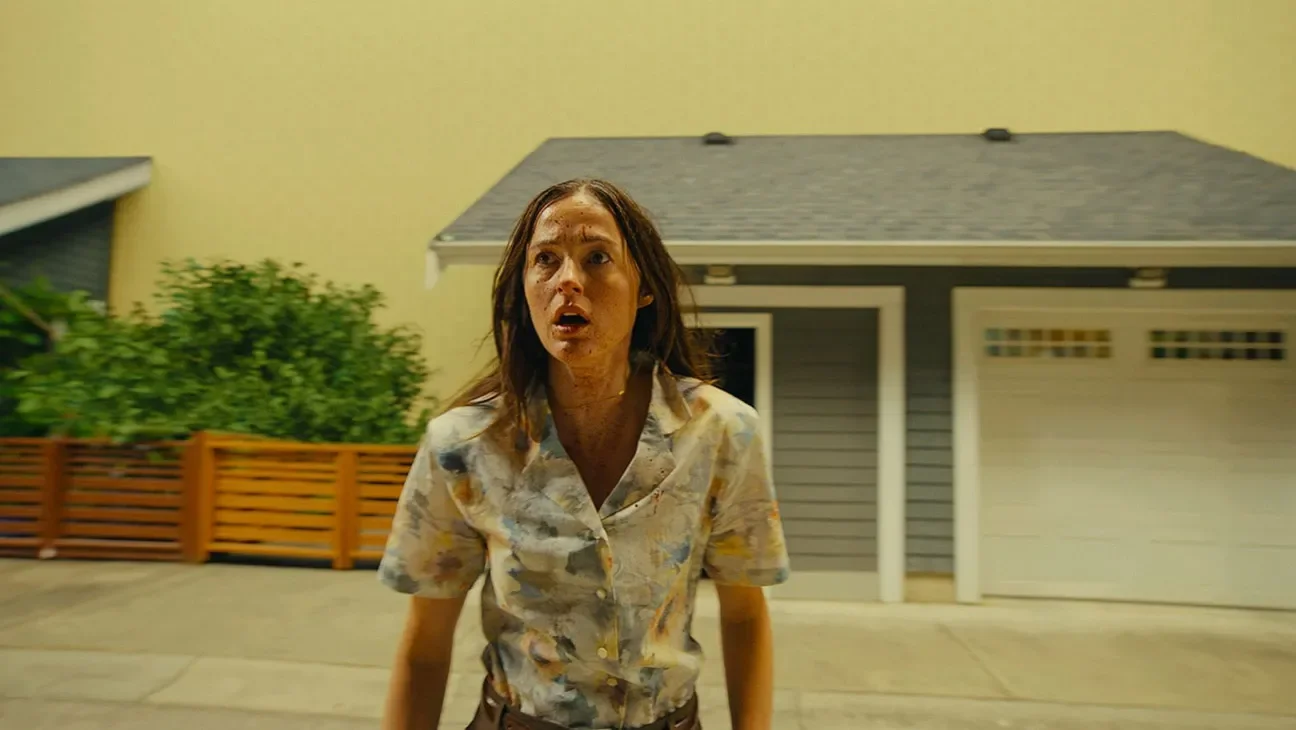
That same imbalance defines the ending, and it is where the film comes apart. The final confrontation, in which Clark rejects the truth Mary brings him and instead demands she go along with his delusions, should be the payoff for everything Ejiofor's performance has been building toward. Instead it happens fast, almost like a checklist, and the way Clark's story closes in on itself feels more like plot mechanics than something the character actually earned. The last image, a distorted, Still Life version of Mary left trapped inside the maze, reaches for ambiguity without doing the work to earn it. It plays more like a setup for a sequel than an ending to the story the film just spent an hour and a half telling.
Backrooms ends up disappointing in the specific way a film does when it has already shown it was capable of more. Parsons has the eye and the instincts to become one of the defining horror filmmakers of his generation, and Ejiofor gives him a performance worthy of that ambition. What the script never manages is trusting its own foundation, because the movie inside the first two-thirds of Backrooms, patient, atmospheric, genuinely psychological, was close to great, and it should not have let that go.
Rating: ★★1/2 out of ★★★★★
Now in theaters
Directed by Kane Parsons | Written by Will Soodik | Starring Chiwetel Ejiofor, Renate Reinsve, Mark Duplass, Finn Bennett, Lukita Maxwell