
In Obsession, the Scariest Thing Has the Cuddliest Name
Curry Barker's debut turns a silly magic trick into one of the most unsettling portraits of male obsession in recent memory, anchored by a career-making performance from Inde Navarrette.
By MIGUEL MATEO | MAY 22, 2026
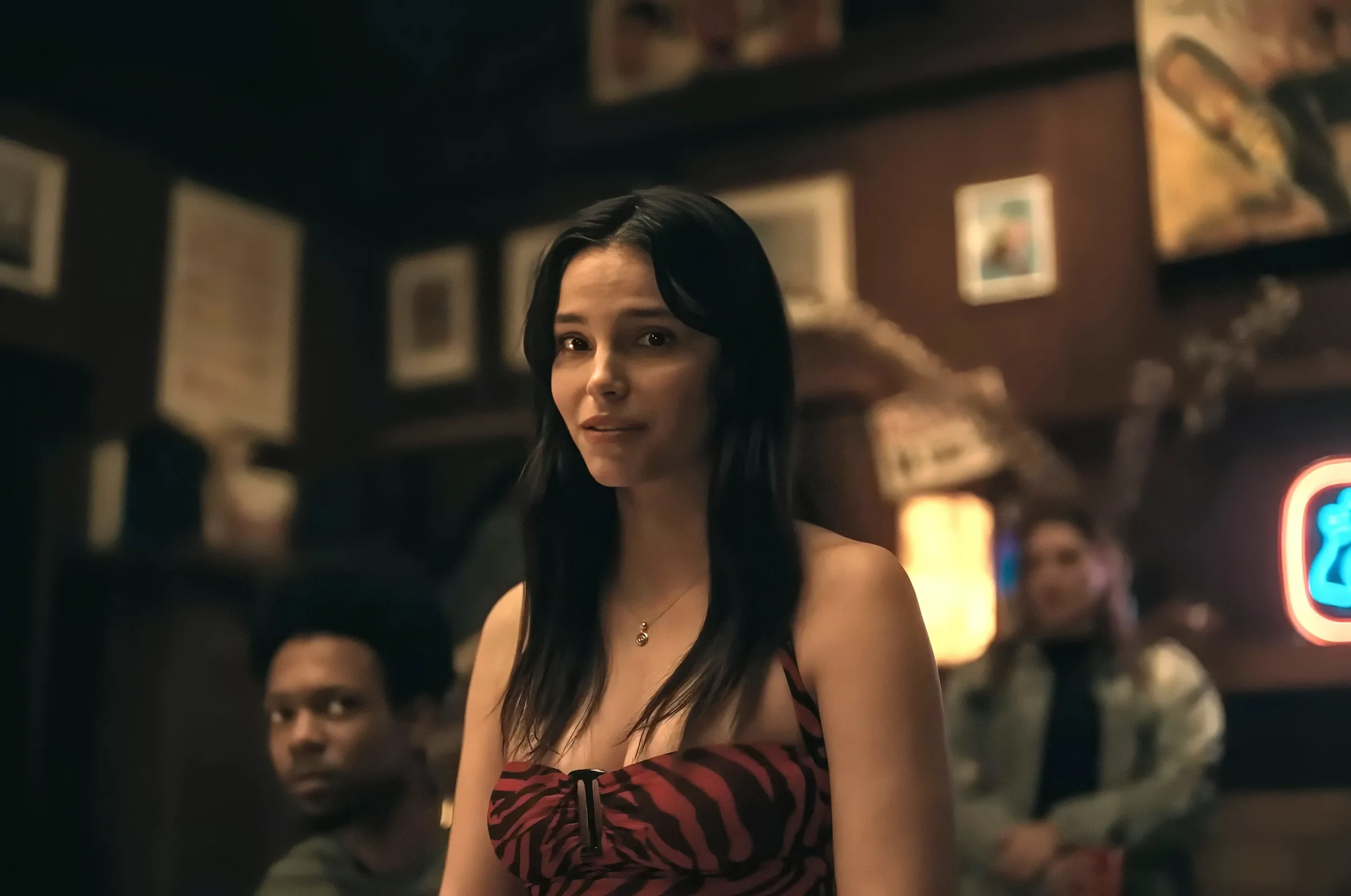
There's a moment in Obsession where Bear calls the customer service line printed on the back of the One Wish Willow he bought at a spiritual shop. Shy, awkward, seemingly well-meaning Bear. He doesn't ask to undo the wish he made. He asks if he can alter it. That distinction is everything. That moment is the film.
Curry Barker's debut feature is a horror movie about a magic stick, but don't let the absurdity fool you. Obsession is one of the sharpest, most emotionally precise films of the year, horror or otherwise. It opens on familiar ground: a guy named Bear (Michael Johnston), sweet-natured and fumbling, has a crush on his coworker Nikki (Inde Navarrette) and can't find the nerve to tell her. He loses his cat. He loses his chance to confess his feelings during a car ride home. He visits a spiritual shop and picks up a One Wish Willow, a small magical branch that grants one irrevocable wish, and wishes that Nikki will love him more than anyone else in the world.
What follows is not a love story. It was never going to be.
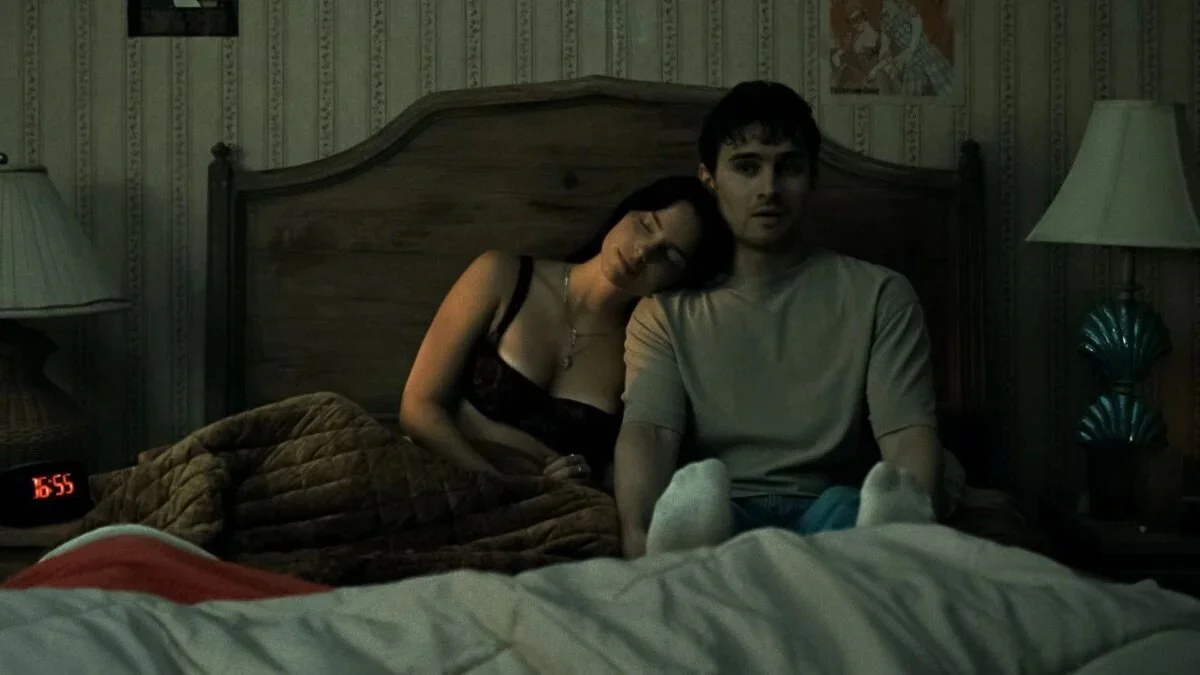
Nikki is almost immediately overtaken by something that is not quite her, a possessing presence that is obsessive, erratic, terrifying, and utterly devoted to Bear. She duct-tapes tinfoil under the door to keep him home. She prepares meals for him that no one should eat. At a house party, she stands up from a Jenga game in a single abrupt motion that makes the entire room go silent, then drags a chair across the floor to steal a kiss. These scenes are uncomfortable, funny, and genuinely scary, often all three at once. Barker has the timing of a born filmmaker. Like Jordan Peele and Zach Cregger before him, he brings a comedian's instinct to horror: the setup matters because the punchline has to land, and when it does, you're laughing and immediately unnerved by the fact that you are.
That comparison to the wave of comedians-turned-horror-directors isn't just a lazy critical shorthand. There's something real happening there. Horror has always rewarded restraint and precision over volume, and comedians tend to understand that instinctively. Barker knows when to be funny and when to pull the rug out, and the film's dark humor doesn't undercut the dread so much as sharpen it. You can feel him calibrating every scene, and the fact that it never feels calculated is a testament to how fully formed his voice already is.
Because the movie is not really about Nikki.
It never was. This is not a twist or a late revelation. It is the thesis, written into every frame. Bear is the villain. What Barker has put on screen is a portrait of the fragile male ego so precise and unsparing that it barely needs to announce itself. The horror here isn't supernatural possession. It's a man who wished away the selfhood of a woman he claims to love, and then, when given every opportunity to undo it, chose not to. The wish, the spell, the monster: they are all him. They always were.
The customer service scene makes this undeniable. Bear reaches the line and is told the wish cannot be altered or cancelled. He learns that Nikki's actual soul, her consciousness, is essentially locked out of her own body and available to speak to "on the other line" if he wants. He doesn't pursue it. He goes back inside. Later, when the real Nikki briefly surfaces in the middle of the night to beg him to end it, his response is to ask her, "What's so bad about being with me?" Then he leaves to meet another girl. A man who made a terrible mistake would try to fix it. Bear doesn't. He likes what the mistake has given him.
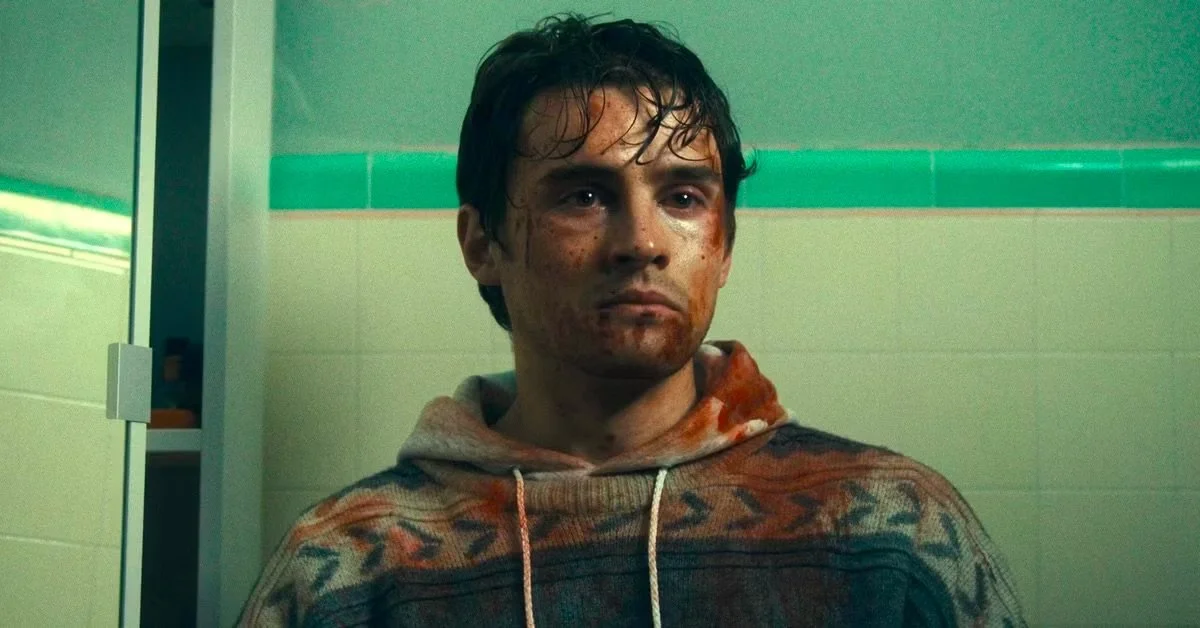
The mirror imagery Barker threads throughout the film keeps hammering this home. Nikki's possessed eyes catch the light in flashes. Bear watches himself in a rearview mirror. She first appears to him after the wish as a backlit silhouette, a shadow of a person, not a person at all. The film is littered with reflections, and what they're all reflecting is his obsession, made literal. The wish didn't give him love. It gave him a projection of what he wanted love to look like, stripped of any trace of the actual human being he claimed to want.
Inde Navarrette delivers what is almost certainly the performance of the year. To play Nikki is to play at least three distinct registers simultaneously: the real Nikki, glimpsed in fragments; the possessing entity, inhuman and terrifying; and the seam between them, those moments where the two bleed into each other in ways that are as funny as they are heartbreaking. Navarrette handles all of it with total command. The party scene alone, the abrupt stand, the slow cross of the room, the chair-drag, the kiss, is a masterclass in physical storytelling. She can be genuinely unsettling in one breath and disarmingly funny in the next, and she makes both feel like they belong to the same performance.
The awards conversation around her is already well underway, with the only real debate being whether she belongs in Lead or Supporting. Horror has a long, frustrating history with the Academy, and it's a conversation that probably won't get settled until nominations come out. But it should. Obsession has a genuine argument to make, not as a genre film asking for a seat at the table, but as a film, asking to be judged on what it does. The screenplay should be in that conversation too.
Barker writes with the kind of economy that makes every scene do double work. The friend group, Bear, Nikki, Ian (Cooper Thomason), and Sarah (Megan Lawless), is sketched in quickly but feels completely lived-in, their history with each other implied rather than explained. The One Wish Willow is introduced with exactly enough rules to function as horror mythology without ever feeling over-designed. The Monkey's Paw tradition it draws from is centuries old, but Barker finds something new in it: the horror isn't just unintended consequence, it's the slow realization that the consequence was never really unintended. You wished for someone to be yours. You got them. Now live with what that means.
The scariest scene in Obsession has no jump cut, no score swell, no shadow on the wall. It's just a man on a phone, asking to change a wish instead of take it back.
Obsession is the best horror film of the year. It is one of the best films of the year. It will linger.
Rating: ★★★★1/2 out of ★★★★★
Now in theaters
Directed by Curry Barker | Written by Curry Barker | Starring Inde Navarrette, Michael Johnston, Cooper Thomason, Megan Lawless