
A Quiet Road Trip That Slowly Breaks Your Heart
An intimate, beautifully restrained indie that finds devastating power in what it doesn’t say, and one that features a devastating performance by John Magaro.
By MIGUEL MATEO | MAY 1, 2026
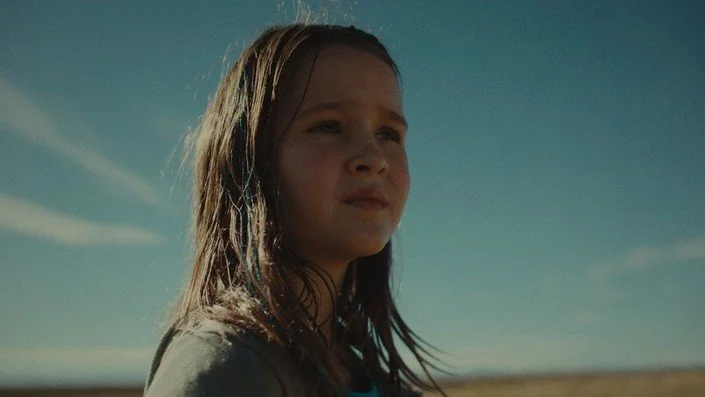
There’s a version of Omaha that could’ve leaned into melodrama. Bigger reveals, louder emotions, cleaner explanations. Instead, it does the opposite. It strips everything down and trusts you to sit in the silence, in the uncertainty, in the small moments that don’t feel important until they suddenly are.
Directed by Cole Webley, the film follows a father taking his two kids on a road trip across the American West, slowly revealing the truth behind why they’re traveling at all. It’s a simple premise, but what makes Omaha land is how deliberately it avoids spelling anything out. This is a pure show-don’t-tell film. You’re not given backstory in neat flashbacks or exposition dumps. You feel it through behavior. Through glances. Through the quiet panic of a man at a grocery checkout, putting items back because he can’t afford them.
And that choice is everything.
Because what Omaha is really about isn’t the “why.” It’s the moment someone reaches a dead end. The point where there are no good options left, only decisions that feel impossible. The film frames this road trip not as a journey, but as the final stretch of something already broken.
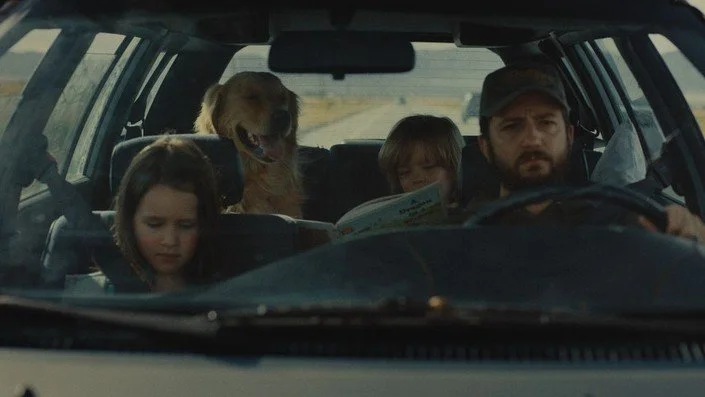
What makes it hit as hard as it does is how much life still exists within that sadness. This isn’t a relentlessly bleak film. It’s filled with moments that feel pulled straight from childhood. A trip to the zoo. Flying kites. Playing on a Nintendo DS in the backseat. Those flashes of normalcy don’t soften the blow. They make it worse. Because you’re watching a version of life that could’ve been, slipping through their fingers in real time.
The performances are what hold it all together.
Molly Bell Wright plays Ella with a quiet maturity that feels almost too real. She’s not written as overly precocious or overly emotional. She just observes. Processes. Adjusts. You can see her piecing things together long before she fully understands them. That tension, being forced to grow up too fast while still being kept in the dark, becomes one of the film’s most heartbreaking threads.
And then there’s Wyatt, played by Charlie Wyatt Solis, who feels almost entirely unfiltered. A lot of his performance comes across as natural, even improvised, and it shows. He’s chaotic, funny, constantly talking, asking questions, touching everything. He brings a level of authenticity that makes the sibling dynamic feel lived-in rather than written.
That dynamic between the two kids is where the film finds its emotional core. Ella is already stepping into a parental role, whether she wants to or not. Wyatt is still blissfully unaware. Watching that gap between them, what one understands and what the other doesn’t, is quietly devastating.
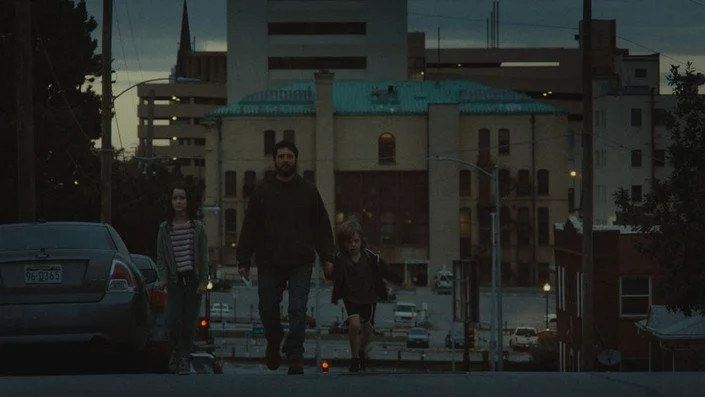
What really stayed with me, though, is John Magaro.
He spends most of Omaha in this incredibly restrained, almost distant headspace. His performance is defined by what he holds back. There’s a quiet stoicism to him the entire film, like he’s already made a decision he can’t undo and is just trying to get through each moment without collapsing under it. You feel something looming from the very beginning, but he never lets it fully crack. And then the final stretch hits.
The last fifteen minutes are where it all unravels, and it honestly broke me. Not because he suddenly becomes overly emotional, but because he doesn’t. The restraint is still there, but now you can see everything underneath it. The weight of what he’s done, what he’s about to do, and how much he loves his kids all colliding at once. It’s devastating in a way that sneaks up on you.
It’s the same thing that made him so great in Past Lives. That ability to bring nuance to a role that, in another actor’s hands, could feel one-note or even unlikable. In Past Lives, he plays the husband, a character that could easily be positioned as the obstacle. But instead of flattening him, Magaro gives him depth, vulnerability, and dignity. He makes you feel the complexity of that situation rather than guiding you toward an easy emotional choice.
He does something very similar here. In Omaha, this is a character who, on paper, could be judged instantly. But Magaro never lets him become that simple. He plays him as someone who is overwhelmed, broken down by circumstance, and still trying, in his own flawed way, to do right by his children. That full characterization is what makes the film land. It’s what makes the ending hurt, and it’s what kept me thinking about this film days after.
Because Omaha doesn’t ask you to agree with its characters or even fully understand them. It just asks you to sit with them. To feel the love that exists even in impossible situations, and the quiet ways people try to hold onto it when everything else is slipping away. By the time it ends, it’s not the plot that lingers, it’s that feeling. The weight of a decision, the innocence of childhood, and a father who never stops caring, even when he’s already run out of options.
Rating: ★★★★ out of ★★★★★
Now in theaters