
forcing open the doors of sirat
A high-strung adventure through the desert pushes a father and son to their limits. Sirat explores how the road to hell can push us into a journey of self-actualization and create a bridge between ourselves and others. Take a road trip with us as we explore a few of these themes in Oliver Laxe's newest project.
By HUNTER SUELZER | MARCH 13,2026
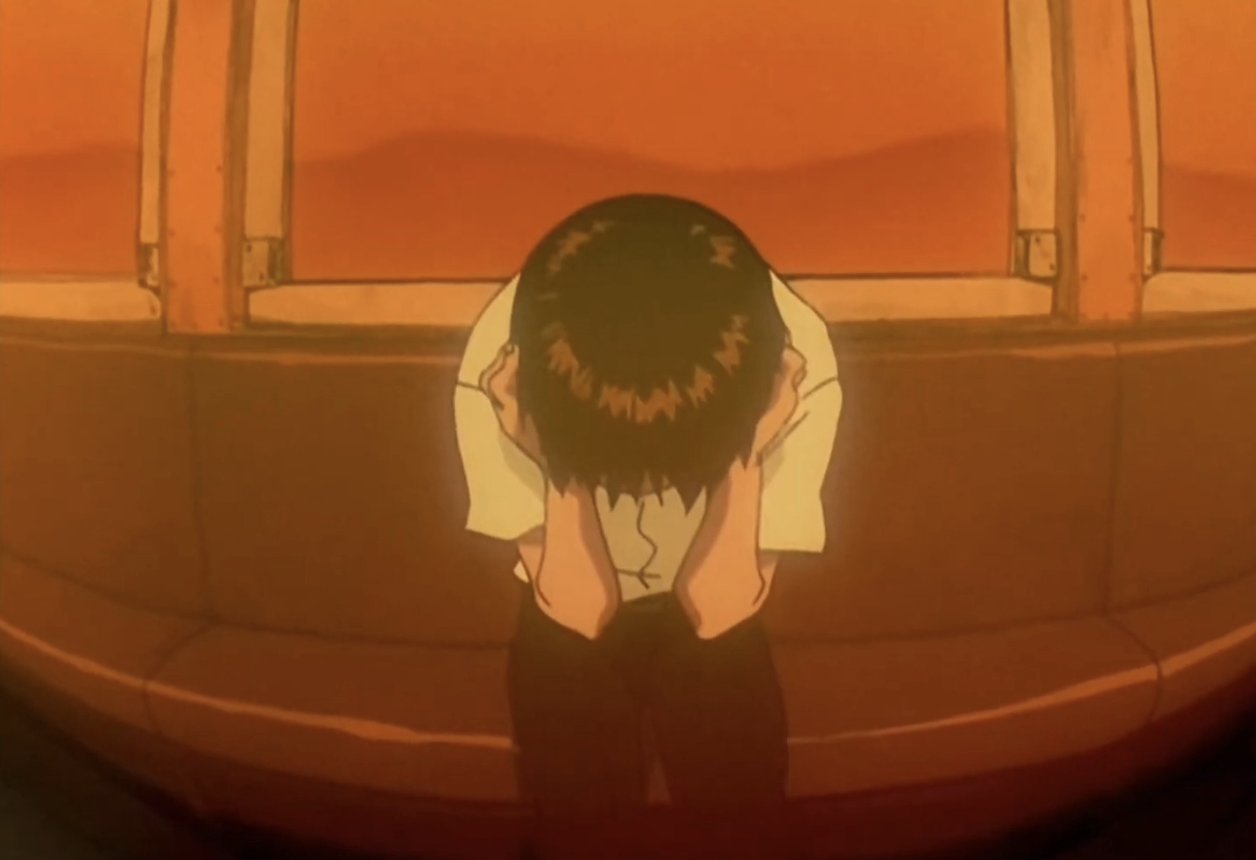
There’s this terrifying aspect to being a walking, talking monkey man with a highly developed brain. It’s not war or famine or clowns. Rather, the absolutely crushing absolute of mental solitude that comes from having a sentient mind that no one else can occupy. Film, and art in general, is already an attempt to bridge this empathy gap through an exchange of experiences and feelings. I often think about Hideaki Annos' interpretation of Evangelion and how it contends with this fear. Expanding it into this black hole of loneliness and misunderstanding. Matching it with the social fear that you can never really know anyone truly. People will always misinterpret you, conceal their feelings, and outright lie about their intentions. Anno in the 90s, deep in social isolation, provided two very reasonable solutions. Disengage, refuse to boot up your human meat suit, and seclude further into solitude. Or transcend humanity through unnatural mediums to reach a spiritual or universal understanding of one another. A universal experience or ultimate truth. Coming to the conclusion that the only person who can care for you and truly understand you is you. The hardest part of life is the decision to wake up and contend with that truth.
“...you must endure the loneliness. Man can never completely erase this sadness, because all men are fundamentally alone.” - The End of Evangelion
The universal truth is an idea that has been chased throughout our entire existence. In the mid 1950s. Famous psychonaut Aldous Huxley coined the term “Antipodes” in his sequel to The Doors of Perception, Heaven or Hell. Attempting to explain certain regions of the human consciousness that would otherwise be inaccessible without extreme external factors. Unlike his mescaline-fueled dive into the mind in its predecessor. Heaven and Hell delves into how extreme stressors on the body or mind could push individuals into spiritual places that would typically be useless in a utilitarian/survival sense. Moments of truth through true delirium. Making the case that monks and medieval Christians/Muslims likely fostered visions of the beyond through practices such as fasting and self-flagellation. Coming closer to sharing a universal experience that often can only be witnessed in solitude. Huxley must have been a big fan of mech anime. He also comes to the absolute truth that, as an individual, you will never completely understand the inner workings of the person sitting next to you. No amount of explanation or shared experience will ever be one-to-one. But maybe we can come as close as possible by accessing these antipodes through drugs or intense hardship.
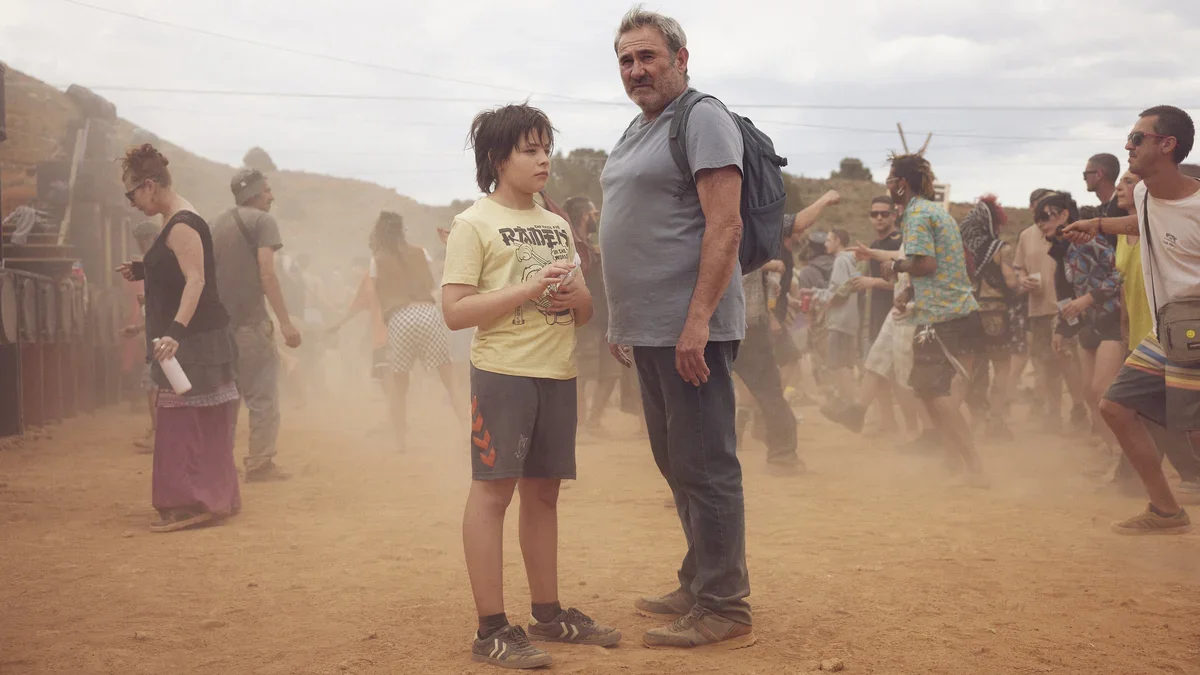
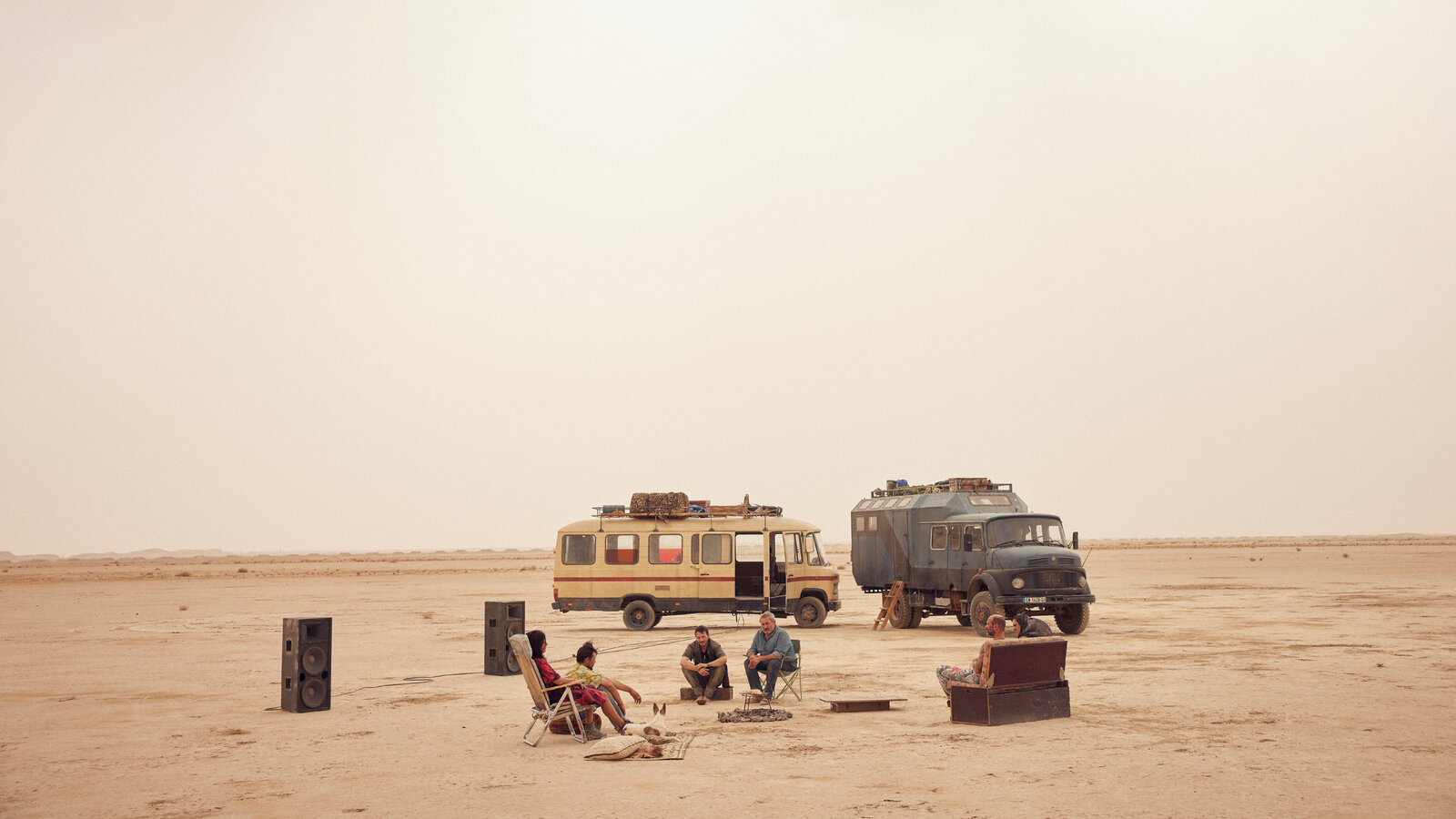
Sirat is a 2025 road trip psychological thriller and coming-of-age political drama. Directed by French-born Spanish filmmaker Oliver Laxe. Sirat is a marriage of the ideas presented in Heaven and Hell and the Doors of Perception. The Arabic title describes a difficult journey over the top of hell. Where, on the other side, one may find some relief or enlightenment. Exploring a father-son duo, Luis and Esteban, respectively, on their journey through the North African Sahara to find their missing daughter/sister. Working with a lead that she may be at a local desert rave. They trail a niche rave scene to their next spot, led forward by a group of misfits deep into the solitude of the desert. A location chosen seemingly to evade military persecution during the onset of the next major global conflict. While we are never explicitly privy to the details of their separation, it is heavily implied that Luis’ daughter left to explore a more spiritual life on the outskirts of life. Luis is presented as a kind but ordinary middle-aged man we can assume has little understanding of why someone would make this choice. Nonetheless, he still strives to reunite with his daughter and pushes himself and his son into an incredibly questionable quest to achieve that goal.
Sound is the medium of experience in Sirat. We are immediately greeted by the classic rave collective. Hundreds moving in unison to a medley of ambient and industrial electronic music. Pounding bass and distorted wails that could only come from the beaten and scarred equipment that is dragged time and time again through the desert in beat-up RVs and buses. The sound is a barrier to Luis. Speakers stacked so high to represent a literal wall. It’s the classic example of your grandpa shaking his head when you exclusively listened to Skrillex in 2010. Even though you swore it was life-changing, there was a disconnect. The heavy music deeply permeates many of these early scenes and is presented to the viewer as so loud that characters often can’t communicate with each other at all without constant reiteration. To Luis’ daughter, this was clearly a door out of solitude. A pathway to a shared experience where a hive mind of bodies is moving and sharing the moment, closing out the hardships of the outside. It takes a literal army to stop this experience that has lasted days and nights. Forcing our rave party and consequentially, Luis, onto a journey of intense pain and hardship that I believe finally pushes him towards a level of understanding with this daughter and her peers.
“The martyrs go hand in hand into the arena; they are crucified alone.”
- The Doors of Perception
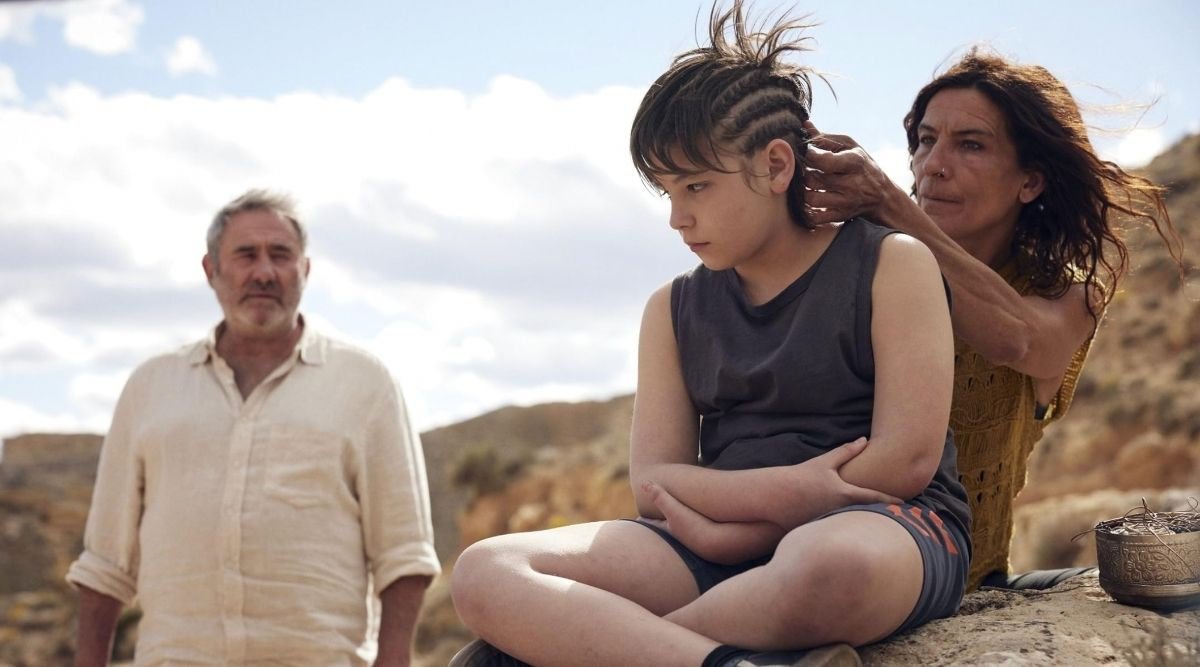
When the road trip begins, the title card finally hits. We enter a journey that could only be expressed as “Thunderdome” like. Pushed through a trail of bright deserts and treacherous mountains by the rave crew. Luis is constantly faced with a barrier between himself and his sherpas. Compared to the middle-aged man, this crew is the definition of a white-collar dad’s nightmare. Tattooed, mutilated, free spirits that seemingly have no connection to the normal world. Often shutting out outside influences by silencing the news or dismissing geopolitical events with nihilism. Their own lack of shared experiences with the father fuels their dismissiveness of him, only agreeing to be in his company out of sympathy for his goal. These guys know this man; they grew up with him, too. Without ever meeting her, they know the experience that Luis’ daughter grew up with. One that forced her to defect from home in search of mutual understanding. It’s where the son, Esteban, is able to shine as a mediator. A fresh pair of eyes on the tattered ravers, combined with his clear love and respect for his father. Esteban’s lack of wariness towards the party, in turn, pushes Luis to mingle with them. Creating moments of small understanding, feeling the sounds of the music, and experiencing it fully instead of closing one's ears to it. While these moments are nice between the brutal trek, it ultimately takes tragedy to push Luis to fully understand his peers.
Sirat often feels like a terminal diagnosis of the worst cancers. From the get-go, you know how this story ends, and you’re simply waiting for the clock to hit zero. When Esteban tumbles down the mountain, you are almost relieved that your suspicions were confirmed. Try to stand on your tippy toes for over an hour and feel the anticipation to finally plant the balls of your feet back on the ground. It’s a shocking turn that finally pushes Luis deep into the desert, fleeing reality. The trauma bond from the event pushes the crew after him into the depths of hell. They rot in the heat. Their water and resources are dwindling with seemingly no easy way to escape. The ragtag team does the only thing they know how to do: deploy the speakers. It’s a final moment of catharsis. Deep in the sounds of industrial droning, inebriated by the effects of starvation, thirst, and psychoactives. Luis finally shares a dance with his daughter. Melting into the sounds and finally joining the collective that once seemed like nonsense. She isn’t there, and she never was going to be there. But his mind has finally forced open the doors to a shared experience. The trauma of reality brought on by agony and loss, melting away through this mindless swaying. He is finally here after all this time, and he’s found her.
“...we were back at home, and I had returned to that reassuring but profoundly unsatisfactory state known as 'being in one's right mind.”
- The Doors of Perception
If you’ve ever experienced a psychoactive drug, you’re likely aware of how time and reality can seemingly melt away. But it always ends the same, landing back into now in a marvelous glow of new perspective, with the expected exhaustion from pushing yourself through such a journey. It’s commonly taught in communities that go on these trips just how important it is to take these fleeting lessons back into reality. Sirat has no subtlety on this return, literally snapping us back into it through the piercing sounds of explosives. In one of the most intense scenes I’ve ever experienced in the theater, Luis literally walks through landmines blind, in almost deity-like fashion. Immune to the danger around him, he guides escape for those willing to follow his methods. I almost can’t suggest this movie just based on how uncomfortable and terrifying these closing events are. If you can survive this scene, it is a relief to watch the remaining survivors follow in Luis’ footsteps to safety. Finally, trusting him and finding relief through this shared moment of spirituality. This is the end of the mythical journey that the term Sirat outlines. The believer walks free, unimpeded. Those who struggled find their relief.
Sirat ends as any trip does, in reality. Those who made it through are strapped back on a literal train to the real world. It’s never exciting, but it can be a relief to just be normal again after so much stress. There’s a universal sadness in these drugs in that we can only disappear and ignore everything for so long. The onset of WW3 is going on outside, and we can’t just turn the news off anymore because it's at our doorstep. The journey through the desert is over, but frankly, that's only the beginning. Now the work begins, but at least for a moment, we had a connection, right? We triumphed over Hell and reached a shared truth. The movie leaves us with its most obtuse imagery. A bass speaker, its openings showing us a path inward into darkness. Indeed, there are many paths into these dark places in our mind, but perhaps some shouldn’t be forced open. The journey is hard, and what is on the other side may have been better left unseen.
I like Sirat, and I hate Sirat. It oozes with style. Brightly lit landscapes and a soundtrack that literally had the person and me next to me in the theater tapping our feet to the bass. It’s another international film this year, alongside The Secret Agent, Sentimental Value, and No Other Choice, that really highlights how brilliant and boundary-pushing these non-American directors are. But it is, at the very least, challenging. An experience that truly left me with a knot in my stomach on the drive home. Writing a review at 3 AM instead of listlessly lying in bed, unable to sleep. Desperately struggling to make sense of my own thoughts. Pushing them into the world in an attempt to be understood by complete strangers. I’m reminded again of Hideaki Anno and the horror his characters inflicted in an attempt to understand a universal truth.