
Spider-Man: Brand New Day Is the Most Emotionally Complex Spider-Man Film Since Raimi
Destin Daniel Cretton's franchise reboot finds Tom Holland at his most compelling, Sadie Sink at her most formidable, and a love story that has taken the series four films to finally get right.
By MIGUEL MATEO | JULY 28, 2026
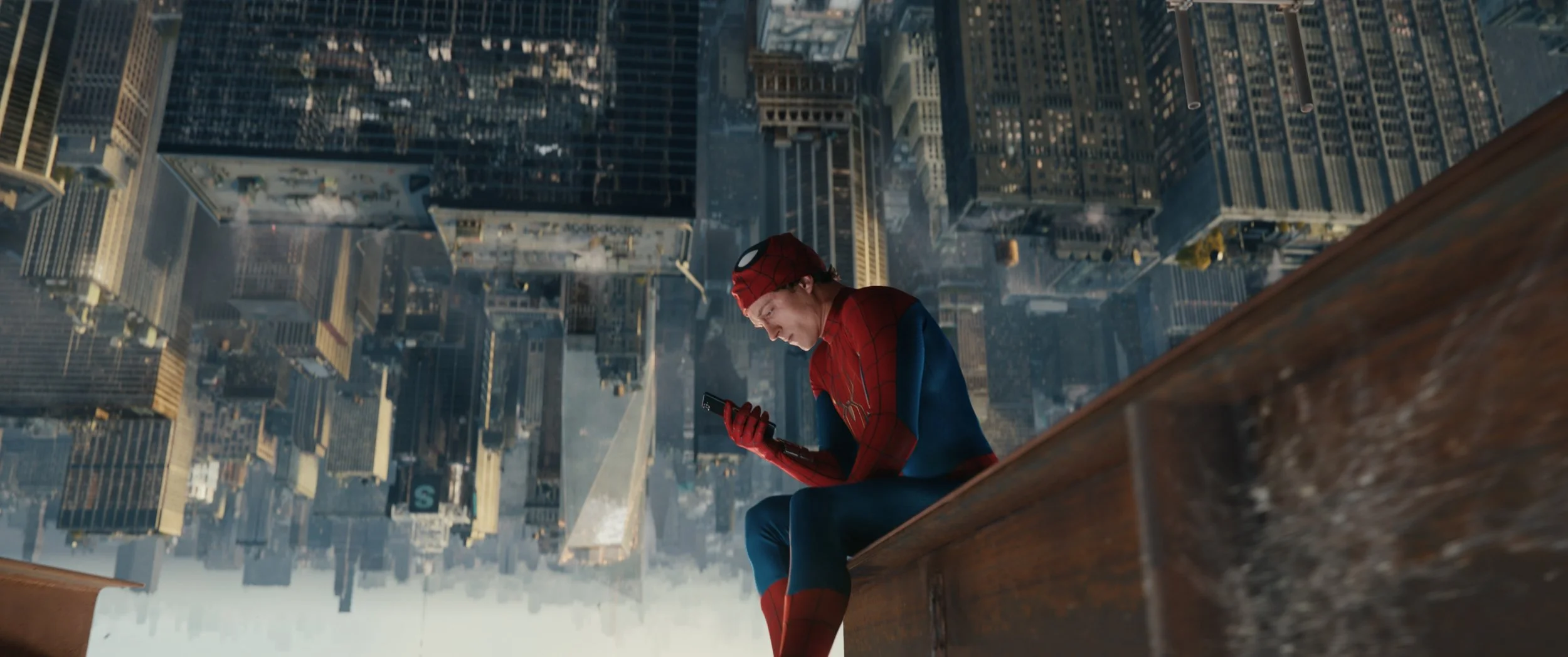
Destin Daniel Cretton has spent his career making films about people trying to reconnect across impossible distances. Short Term 12 was built around fractured families and the effort to hold damaged people together. Just Mercy traced the gap between institutional power and human decency. Even Shang-Chi was, at bottom, a movie about a son and a father severed from each other too long. That sensibility turns out to be exactly what this franchise needed after three films from Jon Watts, who made sharp, witty superhero entertainment but rarely asked what it cost Peter Parker to be this lonely. Spider-Man: Brand New Day is the most emotionally complex entry in the series since Sam Raimi's 2004 masterpiece Spider-Man 2, and it is not a coincidence that the director behind it is someone whose instinct, in any genre, is to reach for the wound.
The film picks up several years after the events of No Way Home, and the time jump does something the Watts trilogy never quite managed: it allows Holland's Peter Parker to occupy the full weight of his situation. During the high school years, his loneliness had the quality of a plot mechanism. Here, in a post-college iteration of the character, it registers as genuine loss. Holland has never been better in this role. The film's early sections track Peter as a man who has erased himself from the memory of everyone who loved him, and they draw on a different register than anything Watts asked of him. There is a restraint to Holland's performance now that makes the quieter moments land with a force the earlier films mostly avoided.
The relationship between Peter and MJ is the film's emotional core, and it is handled with a seriousness and patience that feels earned rather than assumed. When MJ learns, from a stranger who insists he loved her, that there was a version of her life she can no longer access, Zendaya does not reach for warmth or easy reconciliation. The film does not ask her to. What makes this iteration of their dynamic the strongest across all four Holland films is precisely that the screenplay refuses to rush it. We are given the promise of more to come, and the film uses that promise as structural permission to be honest about how disorienting it would be to restart something this significant from zero. The restraint here is rare in franchise filmmaking, and it works.
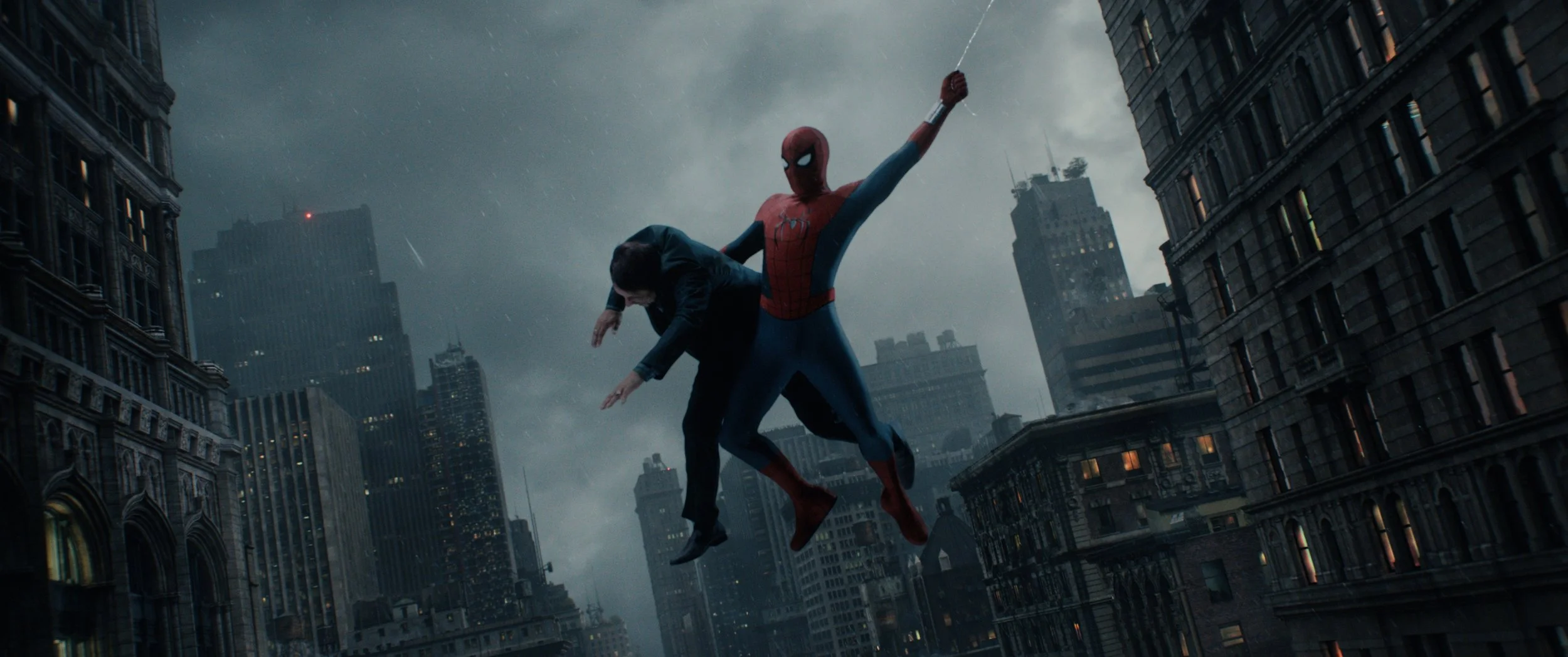
The trio of Peter, MJ and Ned remains a source of genuine warmth throughout. Jacob Batalon continues to find something real in a role that could easily have curdled into sidekick function, and the sequences where the three of them simply exist together carry a nostalgia the movie is not ashamed of. What is notable, and new, is that the MJ-Peter relationship no longer feels like a subplot within that larger friendship structure. For the first time across these films, it stands on its own as the primary emotional axis, and the romance and the trio dynamic operate as separate, equally weighted things.
The film's most satisfying structural move is the way it handles its villain setup. Mac Gargan's Scorpion arrives early with enough presence that a lesser screenplay would have made him the antagonist and called it done. Instead, Brand New Day uses him as a distraction. He clears the path to the film's actual center of gravity: Sadie Sink's Jean Grey, whose identity the movie withholds with considerable craft. Sink is extraordinary here. Jean Grey may be the central antagonist, but she is not a villain in any conventional sense. She is a heroic person placed in an antagonistic position, which gives her story a complexity that rivals Alfred Molina's Doctor Octopus in Spider-Man 2 and Willem Dafoe's Green Goblin in Raimi's original. What distinguishes her from those predecessors is the parallel suffering she shares with Peter. Their confrontations carry weight because the film has done the work of making them mirrors of each other, and Sink handles the full emotional range of that with remarkable precision.
The ensemble around them is managed with confidence. Jon Bernthal's Punisher is not a cameo. Frank Castle is woven into Peter Parker's story in a way that has genuine thematic stakes, their alliance between a moral absolutist and a hero who cannot afford that luxury registering as something more than franchise housekeeping. Mark Ruffalo's Hulk provides the film with one of its most kinetic sequences, and what distinguishes the confrontation with Spider-Man is that it tells us something meaningful about Banner rather than simply satisfying a crossover impulse. Florence Pugh as Yelena Belova brings sharp, dry comic energy to her scenes in a role that knows exactly how much space it needs to occupy. Cretton manages all of it with a confidence that suggests this is not the end of anything. It feels like the beginning of something considerably more interesting.
Rating: ★★★★ out of ★★★★★
In theaters July 31, 2026
Directed by Destin Daniel Cretton | Written by Chris McKenna, Erik Sommers, Justin Kuritzkes | Starring Tom Holland, Zendaya, Sadie Sink, Jacob Batalon, Jon Bernthal, Michael Mando, Mark Ruffalo, Florence Pugh