
The Odyssey is imperfect in ways that only a film operating this far above sea level could be
Nolan strips three thousand years of noise off the greatest story ever told, and what is underneath is a man trying to get home.
By MIGUEL MATEO | JULY 15, 2026
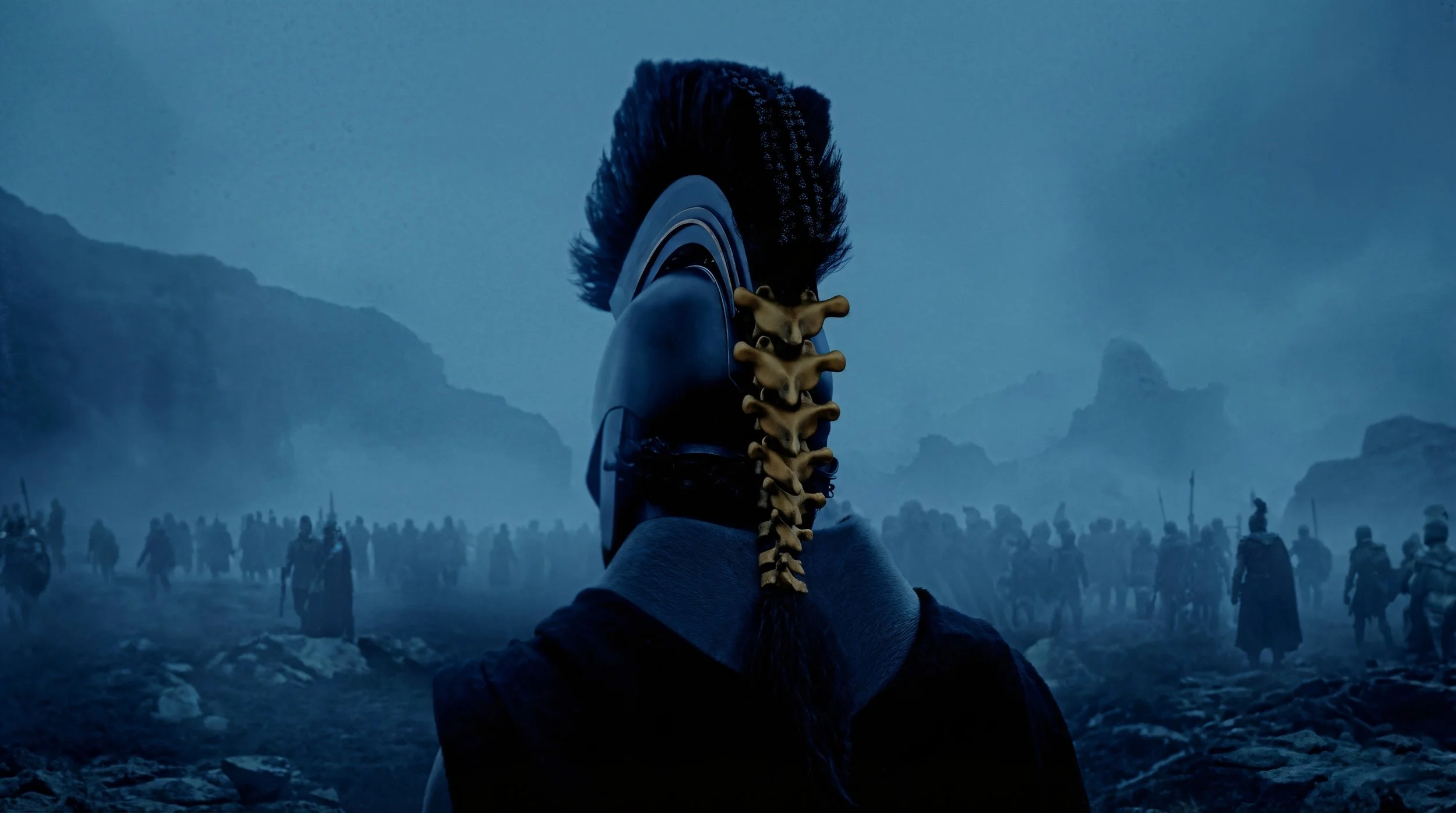
The first quarter of The Odyssey is good and only good. Nothing in it misfires, no scene sits there begging to be cut, and the craft is immaculate. What is missing is the thing Christopher Nolan usually supplies within minutes, that low hum of inevitability that makes his films feel like they are being conducted rather than staged. The likeliest reason is arithmetic. There is an enormous ensemble to introduce, a war to settle, a household to establish, and a decade of absence to make legible before the voyage can begin. Then Samantha Morton's Circe arrives, and the movie stops assembling itself and starts casting a spell. Everything after that is Nolan operating on a different plane entirely.
Her sequence deserves the reputation it will earn. In a year that has been unusually strong for horror, it stands with anything the genre has produced, and it was achieved almost entirely in camera. Morton plays Circe cold, and the coldness is the point. She is not the film's obstacle so much as its mirror. Odysseus survives on cunning, and Circe is the only figure in the picture who is cunning in the same register, which is why she comes closer to unmaking him than any giant or storm. Watching two strategists read each other across a table of food and disarmed weapons is more frightening than any monster, and Nolan knows it.
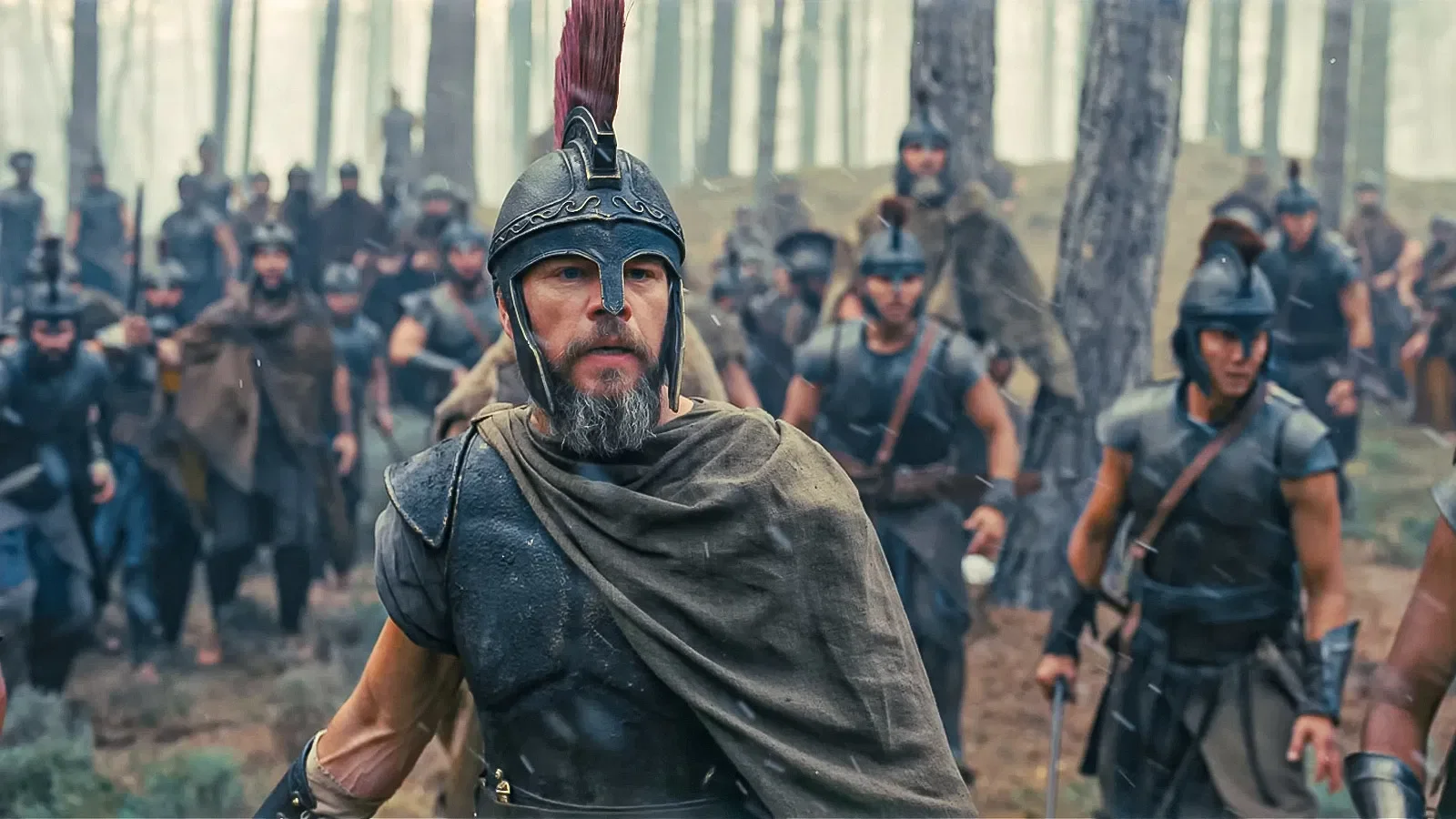
Fidelity has never been a useful measure of adaptation, least of all for a text as vast and contested as this one, which has been rewritten by every century that touched it. Nolan has made his version, and the objections circulating around its casting are not really objections about Homer. They are something uglier wearing a scholar's coat. The film answers them without appearing to try, because its actual concern is xenia, the law of hospitality that Zeus enforces and that structures nearly every encounter in the poem. The suitors gorging themselves in Odysseus's hall, the cave that offers welcome and then teeth, Circe's laden table with its price of surrendered armor, all of it turns on who is let in and what the host owes the guest. Nolan chose to make this story now, and whatever his intent, the film lands in a moment that gives the theme a second edge.
The cast is stacked to the point of absurdity, and the surprise is Matt Damon. His modernity seemed like a liability for a role this mythic, and instead it becomes the film's ballast, a general carrying ten years of war in his shoulders. Tom Holland gives Telemachus a useful uncertainty that resolves into something harder, and his final scenes with Damon land because both actors arrive at them at full strength. Robert Pattinson is not asked for complexity and is gleefully repulsive with what he is asked for. Each film he takes makes it harder to refuse the case that he is one of the best actors currently working, and part of that case is his willingness to be a blunt instrument when a picture needs one. This one needs another necessary evil opposite Odysseus, and he is it. John Leguizamo holds down Ithaca and steals every frame he occupies, which is a long-overdue turn for him. The best work in the film, though, belongs to Anne Hathaway, and it is the best work she has done in years, possibly the best of her career. Penelope is the role that could most easily have been reduced to a symbol, a woman at a loom waiting to be reached, and Hathaway refuses the reduction at every turn. Two moments carry her, a tense confrontation with Telemachus over his plan to purge the house, and the scene opposite the disguised Odysseus where the mention of Athena's pin lets her understand what she is being told before she permits herself to believe it. She plays that recognition in stages, and the stages are the performance. The film does not function if that moment is not earned. It is, and it is earned by her.
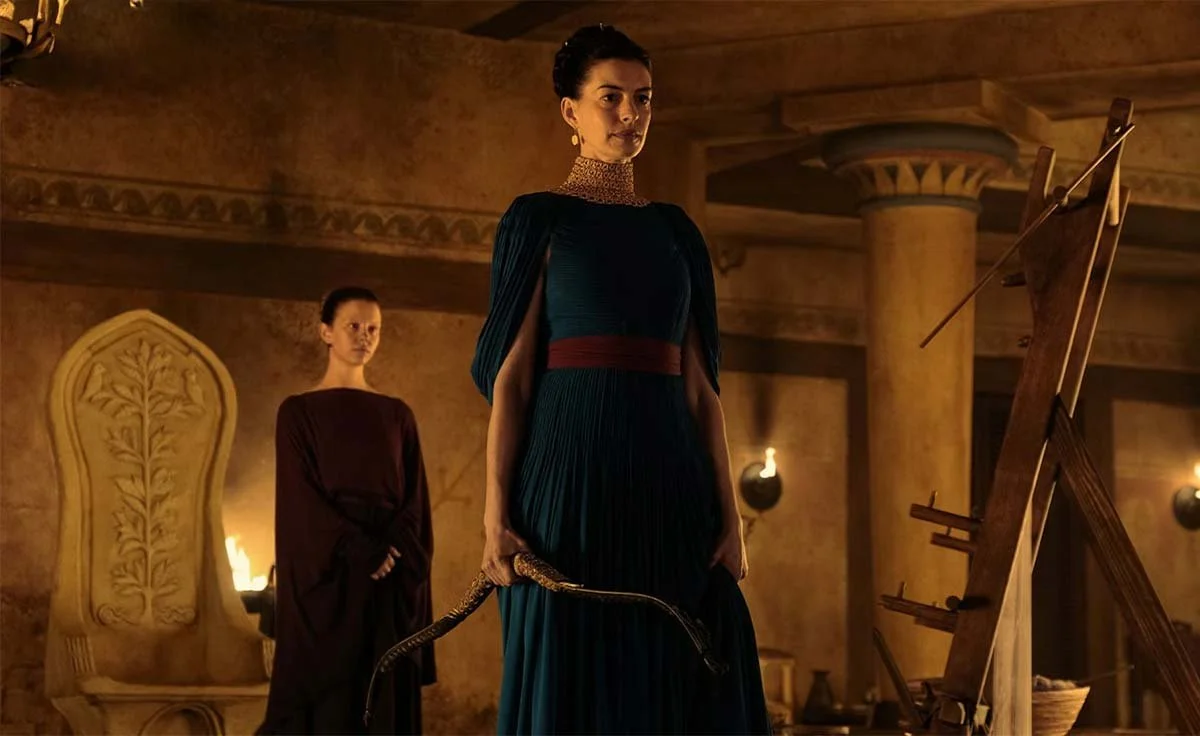
All of which returns to the question of fidelity, and to why it was never the right question. The dialogue does occasionally reach for a register more contemporary than the material strictly needed, a phrase here and there that sits closer to now than to anything Homeric, and some viewers will snag on it. It takes nothing away. If anything it makes the case, because a version that could only speak in the cadence of a translation would be a museum piece, and a museum piece is precisely what this story does not need another of. Nolan needed his own version of this story, not because Homer required improving but because a text that has been recited and translated and assigned for three thousand years accumulates a great deal of noise, and most people now meet it through the noise rather than through the thing itself. What Nolan has done is quiet all of that. Strip away the reverence and the syllabus and the arguments about who should be permitted to appear in it, and what remains is a man trying to get back to his wife and his son, and a wife and a son holding the house until he does. That is the core, and it is why the story has lasted. A great many people will walk out of this film having finally understood that, some of them for the first time in their lives. It is one of the greatest stories ever told, and Nolan built the biggest machine in the history of the medium for no other purpose than to point at it, and at the man walking home.
Rating: ★★★★1/2 out of ★★★★★
Now in theaters
Directed by Christopher Nolan | Written by Christopher Nolan | Starring Matt Damon, Anne Hathaway, Tom Holland, Samantha Morton, Robert Pattinson, John Leguizamo, Lupita Nyong'o