
The Invite Saves the Best Wine for Last
A four-hander this sharp could coast on its jokes alone, but Olivia Wilde uses every laugh to sneak up on something far more tender.
By MIGUEL MATEO | JULY 8, 2026
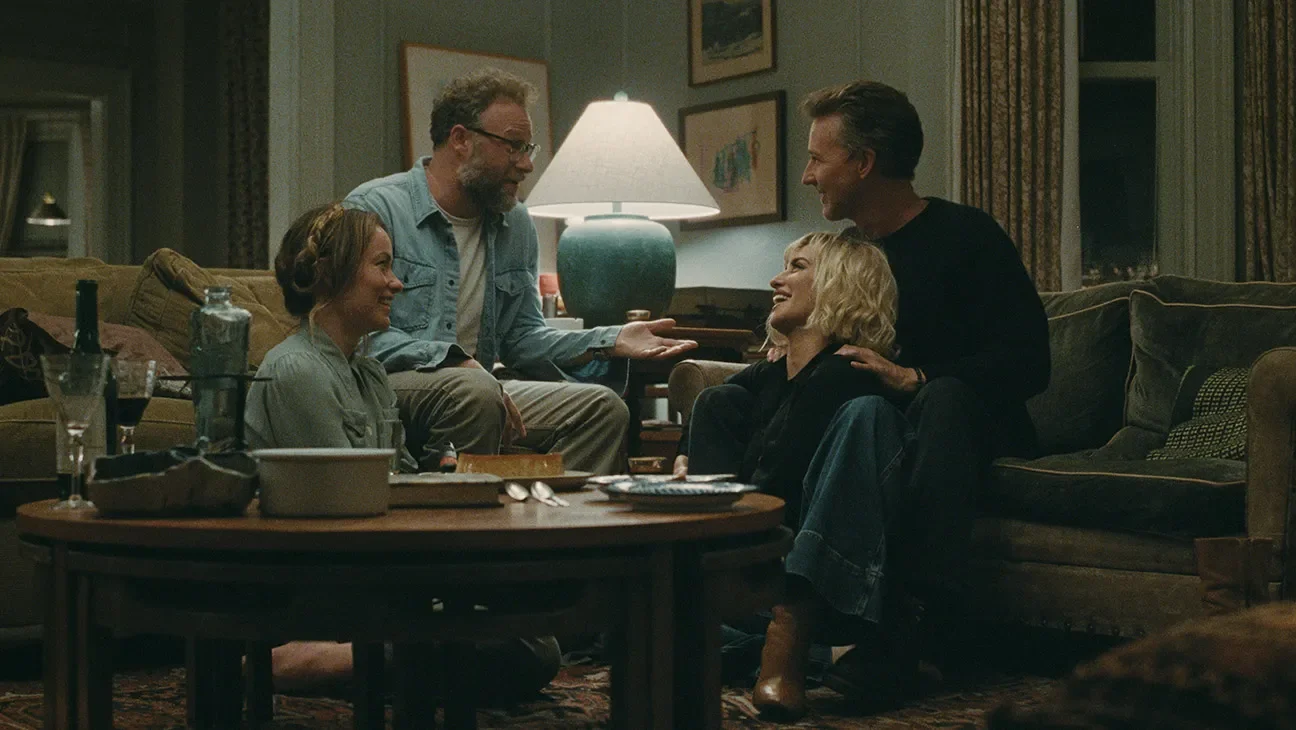
Every marriage starts in the same unguarded place, two people convinced they've found someone worth building an entire life around. What happens later is quieter and harder to talk about. There's a first flicker of fear, a held breath, a beat of distance that wasn't there before, and the easiest thing in the world is to say nothing and wait for a better time to say it. Years can pass that way. The waiting starts to feel like patience, even like love, when really it's a kind of erosion, and the things left unsaid for long enough become their own betrayal, no less real for never being spoken aloud. The Invite understands this completely, and it has the patience, rare for a comedy this funny, to let that understanding arrive slowly and then all at once.
Every second of it works along the way there. Wilde has made her best film yet, and she's giving her best performance in it too, playing two roles at once without letting either one slip. For most of the runtime the theater stays loud with laughter, audibly, at least every two minutes, the kind of shared rhythm that makes an entire room feel like one animal breathing together. Then, in its final twenty minutes, so quietly you almost miss the exact moment it happens, the movie stops laughing and asks you to sit with everything it's been building toward all along.
The premise could not be simpler. Joe and Angela are a married couple in a beautifully renovated San Francisco apartment, and their marriage is quietly falling apart underneath the renovation. Angela invites their upstairs neighbors, Piña and Hawk, over for dinner. Joe didn't want them there at all, and since they're coming anyway, he decides his evening will be spent confronting them about the noise that comes through the ceiling most nights. What stands out about the setup is how much comedy Wilde finds in politeness itself, in the tiny performances two couples put on for each other before anyone says what they actually mean. The soufflé that Angela burns and chucks straight into the trash without a word of acknowledgment is the whole movie in miniature. So is the bit where Hawk appears to be delivering some grave, elaborate verdict on Angela and Joe's marriage, and the camera pulls back to reveal he is talking about paint swatches. The film trusts the audience to sit in a joke a beat longer than expected, and that trust pays off again and again.
There's an inkling early on that the night will eventually turn serious. What's harder to anticipate is how carefully Wilde handles the turn once it arrives. There is no hard pivot, no scene where the music changes and announces it's time to start taking things seriously. Joe throws his back out tripping over a shelf of books, Hawk turns out to moonlight as a masseuse, and somewhere inside that absurd little sequence, the jokes start carrying real weight instead of just deflecting it. By the time Piña sits across from Joe and Angela and quietly tells them she is not their therapist, the line still gets a laugh, but it lands as a laugh with a bruise underneath it. That balancing act, comedy and devastation sharing the same breath, is the hardest thing a movie like this can do, and few films this year pull it off with this much control.
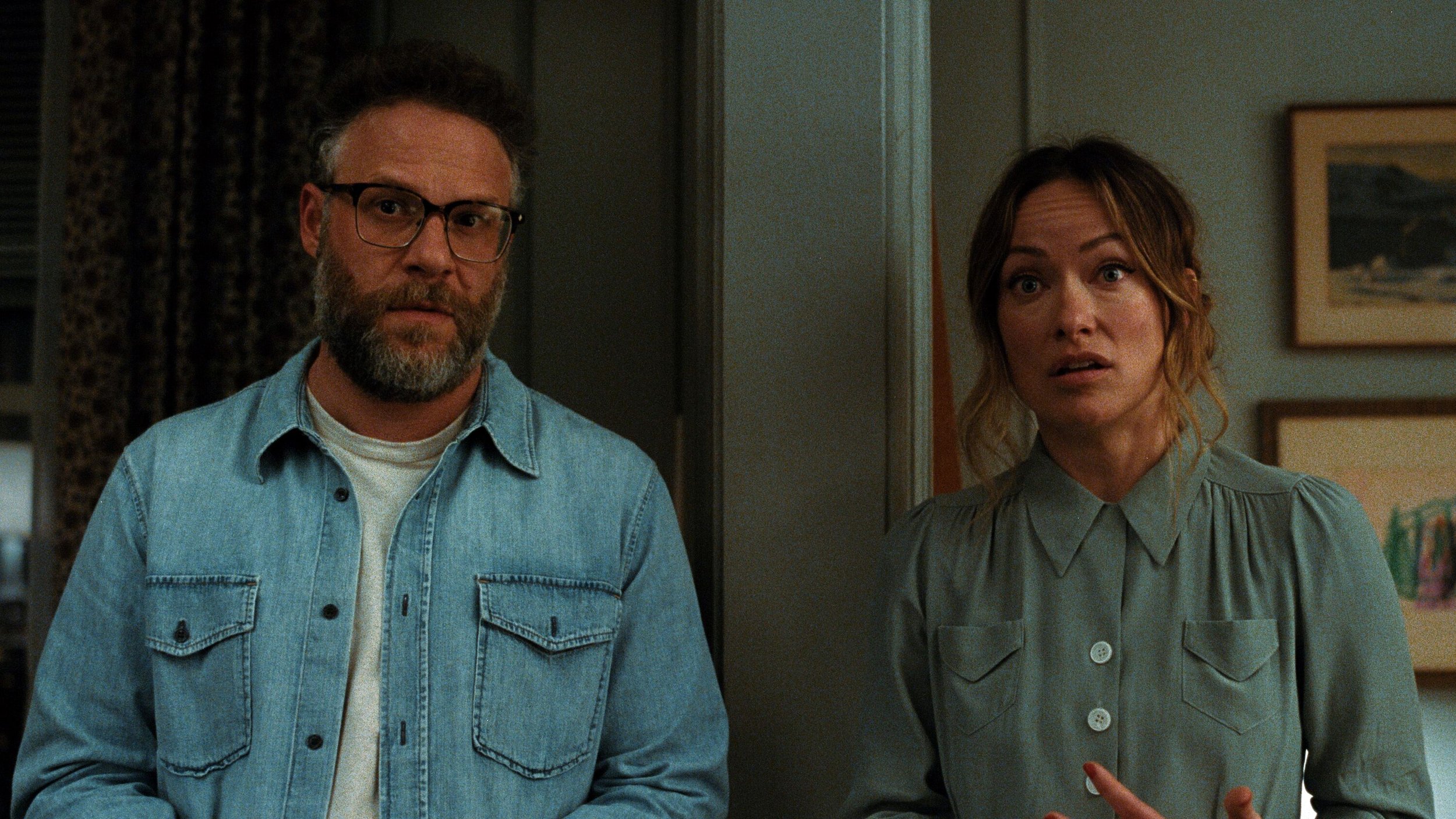
What lands hardest is that the film never lets the ending curdle into simple sadness. Watching Joe and Angela spend two hours proving how incompatible they have become, and then, right before the goodbye, catching these small unguarded flashes of who they were to each other before all of it, is where the movie earns its title twice over. The bottle of wine they had been saving since their wedding day, opened almost by accident to smooth over an awkward moment at the start of the night, turns out to be exactly the bottle they needed, just not for the reason they'd been saving it. For years they held onto it, waiting for the one occasion that would be worthy of it, and that occasion never came. It's hard not to read that as the marriage itself in miniature: so fixed on waiting for the perfect moment that they likely let real ones slip past unnoticed, too distracted or too careful to recognize them when they were actually there. What they end up toasting, without meaning to, is not a new beginning but an honest ending, the last night they'll spend together being fully truthful with one another. That honesty arrives fully in the conversation that follows. When Joe and Angela finally say out loud everything they had spent years avoiding saying, it does not play as a fight with a winner. It plays as two people finally being honest with each other for the first time in a long time, which happens to mean it is time to say goodbye. Few scenes this year land with that much weight.
None of this works without the cast. Rogen is playing a version of the character he always plays, curmudgeonly, deflecting through jokes, but there is more ache under it here than he's shown before. Cruz is the film's quiet center of gravity, warm and self-possessed in a way that keeps threatening to tip into a type and never does. Norton is doing some of his best work in years, sliding between charm and something closer to smarm without ever losing the thread of who Hawk actually is underneath it. And Wilde, on both sides of the camera, treats the apartment itself like a fifth character, all those mirrors and doorways and carefully chosen furniture standing in for everything this couple has been unwilling to say to each other directly.
This is already a strong year at the movies, and The Invite is the best film in it so far. It is a comedy that trusts its own tonal whiplash completely, and a breakup movie that somehow leaves you feeling more tender toward love, not less.
Rating: ★★★★★ out of ★★★★★
Now in theaters
Directed by Olivia Wilde | Written by Rashida Jones, Will McCormack (based on The People Upstairs by Cesc Gay) | Starring Seth Rogen, Olivia Wilde, Penélope Cruz, Edward Norton