
Bonnie, Clyde, and the Ghost of a Mother
A wandering con man and the small-town girl who falls for him rob their way across the South, and it's hard not to root for them the whole way.
By MIGUEL MATEO | JULY 10, 2026
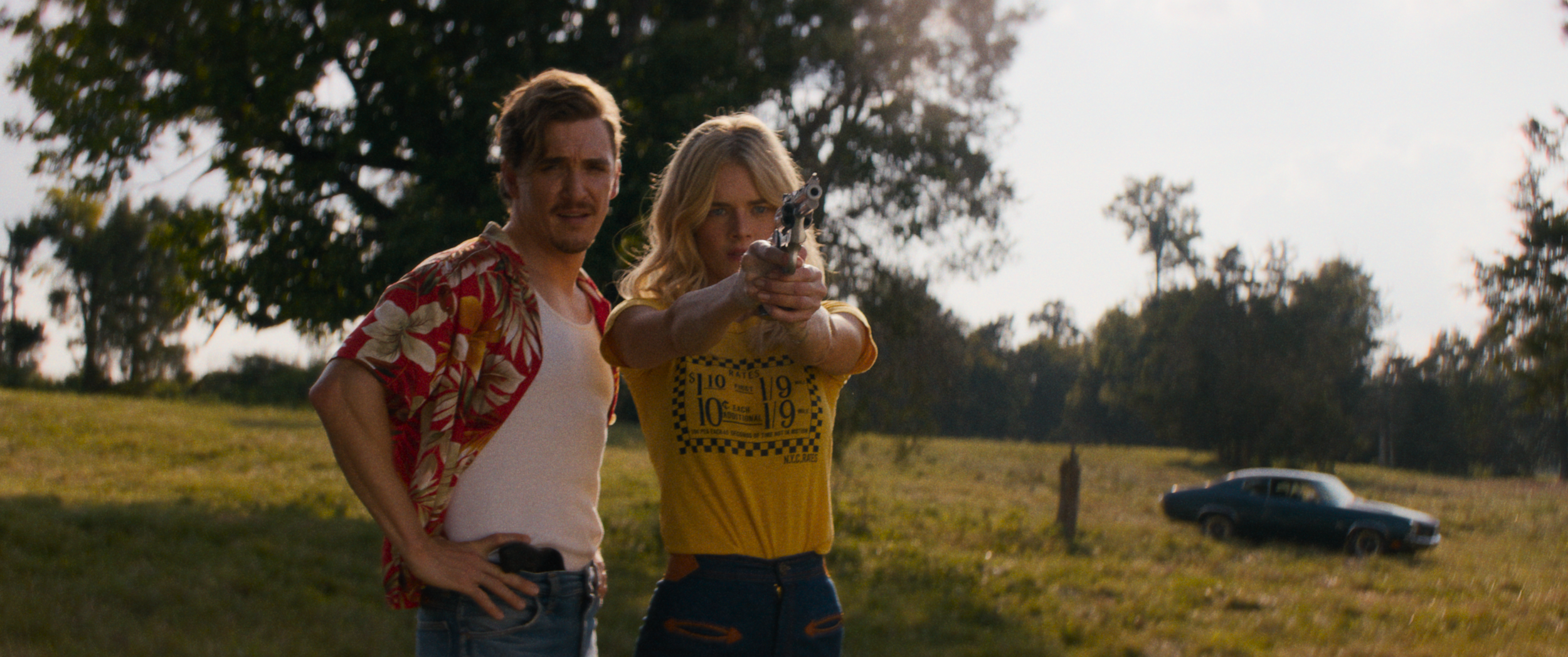
It's clear early on where Carolina Caroline is headed, and that hardly matters, because Caroline and Oliver make terrible decisions look like the only decisions worth making. That's the trick of the film. It hands over a couple who lie, steal, and eventually point a gun at strangers, and it never once lets the audience off the hook for loving them. There's no wanting them caught. There's only the impossible hope that they'll somehow get away with it, even as every frame insists they won't.
Caroline's dream is simple on its face: she wants to go to South Carolina. It sounds like a whim, the kind of thing a bored small-town girl says to a charming stranger to see where it leads. The film waits to reveal the real reason, and when it does, that offhand wish curdles into something much sadder. Her mother left when Caroline was a year old, and South Carolina is where she landed. The place isn't a destination. It's a wound Caroline has been carrying since before she could form memories of it.
The film's tonal hinge is the robbery where Caroline turns her pistol on a father and his daughter, and it's the moment the movie stops being fun. Weaving doesn't play it as a woman losing her nerve. She plays it as a woman suddenly seeing her own life reflected back at her, the bond with her own father rushing up through the barrel of that gun. It's a small, terrible flash of recognition, and it changes everything that follows.
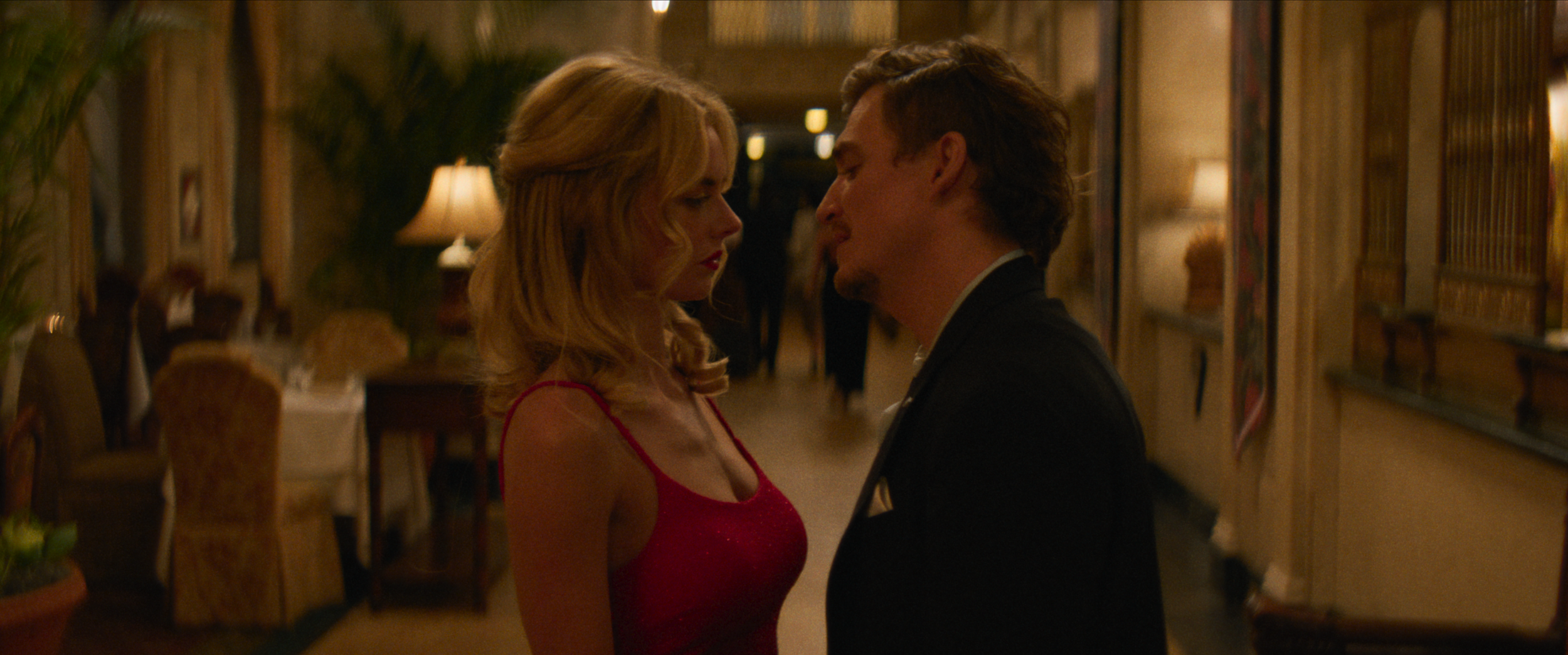
What follows is guilt with nowhere to go. Caroline watches herself on the news, a grainy wig-covered figure with her own recorded voice playing for the whole country, while Oliver sleeps beside her like none of it touches him. When a bellboy clocks her face from the paper, the two of them turn on him with a fear that has nothing to do with him and everything to do with what they've become. It's in this stretch that Oliver asks her how you tell the difference between good people pretending to be bad and bad people pretending to be good. The film never answers it. It doesn't need to.
By the time they reach South Carolina, the dream is already dying, and Kyra Sedgwick delivers the blow herself. Her scene in that roadside bar is brief and merciless. She's drunk, unmoved, entirely without apology, and she tells Caroline flatly that she never wanted to be anyone's mother. In under five minutes she takes the one thing Caroline had left to hope for and closes the door on it for good. The film's final stretch, the two of them slow dancing to their song in a juke joint while their own wanted photos flicker on the television behind them, dreaming out loud about Mexico or Thailand or France, plays like a couple trying to write themselves an ending they know they won't get. When Oliver calls her "Carolina Caroline" one last time, the nickname doing double duty for the dream she never reached and the woman he's about to lose, it lands like a vow made because there's no more time left to keep it. What he does next won't be spoiled here, but it's the kind of gesture that makes the whole film's cruelty feel purposeful rather than cheap.
Weaving and Gallner earn every bit of the Bonnie and Clyde comparisons this film is going to invite. They're sexy and funny together in the early stretches in a way that makes the later devastation actually cost something, and both of them find real interior lives in characters that could have stayed on the surface. Tom Dean's script gives them the room to do it, and Rehmeier directs like a man who trusts his leads completely, staying out of their way and letting the chemistry do the heavy lifting. The result is a familiar shape filled with something genuinely felt.
Rating: ★★★1/2 out of ★★★★★
Now in theaters
Directed by Olivia Wilde | Written by Rashida Jones, Will McCormack (based on The People Upstairs by Cesc Gay) | Starring Seth Rogen, Olivia Wilde, Penélope Cruz, Edward Norton