
Labrador: Autopsy of Silence
A Tribeca-winning murder mystery that cares less about whodunit than about what no one is willing to say.
By MIGUEL MATEO | JUNE 18, 2026
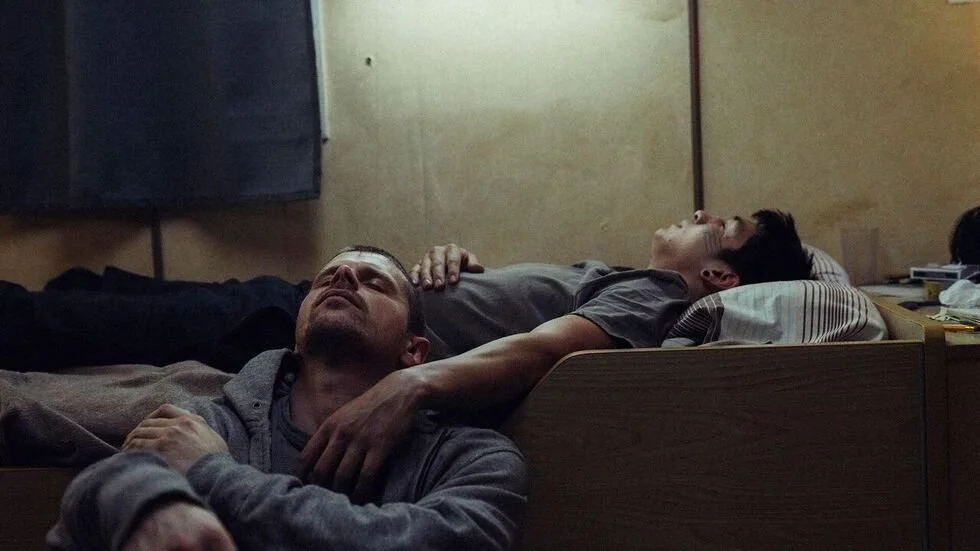
There is a scene in Labrador: Autopsy of Silence where Alupa, the Inuk mechanic at the film's center, sits through an evidentiary hearing in a Quebec court and says nothing. His eyes, framed in a long, unbroken take, say everything the procedural around him cannot. It is the kind of moment that makes you grateful for Acadian filmmaker Rodrigue Jean's restraint and, almost simultaneously, wish he had trusted it a little less completely for the two hours preceding it.
The premise is taut enough to carry a conventional thriller. A cargo ship makes its final run of the year to resupply Inuit communities in the far north of Canada. During a storm off the Labrador coast, the ship's cook, Alex, is found stabbed in his cabin. With no clear evidence and twenty crew members as potential suspects, suspicion lands on Alupa, Alex's closest friend on board and, we slowly understand, his secret lover. What Jean does with this setup is something else entirely: the film unfolds in reverse, moving from the legal aftermath back toward the night of the murder, treating the whodunit not as a puzzle to solve but as a vehicle for something quieter and more bruising.
That structural decision pays real dividends. By the time we arrive at what happened, the "who" is less important than the calculus of silence that allowed it to unfold and the institutional machinery that processes the aftermath. Jean is interested in how a Black Inuk man, both Indigenous and queer, exists as a second-class citizen in the eyes of maritime law and federal investigators alike. The film is not subtle about this, exactly, but it earns the weight of those arguments through accumulation rather than declaration. The shipboard hierarchy, which includes Michelle, the married first officer who exercises a coercive claim on Alex's company, mirrors the broader colonial structures the film circles without ever quite naming.
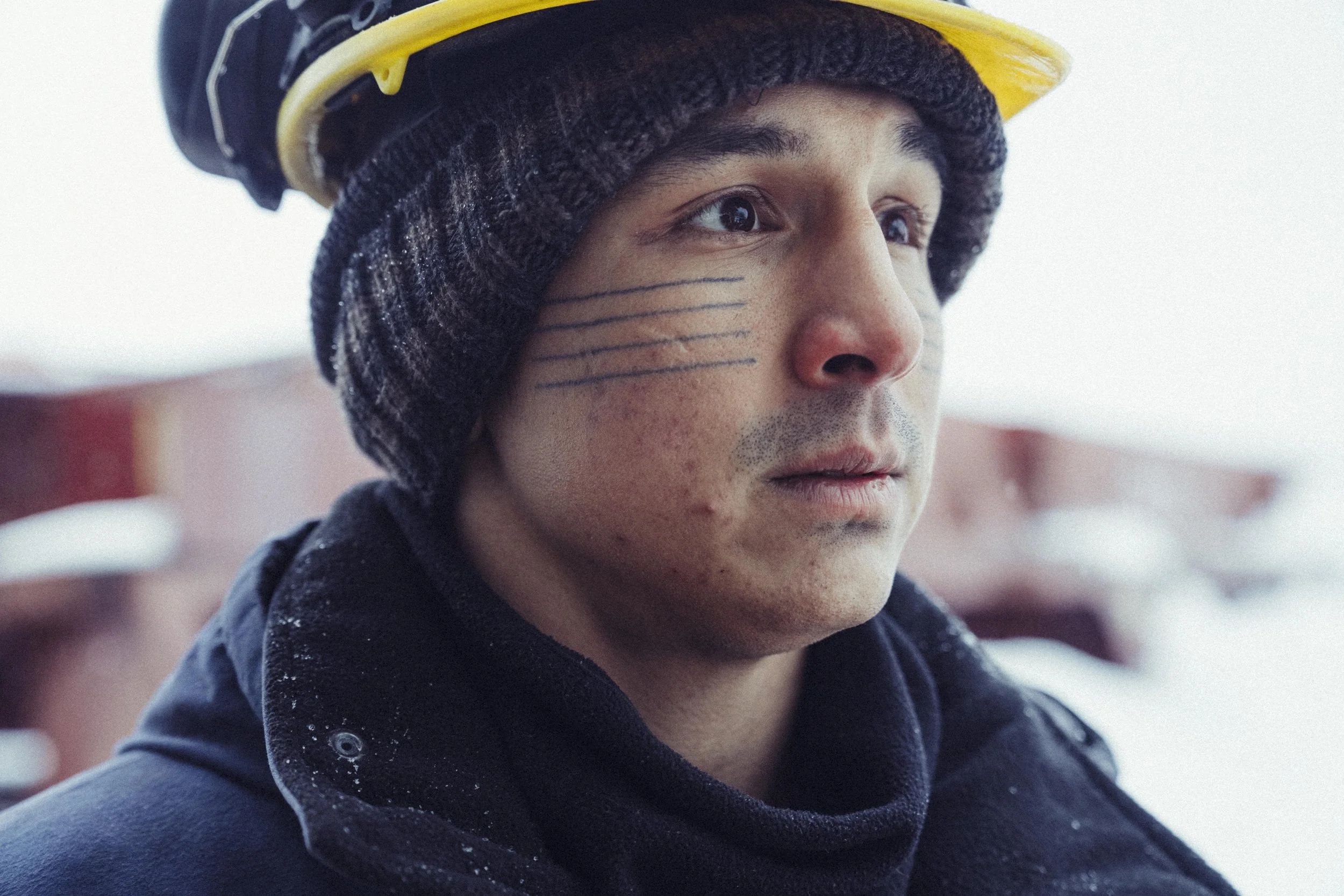
Much of this lands because of Christopher Angatookalook. A first-time actor and native of Kuujjuarapik who grew up in Montreal, he carries the entire film on a performance built almost entirely from what he withholds. His face is an instrument: tattooed, expressive, capable of projecting devastation while his mouth stays shut. The film's Tribeca victories, including Best Performance, feel earned entirely on the strength of what he does in those long takes, and one hopes this is the beginning of something rather than a one-off.
Where Labrador tests my patience is in how faithfully it replicates, at the level of form, the very silence it is examining. Mathieu Laverdière's cinematography is mesmerizing, particularly in its rendition of the Arctic seascape, and Ilyaa Ghafouri's sound design turns ambient noise, the creak of metal, the muffled thud of the sea, into a kind of psychological weather. But Jean's commitment to negative space occasionally tips into withholding for its own sake, and there were stretches where I felt the film daring me to keep up rather than inviting me in. The comparison other critics have drawn to Anatomy of a Fall is fair in genre terms, though Justine Triet's film is finally more interested in destabilizing what we think we know; Jean's is interested in what no one is willing to say, which is a different, and ultimately lonelier, project.
What stays with me is less the mechanics of the investigation than the film's conception of grief. Because Labrador unfolds in reverse, Alex is never really absent. He recedes back into presence, into the warmth of what was shared before it was taken, and Alupa's silence becomes something other than evasion. It becomes the only container large enough to hold what he has lost. That the film builds toward this quietly rather than announcing it is both its great virtue and, for a stretch in the middle, its greatest challenge.
Rating: ★★★1/2 out of ★★★★★
Screened at Tribeca Film Festival