
Christy Finds Its Fight Late, and Lands It Hard
Sydney Sweeney delivers her most committed performance yet in a boxing biopic that spends two acts finding its footing before landing one of the most unflinching depictions of domestic violence ever put to film.
By MIGUEL MATEO | NOVEMBER 8, 2025
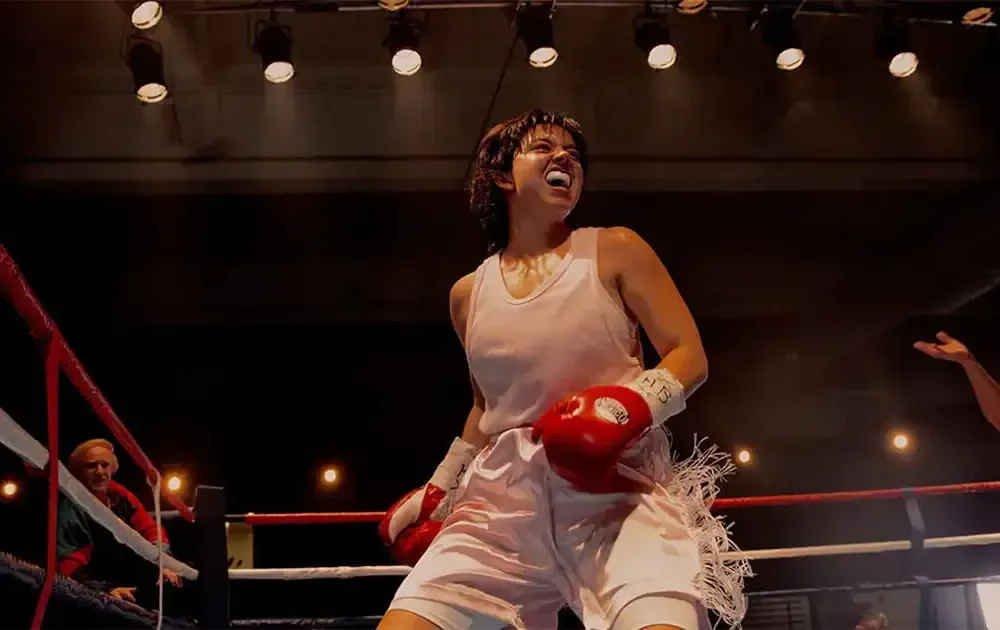
Going in, expectations were low. Christy wears the shape of a biopic audiences have seen a hundred times over, the rise of a scrappy athlete told in the familiar rhythm of training montage, big win, bigger fall. For its first two thirds, the film mostly plays by those rules, and it shows. Scenes covering Christy Martin's ascent through women's boxing move efficiently but rarely surprise, and the film's insistence on hitting every beat of her career leaves some of the more interesting threads, her relationship with her mother, played by a coolly effective Merritt Wever, her sexuality, underexplored in favor of checking boxes.
And yet Sydney Sweeney's work holds the film together even when the screenplay doesn't. Sweeney reportedly gained thirty pounds and trained as a boxer to play the role, and that physical commitment shows up on screen as more than stunt casting. Playing Christy Martin across two decades, she finds something raw and unshowy in the character, letting the bravado Christy performs in the ring curdle slowly into something more guarded and frightened outside of it. It is the best Sweeney has ever been on screen, and it earns the film's back half.
That back half is where Christy stops being a standard biopic and becomes something that stays lodged in the mind long after the credits roll. Ben Foster's Jim Martin, Christy's trainer turned husband, has been simmering with control and jealousy for the entire runtime, and the film's final stretch lets that violence surface in full. The buildup to Jim's 2010 attempt on Christy's life is shot with a queasy, tightening intimacy, the camera staying close enough that there is no relief in cutting away. Foster plays the character's rage as something almost bureaucratic in its coldness, calm right up until it isn't, which makes it scarier than an actor chasing volume ever could.
The attack itself is handled with a restraint that somehow makes it more devastating rather than less. Michôd favors sound and aftermath over spectacle, letting silence and the geography of the house do the work that a more conventional film would hand to a score or a wider shot. The film does not rush past what it costs Christy to survive it, either, staying in the wreckage long enough that her survival feels earned rather than assumed.
It is a genuinely difficult watch, and it should be. Few films this year have captured the specific terror of violence from someone who is supposed to be safe with this much control. That Michôd earns it, after a first two thirds this ordinary, is the real surprise of Christy.
Rating: ★★★ out of ★★★★★