
Roofman: A Ridiculous True Story Made Tender by Its Leads
Channing Tatum plays against type as a fugitive hiding inside a toy store, but it's Kirsten Dunst who gives Derek Cianfrance's true-crime dramedy its aching center.
By MIGUEL MATEO | NOVEMBER 11, 2025
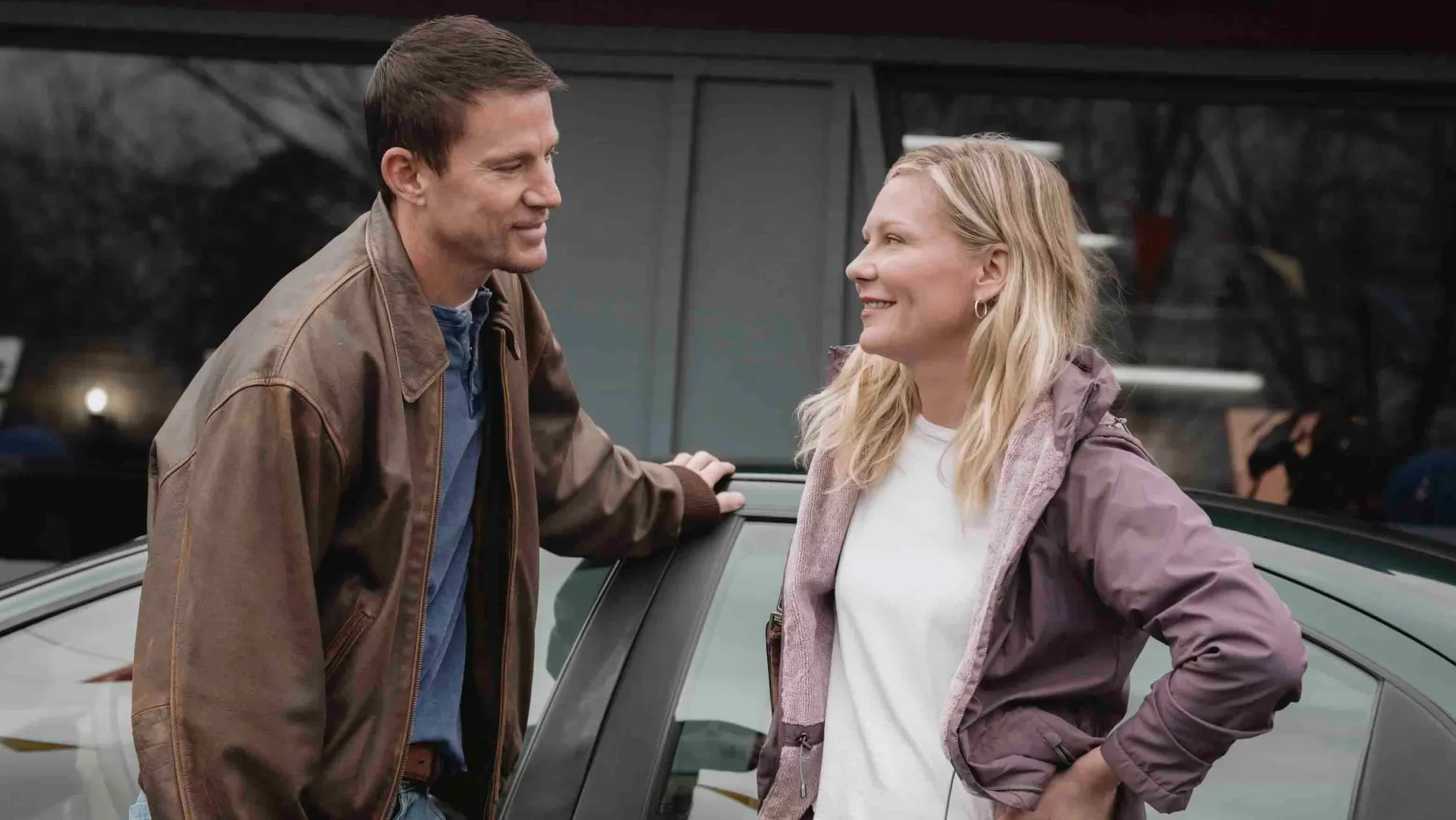
Roofman tells the almost unbelievable true story of Jeffrey Manchester, an Army veteran turned fast-food robber who escapes prison and spends six months hiding inside a Charlotte-area Toys "R" Us. It is a strange premise for Cianfrance, a filmmaker better known for the bruised, working-class melancholy of Blue Valentine and The Place Beyond the Pines, and yet the tonal shift suits him. The film moves between caper, comedy, and quiet heartbreak without ever losing its footing, and much of that balance comes down to its two leads.
Tatum has never been better than he is here, playing Jeffrey (going by the alias "John Zorn") with a looseness that keeps his charm from curdling into shtick. He is funny in the way a con artist has to be funny, always reading the room, but Cianfrance and Tatum let real tenderness slip through the cracks, particularly once Jeffrey starts orbiting Leigh Wainscott's family. The film gives him room to be bittersweet without tipping into sentimentality, and Tatum finds the register on his own.
But it is Kirsten Dunst, as Leigh, who becomes the film's real center of gravity. As a recently divorced, church-going single mother working retail under a boss (Peter Dinklage) who has no patience for her personal life, Leigh could easily have been written as a plot function, the woman who unknowingly falls for a fugitive. Dunst refuses to let that happen. Through her eyes alone, watchful, a little guarded, always doing the math on what she can afford to feel, the audience gets Leigh's entire history before the film bothers to explain it.
That history is most visible in the small, unglamorous beats. When Leigh asks her boss for a donation to her church's toy drive and gets flatly rebuffed, only for "John" to quietly step in and make it happen anyway, Dunst plays her gratitude with a wariness that says more about years of being let down than any line of dialogue could. It is the kind of moment that could read as a throwaway rom-com beat in someone else's hands. Dunst turns it into a character study.
That guardedness is what makes the romance work. The chemistry between Tatum and Dunst carries real warmth without asking the audience to forget what Jeffrey actually is, and Dunst is doing the heavier lifting of the two, holding Leigh's dignity and her desire in the same breath. She has spent years as one of Hollywood's most reliably undervalued actresses, and Roofman is a reminder of exactly what gets wasted when she isn't given the space to do this.
Rating: ★★★1/2 out of ★★★★★